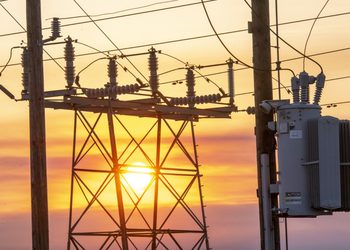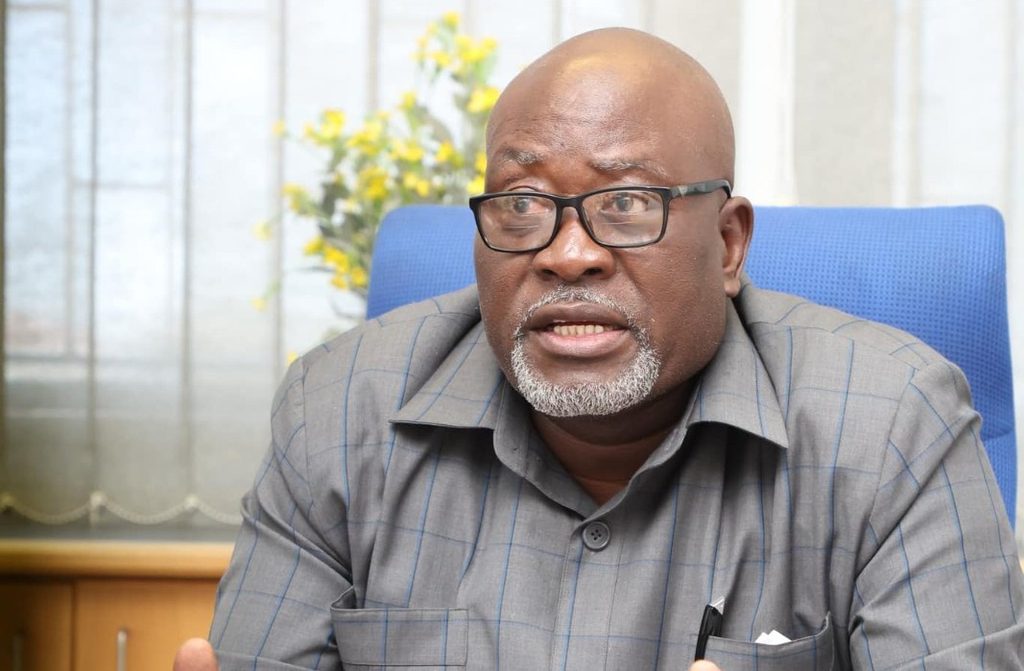
Mines and Energy Minister Modestus Amutse has ruled out privatising Namibia’s electricity transmission and distribution infrastructure, saying the government must retain control over the network to regulate tariffs, protect national security and ensure transmission capacity is aligned with electricity generation.
Addressing the National Assembly, Amutse said electricity was a strategic national asset that could become more expensive and difficult to manage if control shifted entirely to private operators.
“We are not going to privatise as I have said and as you have probably read, honourable member, in the media, because we regard electricity as a national security asset,” Amutse said.
He said the government needed to retain control over electricity tariffs, which are informed by production costs, warning that private control could make prices more difficult to regulate.
“If it’s entirely in the hands of the private players, one can already make out how expensive electricity can become and also become uncontrollable when it comes to deciding on the routes of distribution,” he said.
Amutse also stressed the importance of monitoring national transmission infrastructure to ensure that its capacity matched electricity generation.
“The carriage capacity have to be aligned with the production of energy,” he said.
He maintained that NamPower should continue carrying out its transmission responsibilities under the legislation establishing the utility, arguing that government oversight was necessary to manage the national electricity network.
“As far as government is concerned, ECB is a regulator. They can look at different forms of regulating,” Amutse said.
He said the government and the Electricity Control Board (ECB) were still discussing how to accommodate different approaches to electricity generation and supply without compromising the government’s position on public control of transmission and distribution.
“Where we cannot meet each other in terms of agreeing to terms, we have to come together and that is where we are now, just to iron out what we definitely have to do together so that we don’t dilute the government position,” he said.
The comments come as BW Kudu’s application to construct and operate its own electricity transmission infrastructure remains on hold while the ECB develops a regulatory framework for private investment in the sector.
BW Kudu has applied for a transmission licence to build a 400-kilovolt power line linking its proposed 420-megawatt Kudu gas-to-power plant near Lüderitz to NamPower’s Obib substation. Electricity from the planned plant is expected to supply Namibia and customers in South Africa.
NamPower, which currently holds a monopoly over electricity transmission in Namibia, objected to the application after it was advertised by the ECB in May 2024. The objection led to a public hearing at which NamPower and BW Kudu presented their positions on the proposed private investment.
ECB Chief Executive Officer Robert Kahimise previously said the board had recommended to the minister that BW Kudu’s proposed transmission investment was justified.
However, Amutse determined that the application should remain pending until a regulatory framework governing private participation in electricity transmission was established.
The ECB subsequently began developing an Independent Transmission Company (ITC) regulatory framework and issued a request for proposals for consultancy services in August 2026.
The framework is expected to establish the conditions under which private investors may develop and operate transmission infrastructure, as well as how privately financed networks would connect to NamPower’s existing grid.
Kahimise has said the issue has become increasingly important as private investors pursue large electricity generation projects that require substantial transmission capacity.
The BW Kudu application could therefore help determine how future private power projects finance and connect transmission infrastructure in Namibia.
The regulatory process also reflects wider changes in electricity markets, where some countries have separated generation, transmission and distribution functions traditionally managed by a single utility.