
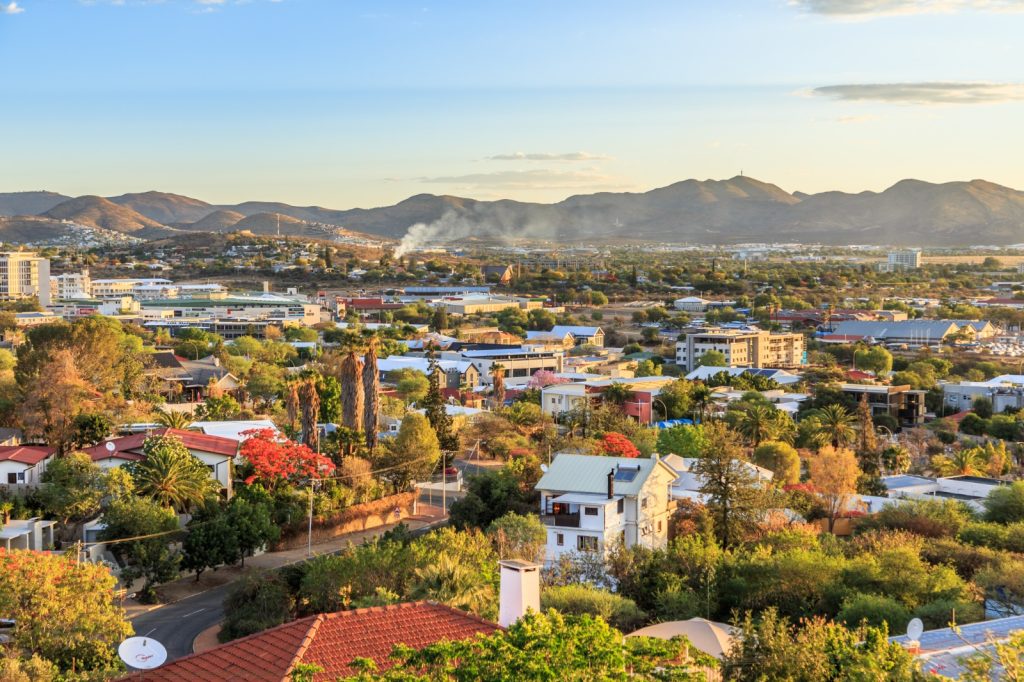
Windhoek’s average house price increased by 17% year-on-year to N$1.85 million in the third quarter of 2026, up from N$1.58 million during the same period last year, as housing shortages, limited serviced land and rising construction costs continued to drive property prices higher.
According to the latest FNB Namibia House Price Index, the capital’s average residential property price reached N$1,848,267, compared with N$1,579,673 in the third quarter of 2025.
However, prices declined by 1.2% quarter-on-quarter from N$1,871,379 recorded in the second quarter of 2026.
FNB Namibia Market Research Manager Mandisa Van Wyk said national house price growth also accelerated, with the FNB House Price Index increasing by 8.9% on a 12-month moving average basis, compared with 7.4% in the previous quarter and 5.9% during the corresponding period last year.
The national weighted average house price increased to N$1,502,539 in the third quarter, up from N$1,461,215 in the second quarter and N$1,380,042 a year earlier.
“The FNB House Price Index accelerated to 8.9% growth on a 12 month average basis in 3Q26, up from 7.4% in 2Q26 and well above the 5.9% recorded in 3Q25. The 12-month national weighted average house price increased to N$1,502,539 in 3Q26, up from N$1,461,215 in 2Q26 and significantly higher than the N$1,380,042 recorded in 3Q25,” Van Wyk said.
She attributed the continued increase in property prices to persistent supply constraints, including limited housing stock, delays in servicing residential land and elevated construction costs.
Despite rising prices, property transaction volumes declined by 3% nationally during the quarter, reversing the 2.8% growth recorded in the second quarter and falling below the 18.4% increase registered in the third quarter of 2025.
Regionally, central Namibia, which includes Windhoek, recorded the strongest house price growth at 11.4%, with the average property price reaching N$1.94 million.
The region accounted for 48.2% of national property transactions during the quarter, compared with 37.8% in the previous quarter.
The coastal region recorded house price growth of 3.7%, bringing its average price to N$1.53 million, while the northern region registered an increase of 1.6% to N$991,000.
In contrast, the southern region recorded a 3.4% decline in house prices, with the average property price falling to N$892,000.
“From a regional perspective, the central region continued to outperform, with price growth increasing to 11.4%, while the northern region recorded modest growth of 1.6%. By contrast, the coastal region moderated to 3.7%, and the southern region remained under pressure, with prices contracting by 3.4% in 3Q26,” Van Wyk said.
She said price movements also varied across housing categories, with the small housing segment recording growth of 3.9%, while medium-sized properties increased by 1.9%.
Large properties recorded growth of 3.6%, while luxury homes registered a 6.2% increase.
The report also highlighted continued constraints in residential land delivery, with national plot sales declining by 15.5% during the third quarter.
Despite the reduction in land transactions, plot prices increased across all four regions, including an 8.5% rise in central Namibia to N$1,003 per square metre.
FNB said the limited availability of serviced residential land remained a major constraint on housing supply, contributing to sustained pressure on property prices.
Meanwhile, housing affordability continued to deteriorate as rising living costs and higher borrowing costs constrained household purchasing power.
Mortgage credit growth improved to 2.8% year-on-year in August 2026, although the Bank of Namibia’s recent decision to increase the repo rate to 7% is expected to place additional pressure on prospective homebuyers.
The increase in interest rates raises the cost of servicing home loans, potentially limiting the number of households able to qualify for mortgage financing.
Looking ahead, FNB expects residential property prices to remain elevated due to persistent housing shortages, limited serviced land availability and high construction costs.
However, affordability constraints and higher financing costs are expected to continue weighing on property transactions, even as house prices remain on an upward trend.