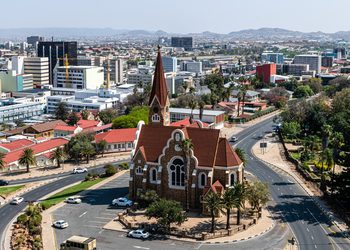
Tuesday, the 21st March 2023 marked Namibia’s 33rd Independence Day. The day is known to be a celebration of an end of a colonial era, in the same vein a commemoration of selfless sacrifices made at the time, which paved the way for us to relish the rights and freedom we have today.
Despite the milestones achieved as a country in relation to fundamental freedoms, the war against poverty and inequality is far from over.
Recent media reports highlighted the Cabinet’s decision to approve the transition of the Food Bank Programme to an unconditional Basic Income Cash Grant of N$600 per month. This is N$100 more than what was previously allocated per household in the preceding financial year.
Coincidentally, the just-concluded International Workshop on Wealth Inequality and Elites in the Global South held in Johannesburg, South Africa, emphasised the effectiveness of cash transfers, citing evidence and lessons from Brazil which was once known to be the world’s most unequal country. South Africa is now topping the latest World Bank list of unequal societies, followed by Namibia in the second place, with estimated Gini-coefficients of 63% and 59.1%, respectively.
Essentially, the United Nations Sustainable Development Goal 10 envisions a world where every citizen is equal, regardless of their race, sexual orientation and social background. Most member states including Namibia have heeded the call, with less than seven years before the target year, 2030.
One of its agencies, the World Food Programme defines cash based transfers as money given to vulnerable people who can use it to buy what they most need in their local markets. Where applicable, the money can also be utilised to settle medical bills and other expenses such as rent or school fees.
These will result in increased household consumption, reduced poverty and improved nutrition, among others, thereby enabling beneficiaries to participate in the market and afford a few essentials. The implementation of these also comes at lower operating costs, in comparison with the Food Bank.
Presently, over 63 developing countries have at least one or more cash benefit programmes. On the contrary, unintended negative consequences of cash transfers include inflationary risks as prices are bound to rise, owing to increased demand.
Nonetheless, this shift is inconsiderable, compared to similar changes brought about by in-kind transfers, which present limited choice to consumers. Exclusion is another shortcoming, as it is almost unfeasible to attend to the whole population all at once, unless in a utopia world.
This may drive the overlooked masses into a deeper trench of poverty and deprivation, confirming Amartya Sen’s view that “poverty is not much of a matter of unavailability, but rather that of inaccessibility”.
Cash transfers can either be conditional, with strings attached where recipients are expected to offer their labour services to the government in return for cash or unconditional, as it is in the Namibian case. Without encouraging idleness and dependency, stringent measures ought to be taken to ensure that only eligible citizens benefit from such programmes.
The long-awaited Population and Housing Census is therefore expected to fill this gap, allowing for Namibians living below the poverty line to be located and captured. If successfully rolled out, this social policy intervention has potential to bring about positive economic growth and the desired sustainable development.
Combined with other targeted interventions and digital transformation, Namibia is positioned to witness a contraction in the gap between the haves and have-nots, by when or to what extent however remains a mystery. Government cannot do it alone, hence an urgent call for institutions and organisations with the financial capacity to get on board and collaborate with the state to make this goal a reality.
As the father of modern economics Adam Smith rightly put it: “no society can surely be flourishing and happy, of which the far greater part of the members are poor and miserable”. The fight continues.
*Saara Mbili-Yetu Niitenge is a Namibian advocate for sustainable development and a Mandela Washington Fellowship alumna.