Namibia has backed the establishment of the African Credit Rating Agency as part of efforts to reform the international financial system and improve African countries’ access to development finance.
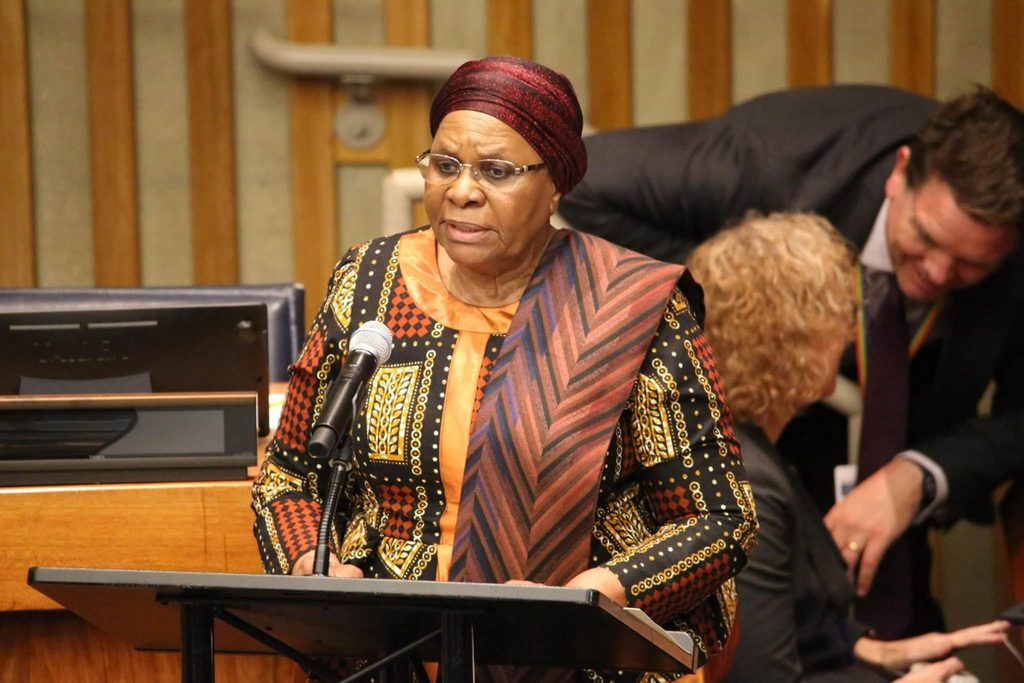
President Netumbo Nandi-Ndaitwah, addressing the General Debate of the 81st Session of the United Nations General Assembly in New York, said reforms to the international financial architecture were needed to create a more equitable system and give developing countries greater access to financing.
Reform of the global financial architecture, high borrowing costs and credit-rating methodologies are among the financing issues being raised by African countries at the 81st UN General Assembly.
Nandi-Ndaitwah said the proposed African Credit Rating Agency, which she said is due to be launched in Mauritius in October, represents a step towards greater African ownership of the continent’s development agenda.
“We welcome the creation of the African Credit Rating Agency to be launched in Mauritius in October this year. This development is a building block of Africa taking ownership of her development and prosperity agenda. It demonstrates progress in Africa’s ambition to drive impetus for the reform of the international financial architecture, in order to ensure a level playing field,” she said.
The establishment of an African credit rating agency has received broader continental backing as part of efforts to promote what African institutions describe as fairer and more transparent assessments of sovereign credit risk.
Nandi-Ndaitwah said middle-income countries continue to face challenges including high borrowing costs, limited fiscal space, debt vulnerabilities and climate-related shocks despite significant development financing requirements.
She said Namibia supports the Sevilla Commitment, adopted at the Fourth International Conference on Financing for Development, including efforts to make the international financial system more responsive to the financing challenges facing developing and middle-income countries. The 81st UN General Assembly has also identified implementation of the Sevilla Commitment and reform of the international financial architecture among its development priorities.
“The system must thus become more inclusive, equitable and responsive to the realities of the Middle-Income Countries,” Nandi-Ndaitwah said.
The President also called for increased climate financing, saying countries that have historically contributed more to greenhouse gas emissions should provide greater support to countries vulnerable to the effects of climate change.
“In the spirit of climate justice, we call for a greater responsibility by those that have contributed most to global greenhouse gas emissions, including through increased support for countries that are most vulnerable to climate impacts. It is through sustainable climate financing that we will be able to achieve Sustainable Development Goal 13, to combat climate change,” she said.
Climate finance and adaptation have emerged as key African priorities, with the continent seeking increased financing to respond to droughts, floods and other climate-related pressures.
Nandi-Ndaitwah also identified water security as a priority for Namibia and the continent as climate change increases pressure on water resources.
“As an arid country, Namibia continues to promote the prudent use and conservation of water, integrated water resources management, groundwater recharge and greater investment in sustainable water infrastructure,” she said.
Water security is a major focus of Africa’s development agenda in 2026, ahead of the UN Water Conference scheduled for December. The UN has highlighted infrastructure, financing, governance and climate resilience as key areas requiring increased attention.
Nandi-Ndaitwah said Namibia’s involvement in international water initiatives, including its role alongside Senegal in the African Union’s water investment agenda, was aimed at mobilising greater investment and strengthening cooperation on water security ahead of the conference.