…seeks industry input to help shape country’s green industrialisation investment strategy
Namibia has launched public consultations on its draft Sectoral Transformation Investment Plan (s-TIP) as it seeks to unlock up to US$250 million in concessional financing to accelerate green industrialisation and attract significantly larger private and development investment.
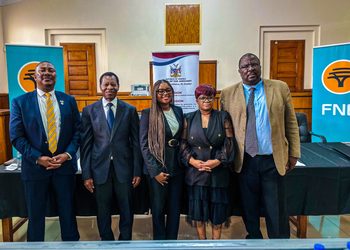
Speaking at the launch of the Climate Investment Funds (CIF) Industry Decarbonisation Programme validation workshop in Windhoek, National Planning Commission Acting Executive Director Sylvester Mbangu said the investment plan will position Namibia to seek approval from the CIF Trust Fund Committee later this year.
Mbangu said the proposed funding is intended to reduce investment risk and mobilise substantially more capital from multilateral development banks, development partners and the private sector.
“The opportunity before us is significant. Namibia is preparing an investment plan that could position the country to access up to US$250 million in concessional CIF capital,” he said.
He stressed that the draft investment plan must go beyond identifying projects and instead present a coordinated strategy for developing a competitive green industrial economy.
“The draft s-TIP must therefore be more than a catalogue of projects. It must demonstrate how a connected package of interventions can resolve shared constraints and advance an entire industrial ecosystem,” Mbangu said.
According to the National Planning Commission, the draft plan is built around four strategic pillars: green industrial projects, enabling infrastructure, local enterprises and value chains, and cross-cutting technical assistance.
The framework aims to convert Namibia’s renewable energy resources into bankable industrial investments while supporting infrastructure development, local supplier participation, job creation and community benefits.
The consultation process, which will run for approximately two weeks, invites input from industry, financiers, state-owned enterprises, local authorities, civil society, academia and the public to strengthen the final investment plan before it is submitted.
Mbangu said stakeholders are encouraged to provide practical recommendations on infrastructure, project bankability, local content, supplier development, skills development, employment, environmental safeguards and the mobilisation of private capital.
He noted that the investment plan aligns with Vision 2030, the Sixth National Development Plan (NDP6), Namibia’s climate commitments, the National Green Hydrogen Strategy and the Green Industrialisation Blueprint.
Mbangu pointed to Brazil and Mexico as examples of countries that have already secured approval for similar investment plans backed by US$250 million each in CIF financing while leveraging billions of dollars in additional co-financing.
He said Namibia’s abundant renewable energy resources, strategic Atlantic location, mineral wealth and growing international partnerships provide a strong foundation, but added that these advantages must be supported by coordinated planning, enabling infrastructure, competitive financing and effective implementation.
The National Planning Commission said the final investment plan is intended to give international financiers confidence in Namibia’s green industrialisation agenda while creating a credible platform for long-term investment in low-carbon industries.