Namibia’s perennial rivers remain largely underutilised, limiting agricultural output and slowing rural industrialisation, lawmakers have warned during the tabling of the 2026/27 Budget Appropriation Bill.
Popular Democratic Movement (PDM) president McHenry Venaani called for increased investment in irrigation infrastructure, saying the absence of a comprehensive national strategy continues to constrain the sector’s growth.
“We have perennial rivers that remain largely untapped. We lack a comprehensive national irrigation strategy capable of significantly expanding agricultural output,” Venaani said.
He warned that without adequate irrigation infrastructure, agricultural production remains highly vulnerable to climate variability and seasonal rainfall, limiting its contribution to economic growth and food security.
“We lack a comprehensive national irrigation strategy capable of significantly expanding agricultural output. Without irrigation infrastructure, agricultural production remains vulnerable to climate conditions and seasonal rainfall,” he added.
Venaani said Namibia’s continued export of raw agricultural products while importing processed goods reflects structural weaknesses in the sector.
“If we are serious about rural development and economic diversification, we must invest aggressively in irrigation infrastructure, agro-processing industries and modern agricultural value chains,” he said.
He added that agriculture must transition from subsistence activity into a productive and industrial sector capable of supporting broader economic transformation.
“Agriculture must become a productive and industrial sector, not merely subsistence activity,” Venaani said.
Contributing to the same debate, PDM member of parliament Diederik Vries said agriculture remains central to rural livelihoods, supporting an estimated 70% of Namibia’s rural population, yet continues to receive limited funding from the national budget.
“Agriculture remains the backbone of many rural livelihoods in Namibia as it supports 70% of the rural population, yet it continues to receive peanuts from the national budget,” Vries said.
He noted that the N$1.8 billion allocated to the Agriculture and Land Reform sector falls short of what is required to address the country’s structural challenges, including limited irrigation capacity and climate vulnerability.
Vries said agriculture plays a critical role in ensuring food security and reducing poverty, but requires targeted investment to unlock its full potential.
“If Namibia is serious about food security, job creation, and rural development, investments must shift towards irrigation expansion, climate-resilient farming, agro-processing, and support for small-scale farmers, so that agriculture becomes not merely a subsistence sector, but a powerful driver of inclusive economic growth,” he said.
The calls for increased investment come as Namibia continues to pursue economic diversification, with agriculture identified as a key sector capable of supporting inclusive growth if adequately resourced and modernised.
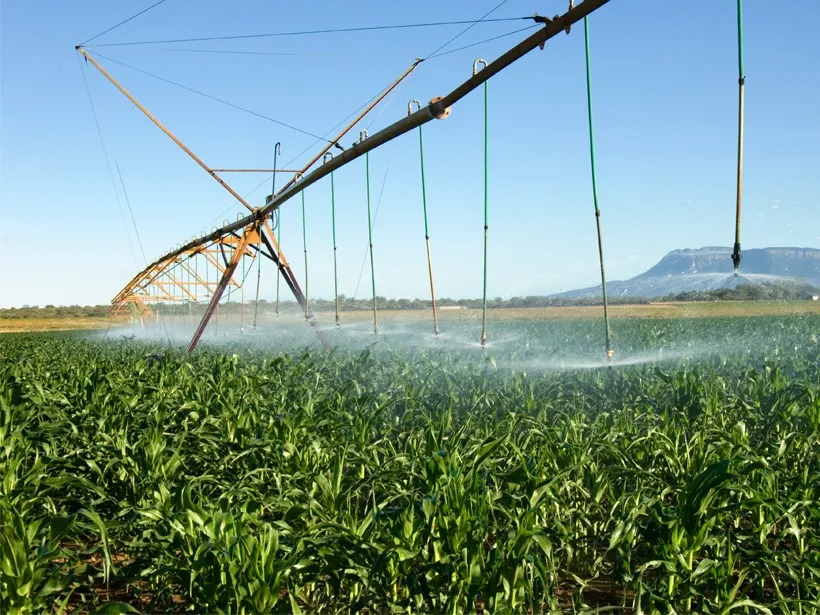
Expanding irrigation infrastructure is seen as critical to stabilising production, increasing yields and enabling year-round farming, particularly in regions with access to perennial water sources.
Lawmakers also highlighted the importance of strengthening agricultural value chains through agro-processing to improve market access, increase incomes and reduce reliance on imported food products.