Thursday, September 10, 2026
Subscribe
The Brief | Namibia's Leading Business & Financial News
  • Home
  • Companies
    • Finance
    • Agriculture
    • Technology
    • Property
    • Trade
    • Tourism
  • Business & Economy
  • E-PAPERreader
  • Mining & Energy
  • Opinions
    • Analysis
    • Columnists
  • Africa
No Result
View All Result
The Brief | Namibia's Leading Business & Financial News
  • Home
  • Companies
    • Finance
    • Agriculture
    • Technology
    • Property
    • Trade
    • Tourism
  • Business & Economy
  • E-PAPERreader
  • Mining & Energy
  • Opinions
    • Analysis
    • Columnists
  • Africa
No Result
View All Result
The Brief | Namibia's Leading Business & Financial News
Subscribe
No Result
View All Result
Home Latest

Namibia’s perennial rivers underutilised as irrigation gaps constrain agriculture

by reporter
March 17, 2026
in Latest
7
A A

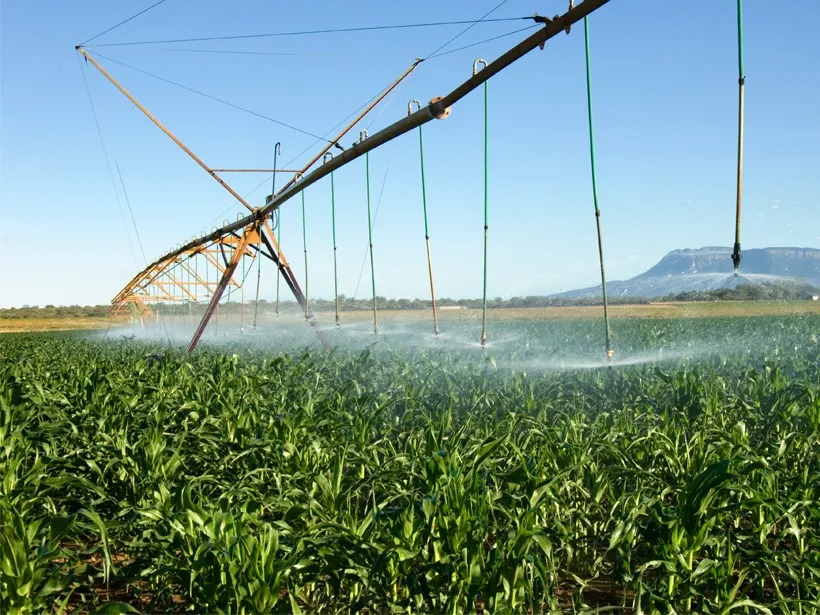
Namibia’s perennial rivers remain largely underutilised, limiting agricultural output and slowing rural industrialisation, lawmakers have warned during the tabling of the 2026/27 Budget Appropriation Bill.

Popular Democratic Movement (PDM) president McHenry Venaani called for increased investment in irrigation infrastructure, saying the absence of a comprehensive national strategy continues to constrain the sector’s growth.

“We have perennial rivers that remain largely untapped. We lack a comprehensive national irrigation strategy capable of significantly expanding agricultural output,” Venaani said.

He warned that without adequate irrigation infrastructure, agricultural production remains highly vulnerable to climate variability and seasonal rainfall, limiting its contribution to economic growth and food security.

“We lack a comprehensive national irrigation strategy capable of significantly expanding agricultural output. Without irrigation infrastructure, agricultural production remains vulnerable to climate conditions and seasonal rainfall,” he added.

Venaani said Namibia’s continued export of raw agricultural products while importing processed goods reflects structural weaknesses in the sector.

“If we are serious about rural development and economic diversification, we must invest aggressively in irrigation infrastructure, agro-processing industries and modern agricultural value chains,” he said.

He added that agriculture must transition from subsistence activity into a productive and industrial sector capable of supporting broader economic transformation.

“Agriculture must become a productive and industrial sector, not merely subsistence activity,” Venaani said.

Contributing to the same debate, PDM member of parliament Diederik Vries said agriculture remains central to rural livelihoods, supporting an estimated 70% of Namibia’s rural population, yet continues to receive limited funding from the national budget.

“Agriculture remains the backbone of many rural livelihoods in Namibia as it supports 70% of the rural population, yet it continues to receive peanuts from the national budget,” Vries said.

He noted that the N$1.8 billion allocated to the Agriculture and Land Reform sector falls short of what is required to address the country’s structural challenges, including limited irrigation capacity and climate vulnerability.

Vries said agriculture plays a critical role in ensuring food security and reducing poverty, but requires targeted investment to unlock its full potential.

“If Namibia is serious about food security, job creation, and rural development, investments must shift towards irrigation expansion, climate-resilient farming, agro-processing, and support for small-scale farmers, so that agriculture becomes not merely a subsistence sector, but a powerful driver of inclusive economic growth,” he said.

The calls for increased investment come as Namibia continues to pursue economic diversification, with agriculture identified as a key sector capable of supporting inclusive growth if adequately resourced and modernised.

Expanding irrigation infrastructure is seen as critical to stabilising production, increasing yields and enabling year-round farming, particularly in regions with access to perennial water sources.

Lawmakers also highlighted the importance of strengthening agricultural value chains through agro-processing to improve market access, increase incomes and reduce reliance on imported food products.


author avatar
reporter
See Full Bio
Previous Post

Navigating the first-year transition: The realities facing new university students

Next Post

Accelerate36 initiative targets startup listings on NSX Development Board

Must Read

Speaker at a podium delivering the keynote at the African Green Industries Summit, with a blue screen behind him displaying event details
Latest

Namibia targets 25% secondary industry contribution to GDP by 2030

September 9, 2026
Group of six adults standing with plaques in front of a bright blue wall; woman sits front center in a dark dress with colorful accents.
Latest

MTC, MVA Fund build 61 classrooms to ease rural school infrastructure shortages

September 9, 2026
Shadow AI employees: Why your company needs an AI usage policy
Latest

AI is already at employees’ desks. Is your board ready to govern AI?

September 9, 2026
Seedlings sprouting from stacked coins on soil beside a moss ball labeled CO2, symbolizing green investment and sustainability.
Latest

Namibia eyes carbon markets as new source of climate finance

September 8, 2026
Close-up portrait of a woman wearing a gray blazer over a black-and-white striped top, facing the camera against a gray background.
Latest

Psychological safety: The missing ingredient in high-performing teams

September 4, 2026
Seven diverse professionals pose in a row in front of a green backdrop with repeating white logo marks.
Latest

Nedbank launches 30-person funeral cover including extended family, domestic workers

September 3, 2026
Load More

Related News

UNAM’s Kenneth Matengu re-elected as Pan-African University Council President

UNAM’s Kenneth Matengu re-elected as Pan-African University Council President

July 21, 2024
Banner for International Training College - Lingua on a campus with brick building and palm trees visible in the background

Lingua embarks on N$300m Windhoek campus development

May 18, 2026
Time to connect Leadership, Strategy and Culture in your organisation

Time to connect Leadership, Strategy and Culture in your organisation

July 6, 2023

Browse by Category

  • Africa
  • Agriculture
  • Analysis
  • Business & Economy
  • Columnists
  • Companies
  • e-edition
  • Finance
  • Finance
  • Fisheries
  • Green Hydrogen
  • Health
  • Investing
  • Latest
  • Market
  • Mining & Energy
  • Namibia
  • namibia
  • News
  • Opinions
  • Property
  • Retail
  • Technology
  • Tourism
  • Trade
The Brief | Namibia's Leading Business & Financial News

The Brief is Namibia's leading daily business, finance and economic news publication.

CATEGORIES

  • Business & Economy
  • Companies
    • Agriculture
    • Finance
    • Fisheries
    • Health
    • Property
    • Retail
    • Technology
    • Tourism
    • Trade
  • e-edition
  • Finance
  • Green Hydrogen
  • Investing
  • Latest
  • Market
  • Mining & Energy
  • namibia
  • News
    • Africa
    • Namibia
  • Opinions
    • Analysis
    • Columnists

CONTACT US

Cell: +264814612969

Email: newsdesk@thebrief.com.na

© 2026 The Brief | All Rights Reserved. Namibian Business News, Current Affairs, Analysis and Commentary

Welcome Back!

Login to your account below

Forgotten Password?

Retrieve your password

Please enter your username or email address to reset your password.

Log In
No Result
View All Result
  • Home
  • Companies
  • Mining & Energy
  • Business & Economy
  • Opinions
    • Analysis
    • Columnists
  • Africa

© 2026 The Brief | All Rights Reserved. Namibian Business News, Current Affairs, Analysis and Commentary

This website uses cookies. By continuing to use this website you are giving consent to cookies being used. Visit our Privacy and Cookie Policy.