Namibia’s exports to the European Union (EU) increased by more than 17% to N$17.6 billion in 2025, supporting approximately 40,000 direct jobs, according to an independent trade study.
The study, titled EU–Namibia Trade: A Partnership That Works, identifies the EU as Namibia’s third-largest export market, accounting for 19.4% of the country’s total exports when the bloc is treated as a single trading partner.
Prepared by Economist Robin Sherbourne using Namibia Statistics Agency (NSA) data for 2024 and 2025, the study shows that exports to the EU increased from N$15 billion in 2024 to N$17.6 billion in 2025.
The findings also show that Namibia’s exports to the European market have more than doubled over the past decade, with the country recording a trade surplus with the bloc in 2025.
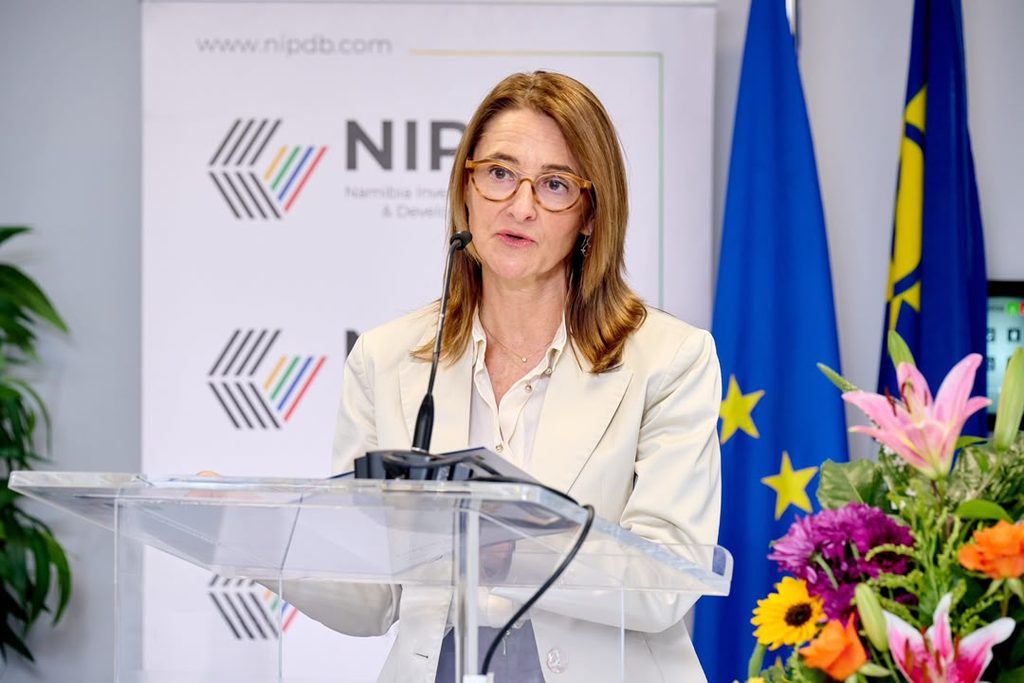
Speaking at a technical workshop in Windhoek, EU Ambassador to Namibia Ana Beatriz Martins said the findings highlighted the European market’s contribution to employment and economic activity in Namibia.
“Forty thousand jobs: Behind this figure are Namibian workers, families, businesses and communities whose livelihoods depend, directly or indirectly, on access to the European market,” Martins said.
Namibia’s major exports to the EU include fish, uranium, meat, table grapes, blueberries, charcoal, diamonds, dimension stone and base metals.
According to the study, the European market accounts for more than half of Namibia’s fish, fruit and vegetable, and charcoal exports, while absorbing more than 80% of the country’s meat exports.
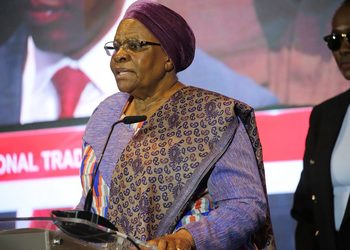
Meanwhile, Ministry of International Relations and Trade (MIRT) Executive Director Jerobeam Shaanika said Namibia needed to use its trade relationship with the EU to attract investment into local processing and manufacturing rather than continue relying heavily on raw material exports.
“Our ambition must be to ensure that Namibia does not merely serve as a source of raw materials for international markets, but increasingly becomes a producer of value-added goods, a destination for productive investment and a competitive participant in global trade,” Shaanika said.
The EU–Southern African Development Community Economic Partnership Agreement (EPA), which marks its tenth anniversary in 2026, provides qualifying Namibian exports with duty-free and quota-free access to the European market.
However, stakeholders said preferential market access alone was insufficient to increase exports, stressing the need for Namibian businesses to meet international standards, expand production capacity and diversify their products.
The workshop, hosted by the Namibia Investment Promotion and Development Board (NIPDB), MIRT and the EU Delegation to Namibia, examined opportunities to expand trade and investment, particularly in the agriculture and mining sectors.
Discussions also focused on strengthening local value addition, increasing the participation of Namibian businesses in international supply chains and attracting productive investment.
The event brought together Members of Parliament, government officials, business representatives, EU member states and other stakeholders to review the study’s findings and identify opportunities for further economic cooperation.
MIRT, NIPDB and the EU said the findings would inform future cooperation on trade, investment and industrial development.