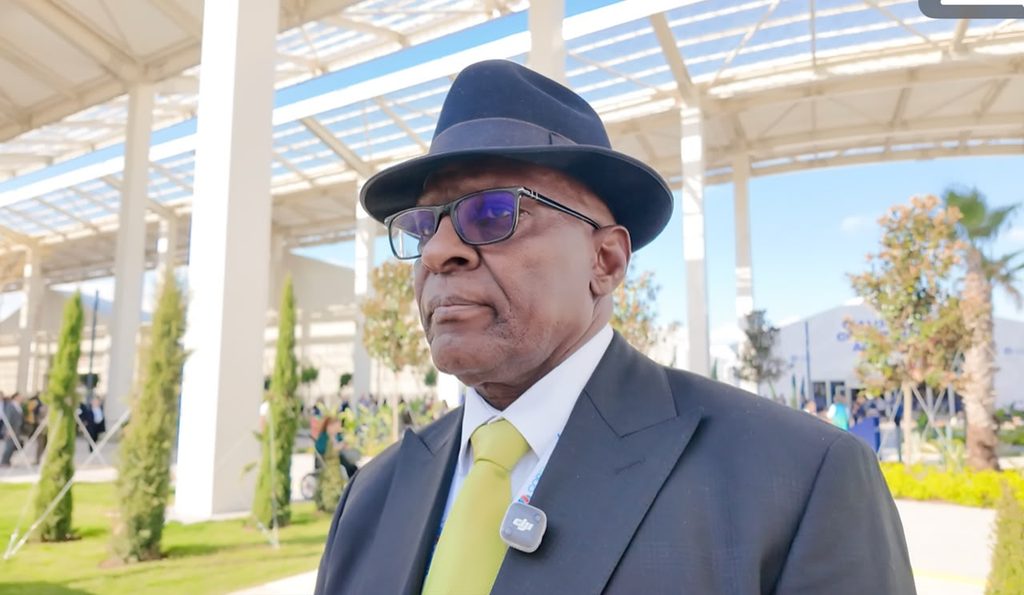
Namibia requires US$14 billion to implement its climate commitments by 2035, with approximately 90% of the funding dependent on international financial support, National Planning Secretariat Director General Kaire Mbuende has said.
Speaking at the high-level segment of the United Nations Climate Change Conference (COP31) in Antalya, Türkiye, on Wednesday, Mbuende said Namibia could not achieve its climate targets without substantial financial assistance from developed countries.
The funding requirement forms part of Namibia’s Third Nationally Determined Contribution (NDC), which targets reductions of approximately 23 million tonnes of carbon dioxide-equivalent emissions while strengthening the country’s resilience to climate change.
Based on the funding estimates, Namibia would require approximately US$12.6 billion in international support, with the remaining US$1.4 billion expected to be mobilised through domestic resources.
“Ambition without adequate means of implementation risks becoming an empty promise,” Mbuende said.
He raised concerns over the shortage of climate finance reaching developing countries, warning that increasing reliance on loans to finance climate adaptation and mitigation could worsen debt burdens in vulnerable economies.
“It is unacceptable that countries least responsible for this crisis must increasingly finance their survival through loans, thereby deepening their debt burdens,” he said.
Mbuende called for climate adaptation funding to be provided primarily through grants and highly concessional financing to help developing countries protect communities, infrastructure and livelihoods against climate-related risks.
He cited estimates showing that developing countries require between US$455 billion and US$584 billion annually to implement their NDC commitments, highlighting the gap between climate financing needs and available resources.
Mbuende said Namibia remained particularly vulnerable to climate change, with rising climate risks already affecting livelihoods, economic development and long-term growth prospects.
Despite these challenges, he said Namibia remained committed to implementing its climate targets and pursuing development strategies that strengthen resilience to climate change.
He also warned that the world was at risk of exceeding the Paris Agreement’s 1.5°C temperature target, calling for greater responsibility from countries with historically high greenhouse gas emissions.
Mbuende said global climate action should be guided by the polluter-pays principle, historical responsibility, equity and the principle of common but differentiated responsibilities and respective capabilities.
“Climate action must be anchored in climate justice, intergenerational equity and respect for national circumstances and development priorities,” he said.
He urged COP31 participants to prioritise the implementation of existing climate commitments and the delivery of financial resources rather than continuing to negotiate targets without adequate funding.
“We cannot continue to negotiate commitments while failing to deliver the resources necessary to implement them,” Mbuende said.
He said the success of COP31 should be measured by the extent to which countries translate climate commitments into practical action and deliver financial and technical support to vulnerable developing economies.