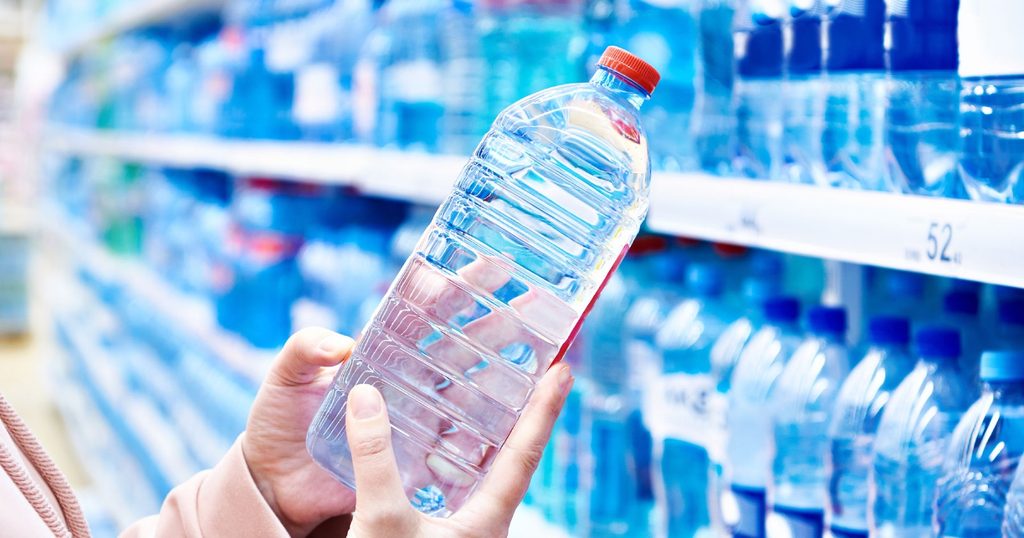
Namibia spent N$516.1 million importing water products during the first eight months of 2026, with South Africa supplying about 88% of the 46.33 million litres brought into the country.
Data from the Namibia Statistics Agency (NSA) shows that imports between January and August declined from 55.14 million litres during the corresponding period of 2025, while the import bill fell by 3.4% from N$534.5 million.
South Africa remained the dominant source, supplying approximately 40.88 million litres valued at N$440.4 million during the period.
Other suppliers included Zambia at 1.55 million litres, Austria at 1.40 million litres, Germany at 902,266 litres, Angola at 555,959 litres and Switzerland at 117,270 litres.
The figures come as the Namibia Trade Forum (NTF) pushes for greater participation by local producers in a bottled-water market it says has grown into a multi-million-dollar industry but remains heavily supplied by imports.
NTF Acting Chief Executive Officer Rodney !Hoaeb said a study involving producers, retailers and consumers had highlighted the scale of the domestic market and the extent to which imported products continue to meet demand.
“The biggest shocker that came was that the sector is heading towards a multi-million dollar industry, which is not widely captured by statistics,” !Hoaeb said.
He said the study showed local producers were not fully participating in the expanding market despite existing domestic production capacity.
The latest trade figures follow strong growth in water imports in 2025.
Namibia’s reported water imports increased from about 72.38 million litres valued at N$780.6 million in 2024 to 85.35 million litres worth N$859.1 million in 2025.
This represented a 17.9% increase in volumes and a 10% rise in import value.
South Africa supplied 63.64 million litres worth N$638.1 million in 2024, increasing to approximately 76.75 million litres valued at N$709.3 million in 2025.
Water in sealed containers of 2.5 litres or less remained the largest import category by value, accounting for N$390 million in 2025, broadly unchanged from N$390.7 million in 2024.
However, imports classified as other waters, mineral waters and aerated waters increased from 14.60 million litres in 2024 to 22.85 million litres in 2025, while their value rose from N$127.5 million to N$161.2 million.
Imports of mineral and aerated waters under HS 22011000 also increased from 10.04 million litres in 2024 to 14.13 million litres in 2025.
!Hoaeb said the NTF was engaging local manufacturers to determine their production capacity, market-access challenges and willingness to expand their presence in the domestic market.
“What is it that you need in terms of market access, because we are the custodians of the supply chain? And then we asked also, what are the bottlenecks that you have? What is your production capacity? What is your willingness to enter the market?” he said.
The NTF is assessing possible concessions and other interventions to support domestic production, employment creation and increased uptake of locally manufactured products.
Namibia’s water exports remain significantly below imports.
Reported exports increased from 161,738 litres valued at N$3.67 million in 2024 to 1.30 million litres worth N$4.09 million in 2025.
However, the 2025 figure includes a December transaction to the Netherlands recorded as 1.008 million litres despite a net weight of just 1,126 kilogrammes and a value of N$23,405.
Excluding that transaction, reported exports amounted to about 292,122 litres, underscoring Namibia’s continued reliance on imported water products.