By Erastus Ngaruka
Heatwaves in Namibia are occasionally experienced, with temperatures exceeding 400C recorded in some years, especially in the southern regions.
Namibia is largely a dry country, which compromises optimal agricultural production. These challenges will be exacerbated by the imminent heatwaves.
The predicted “El Nino” event is expected to negatively affect livestock, soil and plantsin various ways.
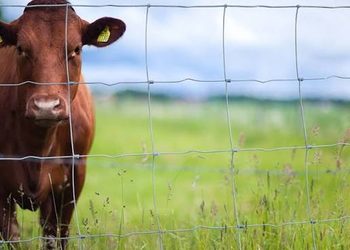
Livestock production in Namibia is predominantly extensive foraging livestock are prone to heat stress and exhaustion. Crop production is equally affected because of the predominant dryland production system.
Impact of heat on livestock
When an animal forages, the digestive processes generate heat and increase its body temperature.
For example, the normal body temperatures (0C) of cattle, sheep and goats are approximately 38.5,39 and 39.5 respectively.
When the body temperature increases beyond the normalrange, the animals physiological functioning is affected and could be detrimental or life-threatening in extreme cases.
Ruminant animals such as cattle, goats, and sheep, under normal circumstances, prefer to graze/forage during cooler hours of the day such as the early morning, late afternoon, or evening to avoid heat stress.
They would only rest during the hot hours of the day to ruminate or further digest feed into a finer form for nutrient absorption.
Grazing during the hot hours exposes animals to excessive heat from both direct sunlight and the internal digestive processes, increasing the risk of heat stress.
This means the animal’s physical activities,such as walking, and feed intake will have to be reduced to maintain normal or optimal body temperature. This in turn compromisesthe animal’s nutrition, health status, and overall performance.
The effects may be observed as nutrient deficiencies, poor growth rate and body condition, reduced milk yield, and poor reproduction, among other challenges.
High temperatures also affect livestock reproduction. Heat stress forces animals to reduce exhaustive physical activities, which include mating.
The female animal’s reproductive system as well as the sperm production process in male animals can be adversely affected by high temperatures.
Heat stress is said to depress the release of reproductive hormones such as oestrogen and progesterone, compromising the consequent processes of oocyte (female egg cell) growth, oestrus (heat) cycle, conception, embryo development, and foetus growth amongst others.
In male animals, high temperatures negatively affect the process of sperm production, rendering the animal temporarily infertile.
Although animals can adapt to environmental conditions and management regimes, hot environments will compromise their potential physiological functioning and overall performance to some degree. It is therefore advisable to minimize the exposure of your animals to extremely high temperatures.
The most available mechanism is when the animals themselves laze in the shade under the trees when they are out in the veld. It is critical to provide shade in the kraals by having trees or using shade nets or other appropriate shading materials.
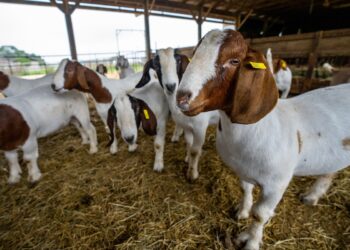
This is very important, especially for young animals such as calves, kids, and lambs that spend a lot of time or in some cases, a whole day in the kraal without any shelter.
In hot environments or when animals forage during the hot hours of the day, the water demand or intake increases. Thus, animals should have daily access to clean, cool and sufficient water. Water has
the direct role of quenching the thirst, supporting the digestion process, and plays an essential role as a coolant, particularly through the sweating mechanism.
In addition, it is important that the animals be transported during the cooler hours of the day, and to have stopovers along the way for them to rest or even drink water especially when trekking or transporting on hoof.
The transporting vehicle should also be well covered to provide sufficient shade and ventilation at the same time. It is also advisable to execute routine husbandry practices such as vaccination or branding during the cooler hours or early morning.
If animals must adapt to new environments, they will have a lot to change in response, for example, foraging habits, respiration rate, and water intake, amongst others.
A farmer should adjust their management regime to respond to the animals’ demands and the environmental conditions to ensure adaptation and optimal performance.
Impact of heat on soil and plants
Soils lose water through two processes, namely, evaporation where water is lost directly from the soil to the atmosphere, and secondly through plant transpiration, where plants suck out water through their roots.
The intensity with which the soil loses moisture is influenced by soil type, soil cover, and environmental temperatures, among others.
The heatwaves or high temperatures that are expected with the El Niño event will be detrimental to soils, plants, livestock, and livelihoods.
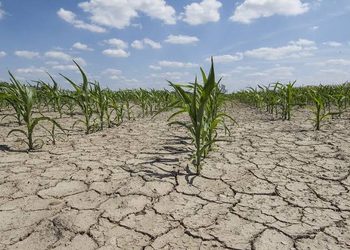
Soils may heat up intensely (higher soil temperatures), which may result in soil desiccation, rendering it unbearable for plant growth and survival.
This is because the extreme high soil temperature will negatively affect soil health, as soil microorganisms, organic matter,seeds and plants will burn or be destroyed by the heat.
Further, the type of soil and its characteristics influence the intensity with which the soil heats up. The main soil types are sand, loam, clay and silt.
For example, sandy soils have lower water retention capacity and heat up much more than clay soils, which have a higher water retention capacity.
Therefore, clay soils are much cooler than sandy soils. However, besides the soil type, soil cover also plays a major role in soil temperature regulation, for example, bare soils are highly exposed to sunburn and prone to desiccation compared to covered soils.
Therefore, any bare or uncovered soil type can heat up intensely or be exposed to high environmental temperatures.
This is where overgrazing and excessive land clearing are dangerous. It is therefore important to manage soil cover by accumulating plant litter materials or mulch on the soil, and to allow dense grass cover where possible.
Plant survival depends on the soil conditions including nutrient availability, organic matter, moisture, pH, as well as sunlight for photosynthesis.
Plants require water for nutrient transportation and respiration, and need to survive under optimal environmentaltemperatures. The availability of water to the plant is influenced by the soil moisture content and the environmental temperature.
The higher the environmental temperature, the higher the water demand. On the other hand, the higher the environmental temperature, the higher the rate of evaporation.
The heat impact on soil will in turn affect both crops and forage plants. However, forage plants, especially woody plants, are deep-rooted or have an extensive root system to extract moisture from deeper soil layers and can withstand the impact to a certain extent.
Whereas shallow-rooted herbaceous plants such as grasses and forbs are more vulnerable to heat stress.
Thus, seed germination or grass growth will be inhibited, ultimately leading to poor rangeland productivity or poor grazing conditions, compromising livestock performance and survival.
Crops are highly vulnerable to heat stress, especially in areas with extremely high temperatures and dehydrated soils.
Crop yield in dryland production systems may be poor or lower than in irrigated production systems. However, the water demand and costs will be much higher for irrigated crops.
The impact of heat can be lessened by implementing some sustainable soil and water conservation measures.
This starts with planting drought-resistant crop varieties, the use of drip irrigation, shade netting, application of mulch materials around the crop to minimize evaporation, the application of compost to improve soil structure and field capacity or soil water retention capacity, as well as proper drainage.
In conclusion, farmers need to prepare in advance to withstand the effects of drought and heat stress by improving water harvesting, storage and conservative use, and improving farm infrastructure to protect livestock and crops from excessive heat exposure.
* Erastus Ngaruka Technical Advisor- Livestock & Rangeland Management