Namibia needs an additional 3,600 productive dairy cows to close an annual milk supply deficit of approximately 13.3 million litres, as domestic production continues to fall short of national demand, Agriculture, Fisheries, Water and Land Reform Minister Inge Zaamwani has revealed.
Zaamwani told Parliament that Namibia produced 17.2 million litres of milk in 2025, meeting only 56% of annual demand, which exceeds 30 million litres, with the shortfall largely covered by imports from South Africa.
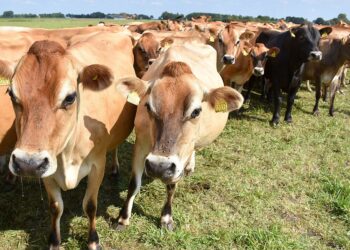
Responding to Question 323 raised by Popular Democratic Movement (PDM) parliamentarian McHenry Venaani, the minister said the country’s dairy industry is heavily concentrated in a single operational institution, which maintains a herd of approximately 4,000 dairy cows.
She said domestic milk production reached 6.04 million litres between January and May 2026, but significant investment in additional livestock and production infrastructure is required to achieve self-sufficiency.
“Based on an average annual yield of approximately 5,000 litres per dairy cow under Namibian production conditions, the Ministry estimates that closing this gap would require approximately 3,600 additional productive dairy cows, bringing the national herd to approximately 7,600 head required for full self-sufficiency,” Zaamwani said.
However, she warned that efforts to expand the national dairy herd face significant challenges, including restrictions on livestock imports linked to foot-and-mouth disease (FMD) outbreaks in neighbouring countries.
Under Namibia’s veterinary import requirements, dairy cattle must originate from countries with equivalent animal health standards and be certified free from FMD, bovine brucellosis, bovine tuberculosis and enzootic bovine leukosis.
Imported animals must also undergo pre-export testing, carry recognised veterinary health certificates and complete mandatory quarantine upon arrival.
Beyond livestock availability, Zaamwani identified high feed costs as one of the biggest obstacles to expanding local milk production, with feed accounting for between 60% and 70% of total dairy production expenses.
She said Namibia’s arid climate and recurring droughts have limited local fodder production, forcing dairy farmers to depend on expensive imported feed.
The minister further revealed that all 10 small-scale dairy farms operating in Namibia in 2022 had ceased operations during 2023 and 2024, largely due to recurring drought conditions and the economic impact of the COVID-19 pandemic.
To revive domestic production, the government introduced the Dairy Value Chain Development Scheme (DVCDS) during the 2025/26 financial year, providing subsidies ranging from 50% to 65% for production livestock, feed, veterinary medicines, transport, equipment and essential services.
The pilot programme targets 150 existing dairy producers in the Otjozondjupa, Omaheke, Hardap, Oshikoto and Zambezi regions, with producers in neighbouring regions also eligible for support through allocated regional budgets.
Zaamwani said the Ministry was also exploring concessional financing arrangements through the Agricultural Bank of Namibia, in collaboration with the Ministry of Finance and Public Enterprises.
The proposed financing measures include reduced interest rates for dairy cattle purchases, construction of milking facilities and acquisition of feed and refrigeration equipment.
The government is also considering cooperative financing arrangements and targeted feed and electricity subsidies to reduce production costs.
Meanwhile, Zaamwani revealed that Namibia faces a poultry meat supply deficit of 4.79 million kilograms annually, despite achieving self-sufficiency in table egg production.
Domestic poultry meat production reached 35.04 million kilograms in 2025 against estimated demand of 39.83 million kilograms, with the shortfall met through imports from South Africa.
The country also supplied 113.97 million eggs to the formal market during the year.
The minister said Namibia would need to produce an additional 2.66 million broilers annually to eliminate its poultry meat deficit, based on average annual per capita consumption of 13.17 kilograms.
“The Ministry acknowledges that closing this gap will require not only an increase in bird numbers but also concurrent investment in day-old chick supply, feed manufacturing, veterinary biosecurity systems, processing capacity, and cold chain logistics, all of which currently constrain the sector’s ability to scale up,” Zaamwani said.
She said poultry meat imports from South Africa are regulated under Government Notice 54 of 2020, with the Livestock and Livestock Products Board of Namibia administering the import permit system since April 2026.
To increase local poultry production, the government introduced the Poultry Value Chain Development Scheme (PVCDS) for the 2025/26 financial year under the Harambee Comprehensively and Coordinated Integrated Agricultural Development Programme.
The scheme provides subsidies of between 50% and 65% for production stock, feed, veterinary medicines, equipment and materials, targeting 2,000 small-scale poultry producers across all 14 regions.
Eligible beneficiaries include communal farmers, resettled farmers, Affirmative Action Loan Scheme beneficiaries and peri-urban and urban producers.
Zaamwani said the Ministry was also strengthening agricultural extension services to support farmers in flock management, feed formulation, disease prevention, vaccination and record keeping.
Meanwhile, the Livestock and Livestock Products Board has commissioned an independent study covering Namibia’s poultry, dairy and pork value chains to identify production bottlenecks and recommend measures to expand domestic output.
The findings are expected to guide government interventions aimed at improving production capacity, strengthening local processing and reducing Namibia’s dependence on imported animal products.