
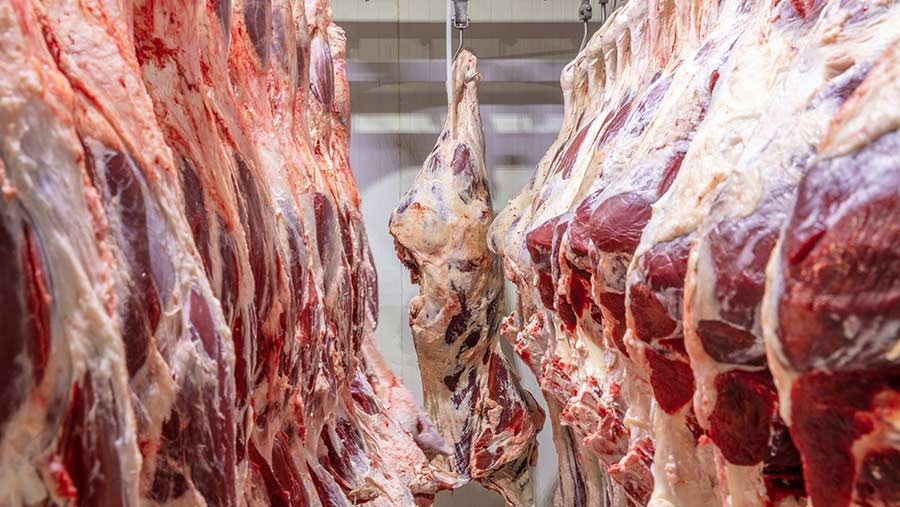
Producer prices in Namibia’s meat processing industry increased by 17.6% year-on-year in the third quarter of 2026, as higher prices across several manufacturing industries contributed to a 14.7% rise in the country’s overall Producer Price Index (PPI).
According to the Namibia Statistics Agency (NSA), meat processing was among the manufacturing sub-industries recording significant annual price increases, with rubber and plastic products registering the largest rise at 53.2%.
Diamond cutting and polishing producer prices increased by 16.3%, followed by other non-metallic mineral products at 14.9% and grain mill products at 11.6%.
The increases contributed to an 18.2% annual rise in manufacturing producer prices, making the sector the main driver of Namibia’s overall producer price increase during the quarter.
The NSA warned that sustained increases in producer prices could eventually translate into higher consumer prices, adding to inflationary pressures.
On a quarterly basis, manufacturing producer prices increased by 1.8% between July and September 2026, compared with a 1.3% increase in the overall producer price index.
“Manufacturing recorded increases across several sub-industries during the quarter. Diamond cutting and polishing prices increased by 11%, dairy products by 4.9% and grain mill products by 2.3% quarter-on-quarter,” the NSA said.
Meanwhile, mining and quarrying producer prices increased by 10% year-on-year, contributing to the overall annual rise despite a 0.4% quarterly decline in the sector.
Electricity generation, transmission and distribution producer prices increased by 1.7% quarter-on-quarter but declined by 5.1% compared with the corresponding period in 2025.
Water collection, treatment and supply recorded a 0.4% quarterly increase and a 0.4% annual decline, with the index reaching 100.4 points in the third quarter, compared with 100.1 points in the preceding quarter.
The NSA said producer prices had remained relatively stable between the first quarter of 2020 and the second quarter of 2025 before experiencing a pronounced increase in the third quarter of 2025.
Quarterly increases continued through the third quarter of 2026, although the annual rate of producer price inflation moderated during the latest reporting period.
The agency also disclosed that it had revised its historical producer price index series following the introduction of a Python-based calculation system.
The revisions cover the period from 2015 to the first quarter of 2026 and reflect a change in the methodology used to estimate missing price observations.
The previous Microsoft Excel-based system used the class mean method, while the new system applies a weighted average approach.
The NSA said the revised methodology would improve the accuracy and reliability of the index and that it intends to expand the publication to cover additional industries as more data becomes available.