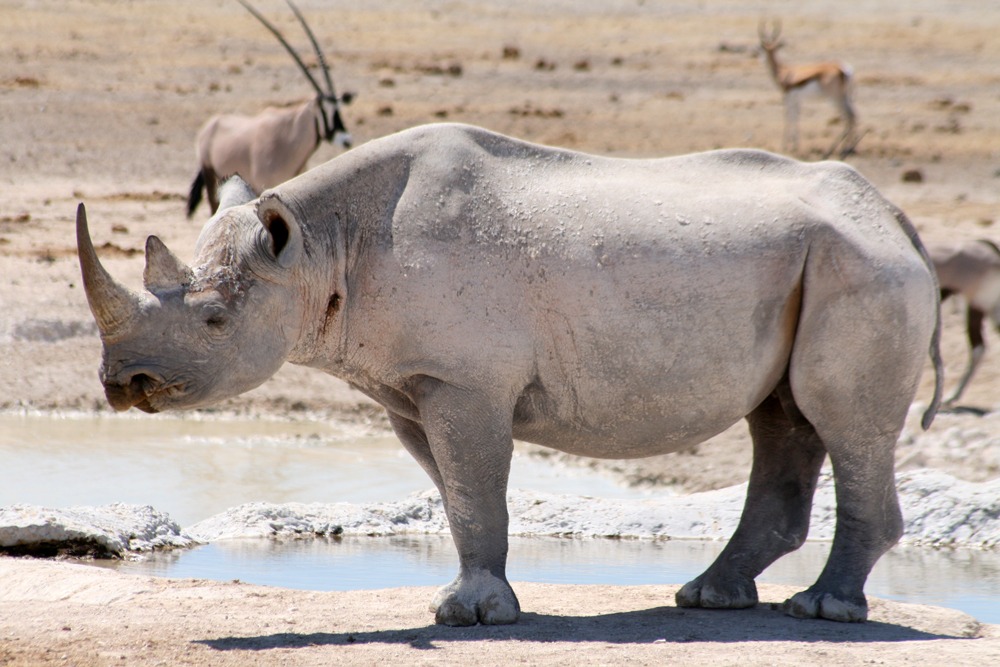
Namibia has recorded 24 rhinos poached so far in 2026, as wildlife crime continues to pose a threat despite a significant decline in rhino poaching last year.
Minister of Environment, Forestry and Tourism Indileni Daniel said the latest figures show that the threat remains active, although anti-poaching interventions are producing results.
Namibia recorded 43 rhinos poached in 2025, down from 91 in 2024, marking the lowest number recorded in more than a decade.
“Yet, our concerted efforts are bearing fruit. Our findings show that wildlife crime is declining. Notably, Namibia achieved a historic conservation milestone in 2025 by having recorded 43 rhinos poached, compared to the 91 recorded in 2024. This marks our lowest poaching levels in over a decade,” Daniel said.
“Thus far, figures from 2026 show us that the threat remains active, with 24 rhinos poached to date. Nonetheless, this is proving that our strategies are working.”
Speaking at the Third National Stakeholder Forum on Wildlife and Environmental Protection in Windhoek on Monday, Daniel also warned that illegal plant trafficking is emerging as a lucrative criminal enterprise in Namibia.
She said the country needs to strengthen efforts to combat environmental crimes, including the illegal trade in plants and forestry resources.
Daniel warned that wildlife and environmental crimes threaten Namibia’s natural resources, economy and livelihoods while placing additional pressure on government, the private sector and international partners to fund enforcement and conservation efforts.
“We must be entirely honest with ourselves about the real cost of these environmental crimes. When we lose our natural resources to criminal syndicates, we threaten our own capacity for survival,” she said.
“These crimes bleed our economy dry. They directly erode our tourism vitality and compromise the vast chain of cognate economic benefits that contribute so immensely to our Gross Domestic Product.”
Daniel said international cooperation remains critical because criminal syndicates continue to adapt their methods. She called for stronger cross-border cooperation and efforts to reduce international demand for illegally traded wildlife and plant products.
She said Namibia has strengthened legislation and penalties and established specialised structures, including the Wildlife Protection Services Division and the Environmental Crime Unit within the Office of the Prosecutor General.
Daniel said the Ministry of Justice and Labour Relations was also making progress towards finalising the long-awaited Wildlife and Protected Areas Management Bill, which is expected to further strengthen the country’s wildlife conservation and protection framework once enacted.
She urged stakeholders to translate discussions at the forum into concrete measures to combat wildlife and environmental crime and protect Namibia’s natural resources.