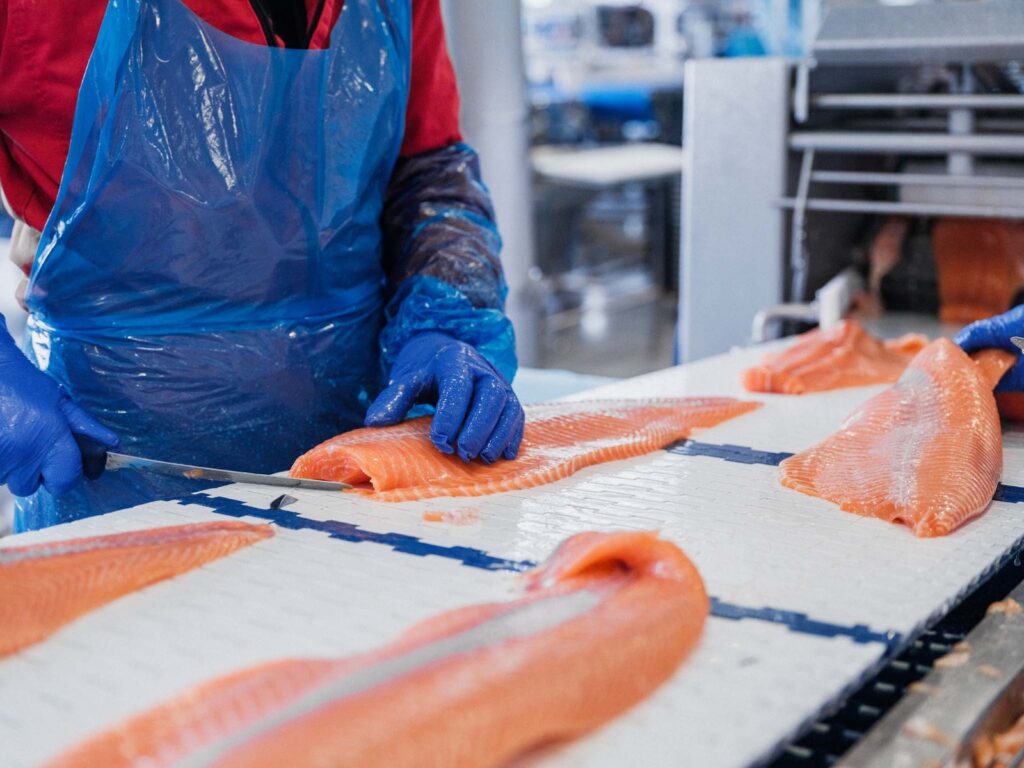
African Aquaculture Company (AAC) plans to enter into processing agreements with existing fish-processing operators in Lüderitz and Walvis Bay to handle production from its proposed 51,000-tonne Atlantic salmon farming operation near Lüderitz.
Rather than initially investing in its own processing facilities, AAC intends to focus on salmon farming and use Namibia’s existing fish-processing infrastructure, potentially creating additional throughput and business for local processors.
AAC Chairman Tobin Foss said the company is preparing processing agreements with local operators as it advances plans to establish commercial salmon farming at three licensed sites along the Namibian coast.
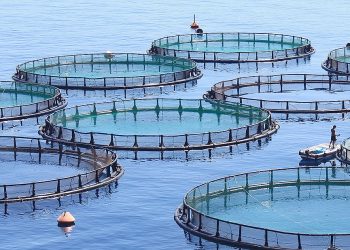
The company has secured licences for a combined production capacity of 51,000 tonnes of Atlantic salmon and believes the cold waters of the Benguela Current provide suitable conditions for commercial farming.
AAC has assessed waves, currents, algae, oxygen levels and seal risks at the proposed farming sites, supported by external experts with experience in Norway and the Faroe Islands.
“We have carefully measured waves, currents, the presence of algae, oxygen, seal risk, et cetera. And with modern equipment, compared with exposed locations in Norway and the Faroe Islands, it is our external experts’ opinion that reaching production of 51,000 tonnes is doable with a solid margin,” Foss said.
The planned use of existing processing facilities could integrate salmon farming into Namibia’s established seafood value chain and provide processors with a new source of raw material beyond traditional wild-capture fisheries.
Foss said the development could also create employment opportunities across both farming and processing if the project progresses to commercial production.
“It would be a profitable investment, providing tax revenues to Namibia, and it will, in a way, be a new economic province to the Namibian economy, as well as a substantial opportunity for additional employment in the farming and processing sectors,” he said.
Namibia’s Benguela Current is central to AAC’s plans, with its cold ocean temperatures considered suitable for Atlantic salmon farming.
Foss said Namibia’s political stability, rule of law and predictable investment environment also support the long-term investment required to establish a commercial salmon farming industry.
AAC is targeting growing international demand for farmed salmon as constraints on expanding wild fish catches increase the role of aquaculture in meeting global seafood demand.
Foss pointed to Chile and Tasmania as examples of regions outside the Atlantic salmon’s natural range that have successfully developed commercial salmon farming industries, with Chile now among the world’s largest producers.
AAC intends to lead the development of commercial Atlantic salmon farming in Namibia, with Foss expecting other investors to follow if the industry proves commercially successful.