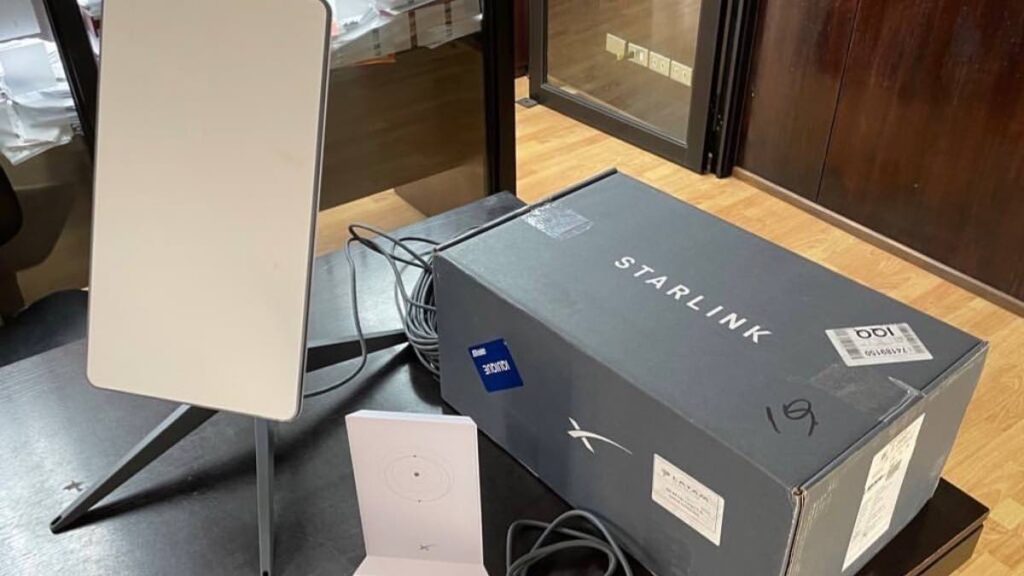
The Communications Regulatory Authority of Namibia (CRAN) has received 1,180 written public submissions on Starlink’s telecommunications and spectrum licence applications, with the majority supporting the satellite internet provider’s proposed entry into the Namibian market.
CRAN Executive for Communication and Consumer Relations Mufaro Nesongano said that, as at Friday, 12 December 2025, 1,164 submissions supported the application, while 16 opposed it. He said both supportive and opposing submissions included substantive issues that Starlink will be required to address as part of the evaluation process.
“The feedback reflects a broad range of views and illustrates the public’s active engagement and diverse perspectives regarding the potential implications of Starlink’s entry into Namibia’s telecommunications sector,” Nesongano said.
He said CRAN is consolidating all comments received and will share the compiled feedback with Starlink once the process is complete, after which the company will have 14 days to respond to the public concerns and viewpoints.
“Once completed, the Authority will share the consolidated comments with Starlink, providing the company with an opportunity to respond directly within a period of 14 days after receiving the comments,” Nesongano said.
CRAN expects to announce its decision on the licence application by the end of the first quarter of 2026.
“CRAN aims to announce its decision regarding the licence application by the end of the first quarter of 2026, ensuring a thorough review and public engagement throughout the process,” he said.
The update follows CRAN’s formal publication of Starlink’s telecommunications and spectrum licence applications, submitted by Starlink Internet Services Namibia (Pty) Ltd in June 2024. The applications were gazetted in Government Gazette No. 8795 on 28 November 2025, triggering the mandatory public consultation period.
Starlink has applied for a Class Comprehensive Telecommunications Service Licence, which would allow it to provide low-earth orbit satellite broadband services nationwide. The accompanying spectrum licence application seeks access to frequencies in the 10.7–14.7 GHz range to support fixed-satellite services for both business and residential users.
CRAN has already received the outcome of the required ownership exemption from the Minister of Information and Communication Technology and will now assess the full licence applications against the criteria set out in section 39 of the Communications Act, including ownership structure, technical and financial capability, service neutrality and confidentiality, and considerations relating to national defence, public security and fair competition.
Paratus Group entered into an agreement in 2023 to act as distributor for Starlink’s high-speed satellite services across Africa. The agreement will allow Paratus to offer Starlink services in African markets as operating licences are granted in individual jurisdictions.
SpaceX Vice President and Head of Starlink Global Subsidiaries Lauren Dreyer has said the company has established a local presence and is ready to meet all regulatory requirements in Namibia.