The United States has committed more than N$310 million over the past decade to strengthen Namibia’s wildlife conservation and law enforcement capabilities, targeting transnational criminal networks linked to rhino poaching and the illegal wildlife trade.
US Ambassador to Namibia John Giordano said enforcement efforts need to extend beyond arresting individual poachers to dismantling the trafficking networks, financial structures and overseas markets that make wildlife crime profitable.
“Rhinos are not being slaughtered simply because poachers happen upon them. They are being killed because transnational criminal organizations can make enormous amounts of money supplying illegal overseas markets,” Giordano said.
“If we want to stop the killing, law enforcement must disrupt the entire criminal enterprise, from the poacher on the ground to the trafficker moving the horn across borders to the networks and markets financing the crime.”
Giordano made the remarks during a three-day field mission to wildlife protection, investigation and prosecution facilities across Namibia.
According to the US Embassy, Namibia recorded its lowest level of rhino poaching in more than a decade in 2025, while rhino-related arrests reached their highest level in five years.
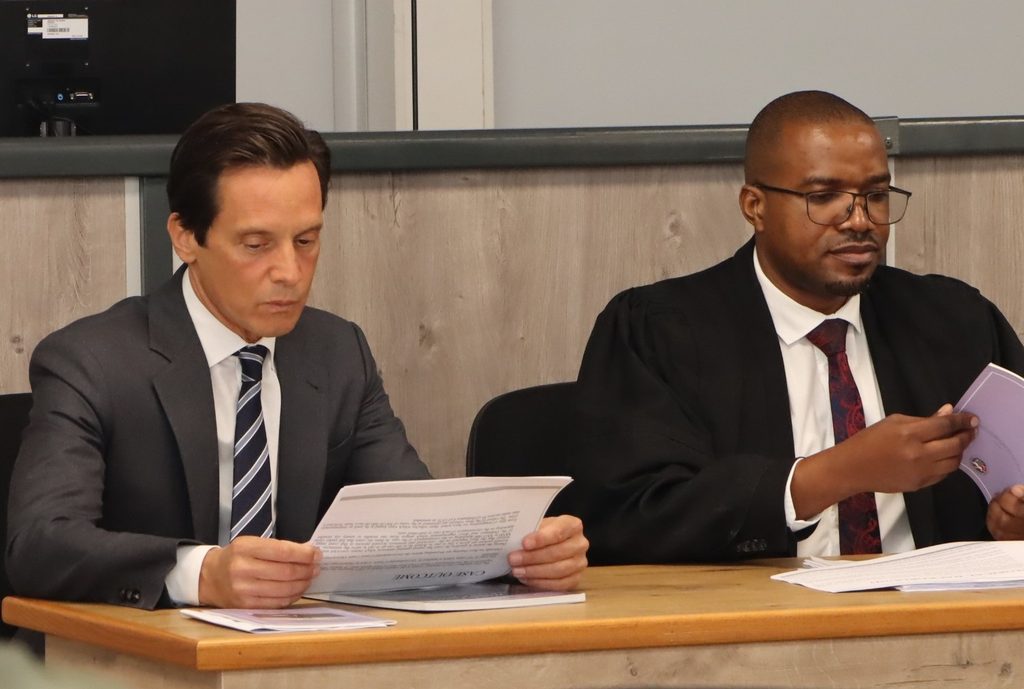
The US has also provided more than N$2.6 million through the Department of State’s Bureau of International Narcotics and Law Enforcement Affairs to establish the Environmental Crimes Court in Otjiwarongo.
The embassy said the facility is Namibia’s first dedicated environmental crimes court and only the second of its kind in Africa. It recorded a 94% conviction rate during its first two years of operation.
Giordano visited the court and met Magistrate Billy Lutaka and officials responsible for investigating and prosecuting environmental crimes.
“The message should be unmistakable: Namibia’s wildlife is not for sale to transnational criminal organizations,” Giordano said.
“As a federal prosecutor, I learned that criminal enterprises survive when the profits outweigh the risks. Effective investigation, aggressive prosecution, and international cooperation change that calculation.”
Giordano also visited Etosha National Park, where he joined Ministry of Environment, Forestry and Tourism rangers and veterinary professionals involved in rhino protection operations.
He said wildlife crimes committed in Namibia are linked to international trafficking networks and demand in overseas markets.
“What happens to these animals in Namibia is connected directly to organized crime and illegal demand thousands of miles away. A rhino killed in Africa can generate profits through an international chain of traffickers, smugglers, middlemen, and buyers,” he said.
According to the US Embassy, wildlife trafficking generates billions of dollars globally and often uses the same routes, financial systems and criminal networks involved in trafficking narcotics, weapons and people.
Giordano also visited the Cheetah Conservation Fund near Otjiwarongo, which employs more than 160 Namibians, to observe its conservation and research activities.
The United States said it would continue supporting Namibia in strengthening investigations, prosecutions, border enforcement and international cooperation against wildlife trafficking.
“The objective cannot simply be to catch the person holding the weapon. Law enforcement must identify the traffickers, follow the money, and dismantle the networks and illegal markets that make these crimes profitable,” Giordano said.