Friday, November 20, 2026
Subscribe
The Brief | Namibia's Leading Business & Financial News
  • Home
  • Companies
    • Finance
    • Agriculture
    • Technology
    • Property
    • Trade
    • Tourism
  • Business & Economy
  • E-PAPERreader
  • Mining & Energy
  • Opinions
    • Analysis
    • Columnists
  • Africa
No Result
View All Result
The Brief | Namibia's Leading Business & Financial News
Subscribe
No Result
View All Result
Home Latest

Namibia targets 18% manufacturing contribution to GDP by 2030

by reporter
November 20, 2026
in Latest
5
A A
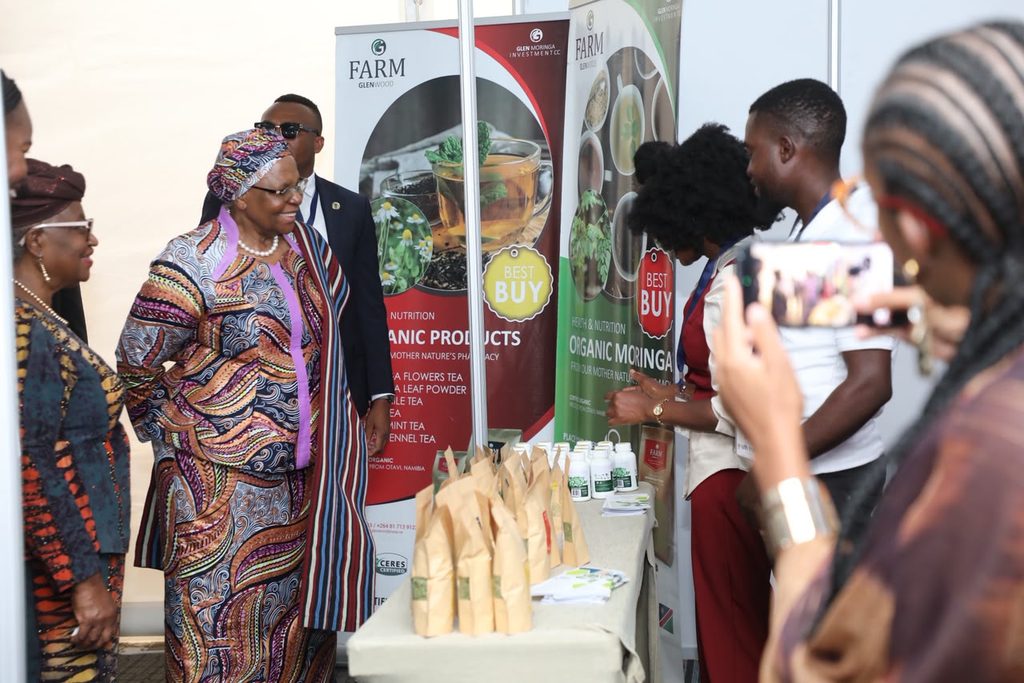
Group of people at a trade show booth discussing organic moringa products, with a table of brown paper bags on display.

Namibia is targeting an increase in manufacturing’s contribution to gross domestic product (GDP) from 10.6% to 18% by 2030 as the government pushes for greater local processing of minerals and other natural resources to reduce dependence on raw material exports.

President Netumbo Nandi-Ndaitwah said achieving the target would require increased investment in domestic production, value addition and the participation of young entrepreneurs across key economic sectors.

Speaking at the inaugural National Youth Trade Forum, Nandi-Ndaitwah urged young entrepreneurs to pursue opportunities in mining, energy, agriculture and fisheries through processing, packaging and manufacturing.

“Namibia’s economic enablers should not be reserved for established businesses and large investors, but should create opportunities for young entrepreneurs to participate across the value chain,” she said.

The manufacturing target forms part of the Sixth National Development Plan (NDP6), which seeks to expand Namibia’s industrial capacity, strengthen small and medium enterprises (SMEs) and increase domestic production.

Namibia has an estimated 40,000 SMEs, which collectively contribute approximately 12% to GDP and provide livelihoods for more than 200,000 people.

However, Nandi-Ndaitwah said many businesses with the potential to access larger markets remain constrained by limited working capital, inadequate production equipment and a lack of investment partners.

She said other businesses face difficulties accessing export markets because of limited knowledge of trade procedures, product standards and certification requirements.

The President called for greater local processing of minerals, fish, beef and horticultural products to ensure Namibia derives more economic value from its natural resources.

“The country that only exports raw materials will always import finished products and have a high unemployment rate,” she said.

Nandi-Ndaitwah also highlighted the N$42 billion Dangote Namibia Tank Farm and Regional Pipeline Project as a major investment expected to create opportunities for local businesses in construction, engineering, logistics, equipment maintenance and the supply of goods and services.

She urged young entrepreneurs to develop the necessary technical capacity, establish partnerships and understand procurement requirements to compete for subcontracting opportunities arising from large-scale investments.

The government has also established the National Youth Development Fund, initially capitalised with N$257 million and supported by a further N$165 million in mobilised funding, to provide financing to young entrepreneurs without collateral requirements.

Nandi-Ndaitwah said expanding manufacturing would also require Namibian businesses to access larger regional and continental markets.

“Namibia’s participation in the African Continental Free Trade Area provides access to more than 1.3 billion people, creating opportunities for locally processed and manufactured products to reach continental consumers,” she said.

Namibia launched its first export consignment under the African Continental Free Trade Area (AfCFTA) in 2025 and is implementing its national strategy to facilitate trade under the agreement.

The government aims to use increased industrial production, regional trade and local value addition to strengthen economic diversification and create employment opportunities, particularly for young Namibians.

author avatar
reporter
See Full Bio
Previous Post

GIPF earns N$208m from N$280m infrastructure investment

Next Post

DBN awards six businesses for driving job creation and innovation

Must Read

A man in a black shirt speaks at a clear podium on stage, with a microphone and a decorative flower arrangement to the side.
Finance

DBN approves N$76.7m for 206 youth-owned businesses

November 20, 2026
Six people on a stage posing for a photo: two women on the left, four men center-right; one holds a framed certificate, another a large ceremonial check and a rock-like trophy sits between them; backdrop with stage lights.
Latest

DBN awards six businesses for driving job creation and innovation

November 20, 2026
Exterior of a deli shop with a bold red 'hartlief' sign and gold '-DELICATESSEN-' lettering on a dark facade.
Latest

Hartlief targets South African market expansion

November 20, 2026
Gaming sector generates N$49.5m as government backs digital overhaul
Latest

Gambling Board suspends new betting licence applications amid surge in demand

November 19, 2026
Woman in a colorful traditional outfit standing at a wooden podium and speaking into a microphone, with flags in the background.
Latest

Namibia’s Youth Fund reaches N$422m, creates over 700 jobs

November 19, 2026
Group of ten professionals posing together at a networking event with banners for NamibRe, Santam, and Ashburton Investments in the background
Latest

Fifth Women in Finance and Insurance Summit set for 24 November

November 19, 2026
Load More

Related News

At first glance, Namibia’s Mid-Year Budget Review reads like a story of calm seas and steady hands

Balancing empathy with accountability

April 8, 2026
Two officials unveil a plaque on stage at a launch ceremony, with a woman in a green patterned outfit helping to remove the cloth.

NamWater, Swakop Uranium target July financial close for N$2.1bn desalination plant

June 25, 2026
Govt called to leverage PPPs to enhance infrastructure

Govt called to leverage PPPs to enhance infrastructure

July 9, 2024

Browse by Category

  • Africa
  • Agriculture
  • Analysis
  • Business & Economy
  • Columnists
  • Companies
  • e-edition
  • Finance
  • Finance
  • Fisheries
  • Green Hydrogen
  • Health
  • Investing
  • Latest
  • Market
  • Mining & Energy
  • Namibia
  • namibia
  • News
  • Opinions
  • Property
  • Retail
  • Technology
  • Tourism
  • Trade
The Brief | Namibia's Leading Business & Financial News

The Brief is Namibia's leading daily business, finance and economic news publication.

CATEGORIES

  • Business & Economy
  • Companies
    • Agriculture
    • Finance
    • Fisheries
    • Health
    • Property
    • Retail
    • Technology
    • Tourism
    • Trade
  • e-edition
  • Finance
  • Green Hydrogen
  • Investing
  • Latest
  • Market
  • Mining & Energy
  • namibia
  • News
    • Africa
    • Namibia
  • Opinions
    • Analysis
    • Columnists

CONTACT US

Cell: +264814612969

Email: newsdesk@thebrief.com.na

© 2026 The Brief | All Rights Reserved. Namibian Business News, Current Affairs, Analysis and Commentary

Welcome Back!

Login to your account below

Forgotten Password?

Retrieve your password

Please enter your username or email address to reset your password.

Log In
No Result
View All Result
  • Home
  • Companies
  • Mining & Energy
  • Business & Economy
  • Opinions
    • Analysis
    • Columnists
  • Africa

© 2026 The Brief | All Rights Reserved. Namibian Business News, Current Affairs, Analysis and Commentary

This website uses cookies. By continuing to use this website you are giving consent to cookies being used. Visit our Privacy and Cookie Policy.