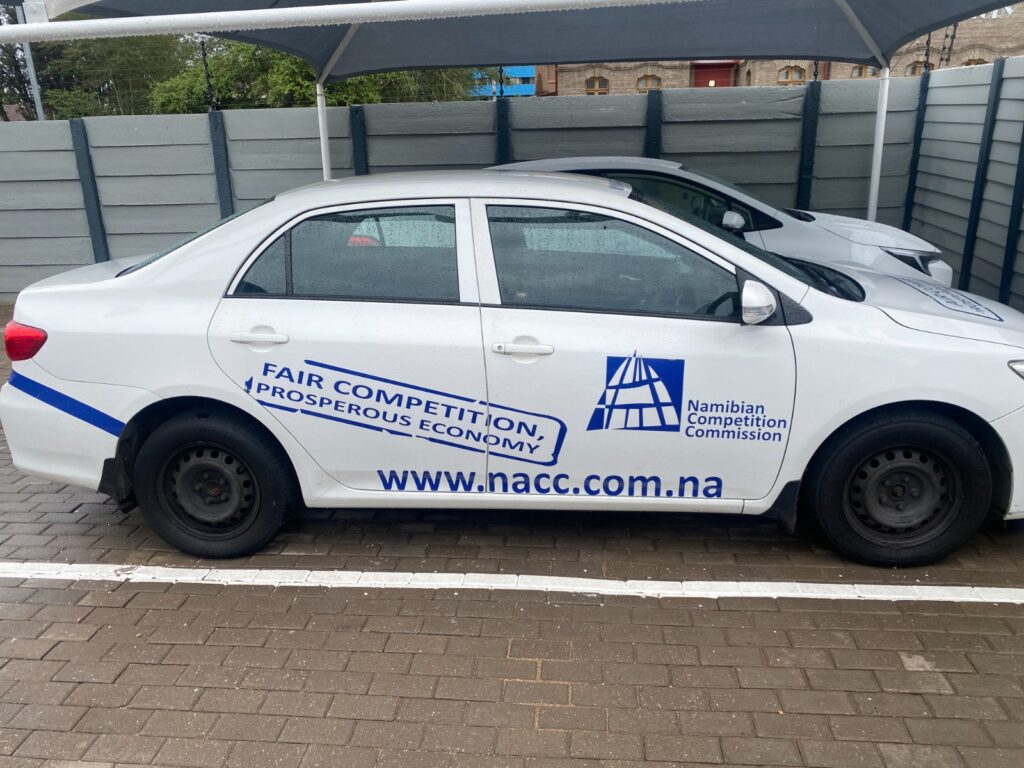
The Namibian Competition Commission (NaCC) has cleared 10 fishing companies of allegations of anti-competitive conduct after separate investigations found no evidence of collusion or abuse of market dominance in the setting of horse mackerel quota usage fees.
The investigations examined whether major fishing operators had colluded to fix quota usage fees or abused their market position by offering unfairly low prices to fishing rights holders without vessels.
In the first investigation, launched in November 2023, the Commission examined allegations that Erongo Marine Enterprises (Pty) Ltd, Namsov Fishing Enterprises (Pty) Ltd, Venmar Fishing (Pty) Ltd and Princess Brand Processing had coordinated the pricing of horse mackerel quota usage fees.
The NaCC concluded there was no evidence of collusion, coordination or any concerted practice in determining the fees.
“There was no evidence of collusion, coordination, or concerted practice in the fixing of Horse Mackerel quota usage fees. Quota usage fees offered to rights holders are not uniform and are determined using different methodologies, each informed by factors relevant to the operators’ unique operations and access to quotas,” said NaCC Corporate Communications Practitioner Dina //Gowases.
A second investigation, initiated in July 2024, focused on whether 10 operators had abused a dominant market position by offering unfairly low quota usage fees to rights holders without fishing vessels.
The investigation covered Erongo Marine Enterprises, Namsov Fishing Enterprises, Venmar Fishing, Seaflower Pelagic Processing, Cavema Fishing, Scombrus Fishing, Gendev Fishing Group, Hadago Fishing, Carapau Fishing and Etosha Fishing Corporation.
Although the Commission found that the companies possessed a degree of market power in the relevant market, it concluded there was insufficient evidence that they had abused that position.
According to the NaCC, quota usage fees are negotiated on commercial terms, with the government’s Objective Fish Quota reserve price serving as the minimum non-negotiable benchmark.
“Quota usage fees are determined or negotiated on commercial terms, with the Governmental Objective Fish Quota reserve price being a non-negotiable minimum price set by Government to meet specific socio-economic objectives. While the respondents were found to hold a degree of market power or dominance in the relevant market, no evidence was found of an abuse of that dominant position,” //Gowases said.
The Commission also found that fishing rights holders without vessels have several commercial options for utilising their quotas, including purchasing or chartering vessels, entering into catching agreements or negotiating quota usage agreements.
Its investigation showed that rights holders were able to negotiate a range of commercial arrangements, including profit-sharing agreements, by-catch entitlements and quota usage fees above the government’s reserve price.
The NaCC concluded that neither investigation found any contravention of the Competition Act and formally closed both cases against the companies involved.