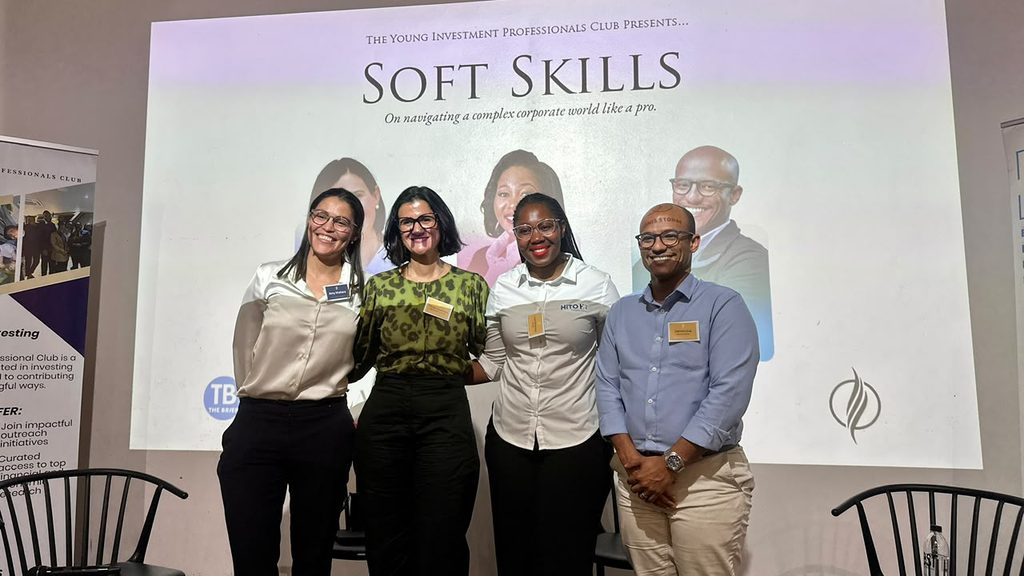
Technical skills alone are no longer enough to drive career growth, with young professionals increasingly needing communication, emotional intelligence, listening and adaptability to perform and progress in the workplace, industry professionals have said.
Speaking at a Young Investment Professionals Club event focused on soft skills, industry professionals said technical expertise may help young people enter the workplace, but their ability to communicate, manage relationships and adapt to changing demands can influence how far they progress in their careers.
HitoHR Managing Partner Lisa Matomola said communication has become increasingly important as employees are expected to collaborate, contribute ideas and work across teams.
She said effective communication extends beyond speaking confidently and requires professionals to listen, explain ideas clearly, negotiate and adapt their messages to different audiences.
Matomola said confidence should be built on knowledge and skills rather than being associated with being loud or aggressive.
She said professionals should be able to communicate calmly and clearly when providing feedback, presenting ideas or dealing with people at different levels of an organisation.
Shelah Transformation founder Priscilla Hasselmann said emotional intelligence was equally important in determining how professionals deal with workplace situations, particularly under pressure.
She identified self-awareness as a critical leadership skill, requiring professionals to understand their own emotions and recognise how their behaviour affects colleagues.
Hasselmann said frustration, defensiveness and anger can influence how people react in high-pressure situations, while emotional intelligence allows professionals to pause and choose a more constructive response.
“The ability to respond intentionally rather than react instinctively can strengthen both leadership and professional relationships,” Hasselmann said.
Simonis Storm Securities Client Associate Sameer Issa said listening, explaining information simply and managing expectations honestly were critical when dealing with clients.
He said professionals should seek to understand the underlying concern behind a client’s question before immediately offering a technical solution.
“Effective listening goes beyond hearing a client’s words. Often, a request may be driven by fear, uncertainty or a lack of understanding, meaning that technical information alone may not address the real concern,” Issa said.
He said his experience in financial services had shown that technical explanations and performance charts did not always reassure clients, with listening and explaining information in simpler terms often proving more effective.
The speakers also identified adaptability as an increasingly important skill as technology, workplace expectations and ways of working continue to change.
They said professionals should be prepared to continuously learn, adjust and collaborate rather than depend only on the technical skills with which they entered their careers.
The discussion highlighted that soft skills should not be treated as secondary to technical competence because they influence how effectively professionals apply their knowledge and interact with colleagues and clients.
The Young Investment Professionals Club event brought together industry representatives and young professionals to discuss workplace competencies and career development beyond technical expertise.