Only about 20% of Namibia’s more than 100,000 civil servants are benefiting from the government’s housing subsidy, with high land prices, affordability constraints and limited access to finance continuing to lock thousands out of the property market, the Government Institutions Pension Fund (GIPF) has said.
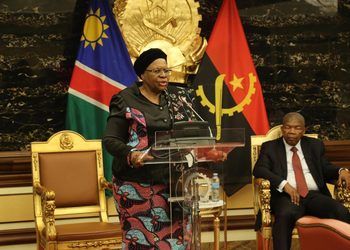
The figures were disclosed by GIPF Executive for Corporate Communications and Stakeholder Engagement Edwin Tjiramba during a presentation on the Pension-Backed Home Loan Scheme at the Africa Public Service Day commemorations in Swakopmund.
Tjiramba said the low uptake reflects broader structural challenges in Namibia’s housing sector, particularly the high cost of serviced land.
“Out of more than a hundred thousand civil servants, only 20% are benefiting from the housing subsidy. We can say our local authorities are not making land affordable. Land is expensive. Affordability is a big issue,” he said.
To improve housing access, GIPF has invested more than N$235 million since 2011 to service over 5,000 residential plots across the country.
The fund has also invested more than N$778 million to construct over 8,000 houses in Walvis Bay, Ongwediva, Oshakati, Keetmanshoop and Gobabis.
Tjiramba said GIPF had previously allocated N$1.5 billion to its traditional mortgage-backed housing scheme before introducing the Pension-Backed Home Loan Scheme, which allows members to borrow against their pension benefits instead of using the property as collateral.
Under the scheme, members can access loans of up to 33% of their withdrawal or transfer benefit to buy or build homes, purchase land, renovate properties, refinance existing mortgages and cover transfer costs.
The loans are offered at the Bank of Namibia repo rate plus 2.5 percentage points, currently 9.25%, below commercial mortgage rates of between 11% and 11.25%.
GIPF has also expanded the facility to finance boreholes, water pipelines, storage tanks, solar systems and electricity connections after identifying inadequate access to basic services as a major obstacle to rural housing development.
Tjiramba said members in communal areas continue to face difficulties obtaining customary land rights certificates, while high household debt levels are reducing affordability and limiting access to housing finance.
He said GIPF is engaging the Ministry of Finance and the Office of the Prime Minister on possible debt consolidation measures to improve members’ ability to qualify for housing finance.
“The fund, together with the Ministry of Finance and our principals in the Office of the Prime Minister, will be looking at this issue, hopefully with a solution that will be a win-win. Because when we can have everybody being able to afford it, the take-off will be much greater,” he said.
According to Tjiramba, improving affordability would enable significantly more public servants to benefit from the Pension-Backed Home Loan Scheme, particularly employees with 10 to 15 years of service who still have sufficient time before retirement to utilise their accumulated pension benefits.