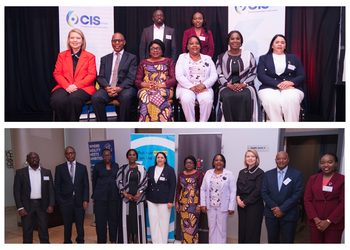
Namibia could unlock an estimated US$816 million (approximately N$14.6 billion) in unrealised export potential within Africa and nearly US$4 billion (about N$72 billion) globally by 2030 if it strengthens value addition, regional trade integration and industrial competitiveness, according to a newly launched AfCFTA-AIDA Country Impact Assessment Report.
The report, launched by the Namibian government in partnership with the African Union Development Agency (AUDA-NEPAD), the African Continental Free Trade Area (AfCFTA) Secretariat, the African Union Commission and the Japan International Cooperation Agency (JICA), identifies mining, fisheries, logistics and agro-processing as key sectors capable of driving future export growth.
Ministry of Works and Transport Executive Director Michael Humavindu said the assessment confirms that Namibia is well positioned to benefit from the AfCFTA and that the country’s greatest opportunity lies in extracting more value from sectors where it already has established strengths.
“The assessment estimates approximately US$816 million in unrealised export potential within Africa and nearly US$4 billion globally by 2030, concentrated in sectors where Namibia already possesses recognised strengths, including mining, fisheries and agro-processing,” Humavindu said.
He said the findings indicate that Namibia’s AfCFTA opportunity is not primarily about developing new products, but rather about increasing value addition and competitiveness in existing industries.
“Perhaps the most important finding of the assessment is that Namibia’s AfCFTA opportunity is not primarily about producing new products, but about capturing greater value from sectors where we already possess established capabilities and regional market linkages,” he said.
According to the report, the largest unrealised export opportunities within Africa are concentrated in fisheries and mineral products, including frozen fish, frozen mackerel, unworked diamonds, beer made from malt, live cattle and selected processed food products.
Globally, the greatest export opportunities are linked to unworked diamonds, semi-manufactured gold and uranium products.
Humavindu said the assessment highlights significant opportunities to deepen beneficiation in the mining sector, expand regional market access for fish products and strengthen manufacturing and agro-processing value chains.
He identified four priority areas for implementation: accelerating value addition and beneficiation in mining and fisheries, improving trade corridors and border efficiency, deepening trade system digitisation, and strengthening firm-level competitiveness through skills development and investment support.
National Planning Commission Director-General Ambassador Kaire Mbuende said the assessment provides a roadmap for advancing Namibia’s industrialisation and trade ambitions.
“The assessment confirms that Namibia is well positioned to benefit from the opportunities created by the AfCFTA and AIDA. Our priority now is to translate these findings into practical actions that strengthen value addition, improve competitiveness and expand Namibia’s participation in regional value chains,” Mbuende said.
He noted that Namibia is the first of five pilot countries, alongside Egypt, Ghana, Kenya and Seychelles, to launch its assessment report under the continental initiative aimed at strengthening implementation of the AfCFTA and advancing Africa’s industrialisation agenda.