Thursday, September 10, 2026
Subscribe
The Brief | Namibia's Leading Business & Financial News
  • Home
  • Companies
    • Finance
    • Agriculture
    • Technology
    • Property
    • Trade
    • Tourism
  • Business & Economy
  • E-PAPERreader
  • Mining & Energy
  • Opinions
    • Analysis
    • Columnists
  • Africa
No Result
View All Result
The Brief | Namibia's Leading Business & Financial News
  • Home
  • Companies
    • Finance
    • Agriculture
    • Technology
    • Property
    • Trade
    • Tourism
  • Business & Economy
  • E-PAPERreader
  • Mining & Energy
  • Opinions
    • Analysis
    • Columnists
  • Africa
No Result
View All Result
The Brief | Namibia's Leading Business & Financial News
Subscribe
No Result
View All Result
Home Companies Agriculture

The basic understanding of “livestock-environment-management” interaction

by editor
August 30, 2022
in Agriculture
5
A A

Livestock farming enterprise objectives are aimed at increasing and sustaining production, which in turn, exerts pressure on the animal’s physiological abilities to perform. These performance aspects include reproduction, health, feed conversion, and general adaptability amongst others.

The productivity of a livestock farm depends on three factors, namely, the environment, the animal, and the applied management regime. When these factors are separated at any time, the animal’s productive potential may noticeably be compromised to some degree.

Further, the role of each of these factors in determining productivity is influenced by various attributes highlighted below.

The animal factor

The productive ability of the animal is primarily influenced by its genetic make-up or overall, by its breed type. There are different livestock breeds with different structural and physiological abilities which in turn influence their performances in any given environment.

The different breeds of animals differ in their abilities to adapt to the environment, feed conversion, and disease resistance amongst others. In addition, personal preferences, and management abilities also influence the breed of choice. However, the main driver of performance is genetic-environmental interaction.

For example, sheep breeds such as the Damara and the Dorper carry different genetic attributes related to adaptability or weight gain that can be used as measures of performance given the production objectives and the environment.

The environmental factor

The production environment has a significant influence on the animal’s performance. This is primarily attributed to the climatic conditions such as temperature and rainfall, moreover the landscape or topographic features such as mountains and plains, and lastly the availability or quality of the resources such as forage and water. The animal’s performance and survival are dependent on its ability to withstand or adapt to changes in environmental conditions.

However, animals that are native to the environment perform well compared to the non-natives. Moreover, adaptability is both on spatial and temporal scales. As a result of genetic-environmental interaction, an animal may adjust or adapt to a new environment when exposed to it over time due its genetics being influenced to express adaptive traits.

It is also common that the productive potential of non-native animals is compromised, or in extreme cases, succumb to harsh environmental conditions. 

The management factor

A livestock management plan should be based on the production objectives and set targets. Thus, to achieve those, specific activities are expected to be performed. The management regime should be aimed at harmonizing the interaction of the animal’s genetics with its environment to ensure that the production objectives and targets are achieved. This includes practices such as health maintenance, feed and water provision, and general animal welfare (e.g.,shelter) to ensure that the animal performs optimally.

The farming objectives are also influenced by the market which also leads to the introduction of animal breeds

that would meet specific market demands, which in turn exerts pressure on the animal and the environment. For example, the demand for heavier

slaughter or carcass weights will demand animal breeds with such characteristics (large-framed breeds) which in turn will demand heavy feeding to maintain their production potential.

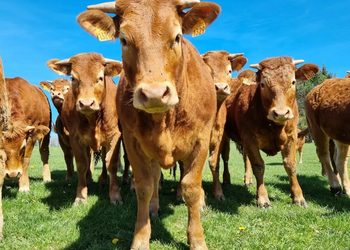
 On that, the environment or the grazing area is put under pressure to sustain heavy breeds as compared to lighter breeds, e.g., Limousine versus Nguni cattle.

 In conclusion, livestock selection is not an independent practice but should be driven by production objectives and targets, however, the ultimate choice should not compromise the animal’s potential, the environment, and the management abilities but ensure sustainable farm productivity.

*Erastus Ngaruka is a  Technical Advisor: Livestock & Rangeland with Agribank

author avatar
editor
See Full Bio
Previous Post

MTC targets inclusive smart economy drive

Next Post

Botswana beef imports suspended on suspected FMD outbreak

Must Read

Young corn plants growing in a cracked, dry field under a blue sky, showing drought stress.
Agriculture

Namibia faces agriculture, water and energy pressure as dry 2026/27 season looms

September 7, 2026
Workers in hard hats and gloves stretch a large gray fabric over a worktable in an industrial textile setting.
Agriculture

Meatco targets EU, Asian markets for Namibian leather

September 2, 2026
Namibia among countries seeing modest recovery in cereal output
Agriculture

Namibia’s 2026 cereal output forecast at 155,000 tonnes

September 1, 2026
Professional portrait of a smiling man in a dark suit and blue tie against a white background with glasses on.
Agriculture

LLPBN officially appoints Vehaka Tijimune as CEO

August 31, 2026
Namibia slaughtered over 14 million chickens by end of September
Agriculture

Namibia’s poultry output forecast to rise 13.8% to 3.81 million kg

August 28, 2026
Namibia’s beef exports plunge nearly 50% in Q2
Agriculture

Govt targets Q1 2027 reopening of Oshakati abattoir

August 25, 2026
Load More

Related News

Professional head-and-shoulders photo of a smiling man in a navy blazer and light blue shirt.

AI can save business leaders four hours a week, says V5 Digital

August 7, 2026
EXPLAINER | Why is the British pound in freefall?

EXPLAINER | Why is the British pound in freefall?

September 29, 2022
Govt to raise N$166m from fish auction

Govt to raise N$166m from fish auction

November 9, 2021

Browse by Category

  • Africa
  • Agriculture
  • Analysis
  • Business & Economy
  • Columnists
  • Companies
  • e-edition
  • Finance
  • Finance
  • Fisheries
  • Green Hydrogen
  • Health
  • Investing
  • Latest
  • Market
  • Mining & Energy
  • namibia
  • Namibia
  • News
  • Opinions
  • Property
  • Retail
  • Technology
  • Tourism
  • Trade
The Brief | Namibia's Leading Business & Financial News

The Brief is Namibia's leading daily business, finance and economic news publication.

CATEGORIES

  • Business & Economy
  • Companies
    • Agriculture
    • Finance
    • Fisheries
    • Health
    • Property
    • Retail
    • Technology
    • Tourism
    • Trade
  • e-edition
  • Finance
  • Green Hydrogen
  • Investing
  • Latest
  • Market
  • Mining & Energy
  • namibia
  • News
    • Africa
    • Namibia
  • Opinions
    • Analysis
    • Columnists

CONTACT US

Cell: +264814612969

Email: newsdesk@thebrief.com.na

© 2026 The Brief | All Rights Reserved. Namibian Business News, Current Affairs, Analysis and Commentary

Welcome Back!

Login to your account below

Forgotten Password?

Retrieve your password

Please enter your username or email address to reset your password.

Log In
No Result
View All Result
  • Home
  • Companies
  • Mining & Energy
  • Business & Economy
  • Opinions
    • Analysis
    • Columnists
  • Africa

© 2026 The Brief | All Rights Reserved. Namibian Business News, Current Affairs, Analysis and Commentary

This website uses cookies. By continuing to use this website you are giving consent to cookies being used. Visit our Privacy and Cookie Policy.