By Frieda Nangolo and Leena N. Shimpanda
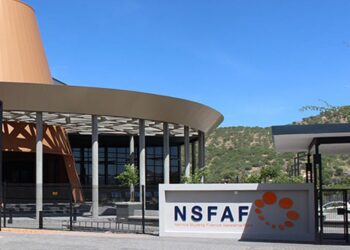
For thousands of Namibian students, support from the Namibia Students Financial Assistance Fund (NSFAF) is not merely financial aid, it is the difference between continuing their studies and abandoning their academic dreams.
When student allowances are delayed, the consequences extend far beyond inconvenience. Many students struggle to pay rent, buy food or even afford transportation to attend classes. NSFAF remains one of the most important mechanisms supporting access to higher education in Namibia.
The fund provides financial support to students enrolled at public institutions such as University of Namibia and Namibia University of Science and Technology.
In recent years, the government has taken a major step toward expanding access to higher education by introducing a subsidised tertiary education funding model beginning in 2026. Under this policy, tuition and registration fees for eligible students at public universities are covered by the state.
This reform forms part of a broader national investment in education. In the 2026/27 national budget, the government allocated approximately N$28 billion to the education sector, making it one of the largest areas of public spending.
Within this allocation, about N$2.8 billion is earmarked to support subsidised tertiary education, reflecting the state’s recognition that education is central to national development and social mobility.
While the subsidised model addresses tuition costs, student life involves far more than lecture halls and registration fees. Basic needs such as accommodation, food, transport and textbooks remain essential for academic success.
For many students, particularly those from low-income households, the non-tuition allowances provided through NSFAF are not simply additional support, they are essential for survival. Despite improvements in funding policies, many students still experience delays in receiving these allowances.
These delays are often linked to administrative processes, including the submission of registration data by institutions, verification procedures and coordination between universities and NSFAF. Although these challenges may appear technical on paper, their real-life consequences for students can be severe.
The most immediate impact is financial strain. Non-tuition allowances are intended to help students cover their basic living expenses during the academic year.
When payments are delayed for weeks or months, students may struggle to pay rent or secure daily meals. Some are forced to rely on friends for temporary accommodation or financial assistance simply to remain in school. Food insecurity is another concern.
Many students depend almost entirely on their allowances to purchase food. When payments are delayed, some skip meals or rely on the support of peers. Others attempt to find part-time work to make ends meet, often at the expense of their studies.
Students without strong family support systems are particularly vulnerable. In many cases, families assume that once a student receives NSFAF funding, all financial needs are covered. However, allowances rarely cover the full cost of living and studying.
When delays occur, students without alternative sources of support face significant hardship. Financial vulnerability can also expose students to unsafe or exploitative living conditions.
In desperate circumstances, some may tolerate poor housing arrangements or other inequitable situations simply to secure shelter or food. These realities are rarely discussed openly, yet they highlight the broader social implications of delayed financial support. Such pressures inevitably affect academic performance.
Mental health is another often overlooked issue. Persistent financial uncertainty can create anxiety, frustration and emotional stress. These challenges are not new.
Concerns about delays in student funding have been raised repeatedly over the years, including during student protests in 2017 that highlighted frustrations with the funding system. Similar concerns continue to emerge in public discussions and student forums today.
At the same time, it is important to acknowledge the scale of government investment in higher education. In 2025, NSFAF disbursed approximately N$3.1 billion to support more than 30,000 students across the country.
This level of investment demonstrates the government’s commitment to expanding access to tertiary education and supporting the development of Namibia’s future workforce. The introduction of subsidised tertiary education further strengthens this commitment.
By covering tuition and registration costs, the policy removes one of the most significant barriers to higher education. However, the success of this reform will depend not only on tuition support but also on the efficient and timely delivery of non-tuition allowances.
Ultimately, investment in education is an investment in Namibia’s future. When students receive financial support on time, they can focus on learning, developing skills and preparing to contribute meaningfully to the economy.
Ensuring that allowances are disbursed efficiently and predictably will help transform higher education from a daily struggle for survival into a genuine opportunity for academic success and national development.
*Frieda Nangolo is a second-year student at the University of Namibia studying towards a Bachelor of Education in Organizational Learning and Development.