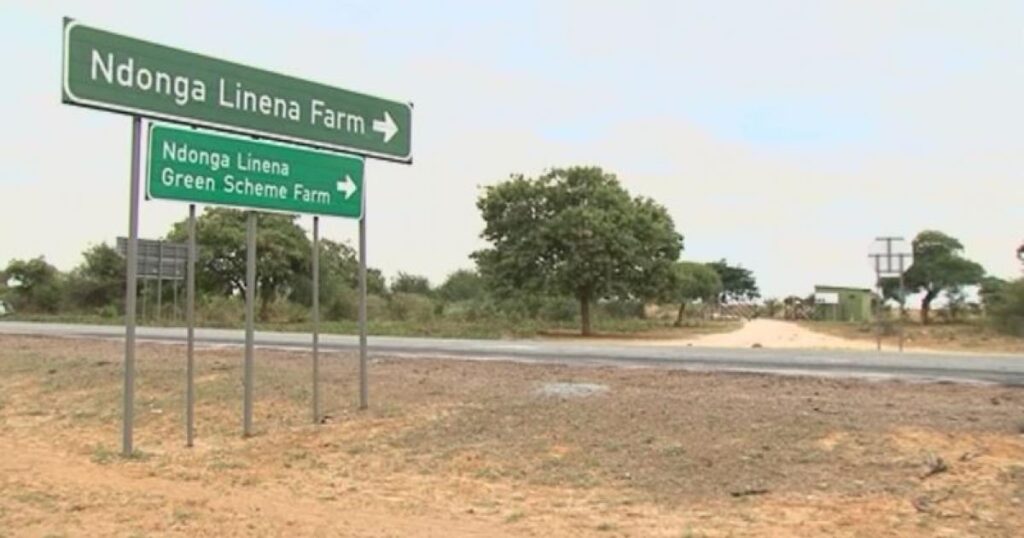
The Ndonga Linena Green Scheme in the Kavango East Region is positioning itself for one of its strongest seasons yet, with projected revenue of N$47.5 million for the 2025/26 agricultural year, driven by increased output and the adoption of modern farming technology.
Farm manager Janno Rentel told the Parliamentary Standing Committee on Natural Resources that the use of soil sensors, automated irrigation systems and advanced crop monitoring tools has enabled the scheme to track soil conditions and crop performance in real time.
He said this has improved water efficiency, increased yields and allowed for faster responses to production challenges.
Looking ahead to the 2025/26 season, Rentel said the scheme plans to plant 420 hectares of maize, targeting yields of nine tonnes per hectare. This is expected to produce about 3,780 tonnes of maize valued at N$26.08 million.
A further 420 hectares will be planted with wheat, with a target yield of six tonnes per hectare, translating into 2,520 tonnes worth N$21.42 million. Combined projected turnover for the season stands at N$47.5 million.
Rentel said the scheme recorded strong production results during the 2025 season. Commercial farmers planted 350 hectares of maize, with expected output of 2,600 tonnes valued at N$17.94 million. To date, 1,900 tonnes have been harvested, 500 tonnes placed in storage, and 750 tonnes remain in the field.
Small-scale farmers planted 150 hectares of maize, harvesting 627 tonnes, which were delivered to the Agro-Marketing and Trade Agency.
Winter cropping also performed well, with 110 hectares of wheat producing 660 tonnes valued at N$5.61 million. In addition, small-scale farmers are producing green maize, watermelons and butternuts, contributing to household incomes and local food security.
The scheme covers a total of 1,000 hectares, comprising 420 hectares under commercial farming, 80 hectares allocated to medium-scale farmers, and 174 hectares for small-scale producers.
Its core objectives include food security, farmer empowerment and sustainable agricultural production, with support from the Ministry of Agriculture.
However, small-scale farmers raised several concerns during the committee’s visit. These included electricity costs exceeding N$1 million per month, high input prices, limited market access and inadequate consultation with the Ministry.
Farmers also cited restrictive AgriBank loan conditions, delays in planting services and management challenges that have contributed to production losses.
The report said farmers called for subsidies, more affordable financing, improved consultation and greater investment in agro-processing to secure markets.
Despite these challenges, the scheme was described as technologically advanced, with modern irrigation systems, soil monitoring and structured training programmes that have improved yields and operational efficiency.