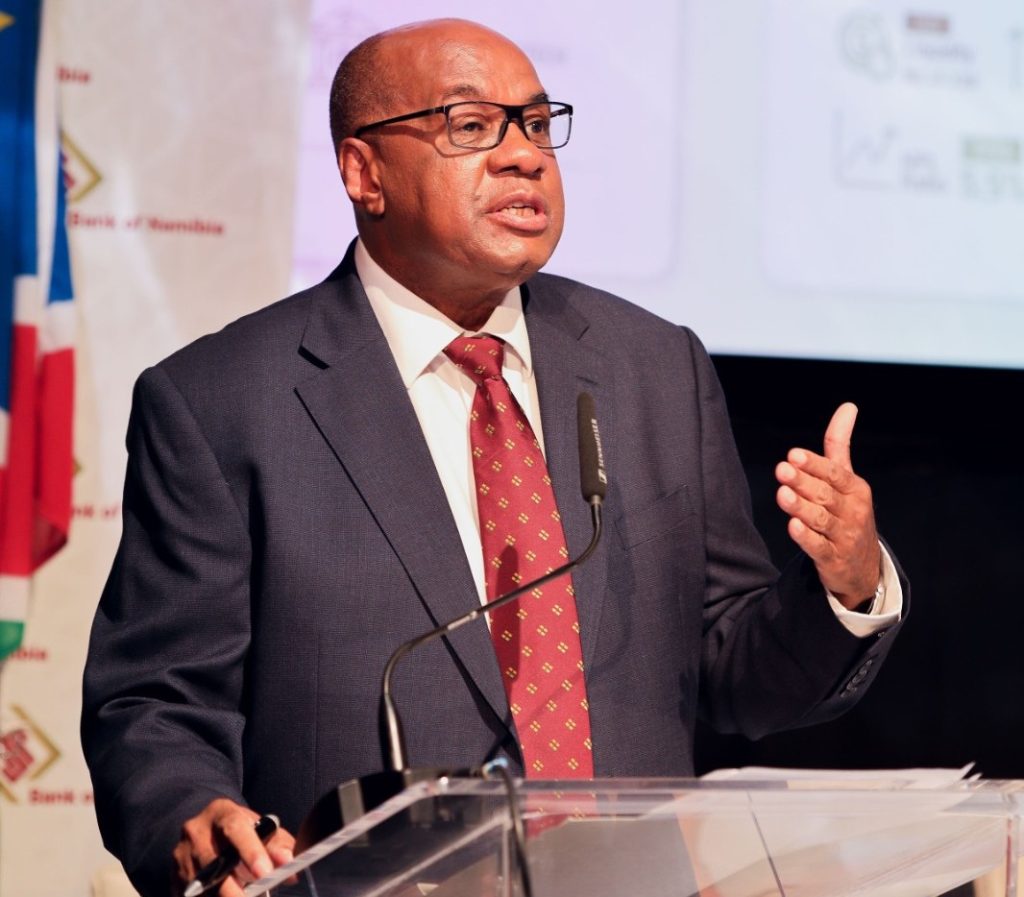
One in five Namibians lives below the national poverty line, youth unemployment remains high, and the country records one of the world’s highest inequality levels, reflected in a Gini coefficient above 0.59, Bank of Namibia Governor Johannes !Gawaxab has said.
Speaking at the opening of the 2025 Alliance for Financial Inclusion (AFI) Global Policy Forum in Swakopmund, !Gawaxab described poverty, inequality and unemployment as Namibia’s “triple challenge” and stressed that financial inclusion is a critical tool for bridging the gaps and promoting social and economic empowerment.
“Almost one in five of our people lives below the national poverty line. These are not just statistics — they are the daily struggles of families in our villages, settlements and towns. They are the realities that demand urgent, collective action,” he said.
!Gawaxab highlighted global trends, noting that nearly 700 million people worldwide live on less than US$2.15 a day, with Sub-Saharan Africa carrying the greatest burden as almost one in three people survives in extreme poverty.
He added that the richest 10% hold more than 70% of global wealth, while the poorest half share just 2%. At the same time, about 260 million young people worldwide, aged 15 to 24, are neither in school, working nor training — a threat to future economic stability if not addressed.
Namibia has taken steps to expand access to financial services. A regulator-led Instant Payment Solution now enables 24/7 transfers between banks, wallets and other platforms, making services faster, cheaper and more accessible, particularly for rural households and informal traders.
The Bank of Namibia has also launched an AI-enabled customer complaints system, while the Ministry of Finance has expanded financial literacy under the Financial Literacy Initiative.
“Financial inclusion must not only be treated as a side issue, but it is also an important catalyst for empowerment and social transformation. Evidence shows that countries with higher levels of financial inclusion enjoy faster GDP growth and greater resilience in times of crisis,” he said.
The Governor added that Namibia is conducting a digital public financial infrastructure gap analysis with government partners to guide investment and strengthen cooperation.
Banks now also have instant access to the national ID database, laying the foundation for a digital identification system.
These measures are part of the Financial Sector Transformation Strategy 2025–2035, which aims to modernise the sector and foster inclusive growth.
“Namibia is committed to addressing these challenges head-on by ensuring that our financial inclusion agenda is inclusive and people-centred. For us, at the Bank of Namibia, we believe that central banks should not be solely guardians of stability,” !Gawaxab said.