Wednesday, November 4, 2026
Subscribe
The Brief | Namibia's Leading Business & Financial News
  • Home
  • Companies
    • Finance
    • Agriculture
    • Technology
    • Property
    • Trade
    • Tourism
  • Business & Economy
  • E-PAPERreader
  • Mining & Energy
  • Opinions
    • Analysis
    • Columnists
  • Africa
No Result
View All Result
The Brief | Namibia's Leading Business & Financial News
Subscribe
No Result
View All Result
Home Latest

Slow industrialisation pushing Namibian workers into low-paying jobs

by reporter
November 4, 2026
in Latest
5
A A
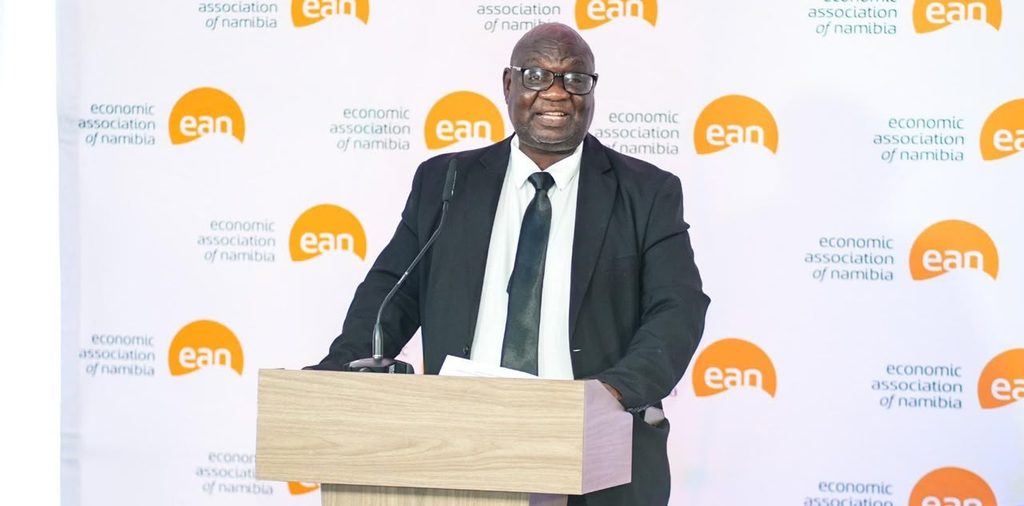
Man in a dark suit and tie speaking at a wooden podium, with a backdrop featuring the orange 'ean' logo and 'economic association of namibia' text in blue.

Namibia’s persistently high unemployment rate is being driven by slow economic transformation, with limited industrial development and skills mismatches preventing the economy from creating sufficient jobs, according to the National Planning Commission (NPC).

NPC Deputy Executive Director for Macroeconomic Planning, Sylvester Mbangu, said the country’s economic structure has failed to shift towards manufacturing and other productive industries capable of absorbing unemployed workers and creating higher-paying jobs.

Speaking at the Economic Association of Namibia’s public discussion on national skills and employment on Wednesday, Mbangu said Namibia’s development trajectory has differed from that of industrialised and industrialising economies.

“Namibia’s stubborn high unemployment is explained, to a greater extent, in my opinion, by the country’s economic structural transformation, which is very slow and has not followed the classical development path observed in many industrialised or industrialising economies,” he said.

Mbangu said secondary industries, particularly manufacturing, contribute approximately 15% to Namibia’s economy, a share that has remained largely unchanged over the years.

He noted that the limited growth of manufacturing has restricted the economy’s capacity to create jobs for workers moving out of agriculture and other primary industries.

“There has been a slight shift of labour from primary industries. Despite the primary industry employing a larger part of our labour force, it is shedding employment. And where are they going? They are not going into the secondary industry, but into the tertiary industry,” he said.

Mbangu said the shift towards services has largely resulted in workers taking up low-paying employment rather than moving into higher-skilled occupations.

“Unfortunately, even when they move into these tertiary industries, they are going into low-paid jobs in wholesale and retail trade and some related industries. They are not going into highly skilled sectors,” he said.

He explained that although the services sector accounts for a significant share of Namibia’s economic activity, it remains dominated by non-tradable activities, including public services, rather than industries capable of generating stronger productive growth.

Mbangu further linked the country’s slow industrial development to weaknesses in technical and innovation skills, saying the economy has not created sufficient opportunities for workers to develop and apply specialised capabilities.

He said these structural weaknesses have contributed to a mismatch between the skills available in the labour market and those required to support industrial expansion.

According to Mbangu, reducing unemployment will require greater investment in manufacturing and other productive sectors, supported by training that equips Namibians with relevant technical and employability skills.

He maintained that skills development alone would not resolve the unemployment challenge without corresponding changes in the structure of the economy.

The discussion, held under the theme Understanding Employer Skills Across Sectors, focused on the skills required by employers and the economic factors affecting Namibia’s ability to generate employment.


author avatar
reporter
See Full Bio
Previous Post

Dangote commits US$2.5bn to Namibia fuel storage and regional pipeline project

Next Post

Standard Bank provides workplace readiness training to students with disabilities

Must Read

Man in a dark suit and striped tie, facing the camera against a light gray backdrop.
Latest

TotalEnergies funds skills development beyond Namibia’s oil and gas sector

November 4, 2026
Group of dignitaries in formal attire standing in a conference tent, with a woman in bright blue traditional dress on the right.
Latest

Dangote commits US$2.5bn to Namibia fuel storage and regional pipeline project

November 4, 2026
Woman in turquoise dress speaks at a podium during the Dangote official launch in Namibia, with Vision 2030 branding in the background.
Latest

Dangote’s fuel infrastructure project to position Namibia as regional energy hub

November 4, 2026
Professional headshot of a smiling man in a navy suit and striped tie against a gray background.
Latest

PAN appoints Michael Humavindu as CEO

November 3, 2026
Portrait of a woman with short curly hair and red-framed glasses, smiling in a bright office setting, wearing a black turtleneck and patterned blazer.
Latest

Traditional bank lending models restrict financing for Namibian agricultural SMEs

November 3, 2026
Man in a beige suit with a red striped tie speaks into a handheld microphone at a podium.
Latest

Govt moves to hold council CEOs accountable for poor service delivery

November 2, 2026
Load More

Related News

NamPost assets hit N$8.1 billion, launches digital banking channels 

NamPost assets hit N$8.1 billion, launches digital banking channels 

October 18, 2024
Botswana sees Russian diamond ban opening door to synthetic gems

Botswana sees Russian diamond ban opening door to synthetic gems

May 16, 2022
Japan provides N$9 million drought relief grant to Namibia

Japan provides N$9 million drought relief grant to Namibia

August 15, 2024

Browse by Category

  • Africa
  • Agriculture
  • Analysis
  • Business & Economy
  • Columnists
  • Companies
  • e-edition
  • Finance
  • Finance
  • Fisheries
  • Green Hydrogen
  • Health
  • Investing
  • Latest
  • Market
  • Mining & Energy
  • namibia
  • Namibia
  • News
  • Opinions
  • Property
  • Retail
  • Technology
  • Tourism
  • Trade
The Brief | Namibia's Leading Business & Financial News

The Brief is Namibia's leading daily business, finance and economic news publication.

CATEGORIES

  • Business & Economy
  • Companies
    • Agriculture
    • Finance
    • Fisheries
    • Health
    • Property
    • Retail
    • Technology
    • Tourism
    • Trade
  • e-edition
  • Finance
  • Green Hydrogen
  • Investing
  • Latest
  • Market
  • Mining & Energy
  • namibia
  • News
    • Africa
    • Namibia
  • Opinions
    • Analysis
    • Columnists

CONTACT US

Cell: +264814612969

Email: newsdesk@thebrief.com.na

© 2026 The Brief | All Rights Reserved. Namibian Business News, Current Affairs, Analysis and Commentary

Welcome Back!

Login to your account below

Forgotten Password?

Retrieve your password

Please enter your username or email address to reset your password.

Log In
No Result
View All Result
  • Home
  • Companies
  • Mining & Energy
  • Business & Economy
  • Opinions
    • Analysis
    • Columnists
  • Africa

© 2026 The Brief | All Rights Reserved. Namibian Business News, Current Affairs, Analysis and Commentary

This website uses cookies. By continuing to use this website you are giving consent to cookies being used. Visit our Privacy and Cookie Policy.