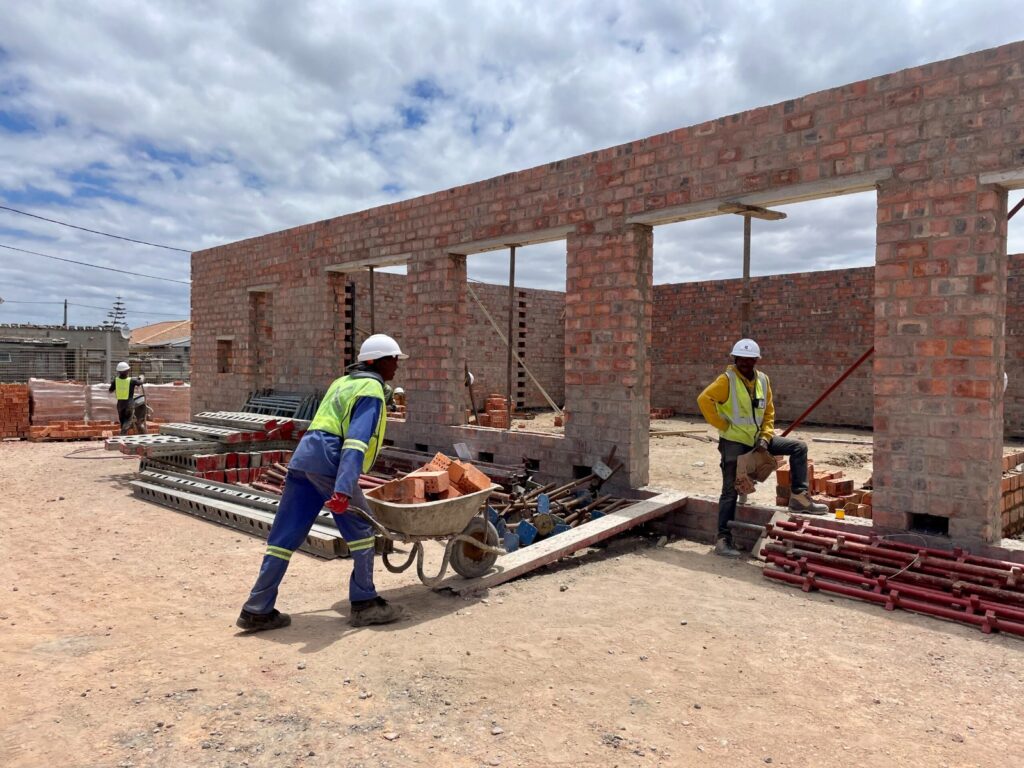
Home extensions and smaller residential developments are driving building activity in Windhoek, with non-commercial building approvals reaching N$138.7 million in October 2026, nearly three times the N$48.7 million recorded for commercial projects.
According to Simonis Storm Research, non-commercial approvals increased by 47.1% from N$94.3 million in October 2025, while commercial approvals declined sharply from N$393.2 million over the same period.
The figures show a shift towards household-driven construction activity as businesses scale back investment in new commercial properties.
The City of Windhoek approved 237 building plans valued at N$187.4 million in October, compared with 198 plans during the corresponding month last year.
Despite a 19.7% increase in the number of approved plans, their combined value declined by 61.6% year on year, largely reflecting weaker commercial property investment.
Additions to existing properties dominated approvals, accounting for 174 plans valued at N$85.4 million, representing 73% of all plans approved during the month.
This was the second-highest monthly value for additions recorded in 2026, after June.
“Residential construction also recorded an increase in the number of approvals, with 40 house plans valued at N$51.3 million approved during October. However, the average value of a house plan declined to N$1.28 million from N$1.40 million a year earlier,” Simonis Storm said.
The research firm said the trend was expected to continue into the first half of 2027, with household additions and smaller residential projects remaining the main drivers of construction activity.
However, the growth in residential activity was insufficient to offset the decline in commercial developments.
Between January and October 2026, the municipality approved 1,875 building plans valued at N$1.717 billion, compared with 1,795 plans during the corresponding period last year.
The combined value of approvals declined by 38.6%, despite the increase in the number of projects.
Commercial building approvals fell by 54.6% to N$409.2 million during the ten-month period, compared with N$900.4 million a year earlier.
Corporate and institutional building approvals also declined by 63.1% to N$353.2 million from N$956.4 million.
“Corporate commercial approvals declined by 87.2%, from N$780.9 million to N$99.8 million, suggesting that companies are directing investment towards existing properties and other sectors rather than expanding commercial floor space,” Simonis Storm said.
Meanwhile, demand for building plan approvals remained strong, with the municipality receiving 320 submissions in October, the highest monthly figure recorded since at least January 2024.
During the first ten months of 2026, submissions exceeded approvals by 484 plans, compared with 299 during the corresponding period last year.
The median approval period increased to 63 days from 56 days in 2025, while the proportion of plans approved within 30 days declined from 32% to 27%.
Higher borrowing costs are also expected to influence residential development following the Bank of Namibia’s decision to raise the repo rate to 7.00% on 28 October, taking the prime lending rate to 10.50%.
Simonis Storm estimated that the increase in lending rates had added approximately N$430 to monthly repayments on a N$1.28 million mortgage over 20 years compared with January.
The firm expects household extensions and smaller residential developments to continue supporting construction activity into the first half of 2027, while commercial projects remain constrained by weak demand and higher financing costs.