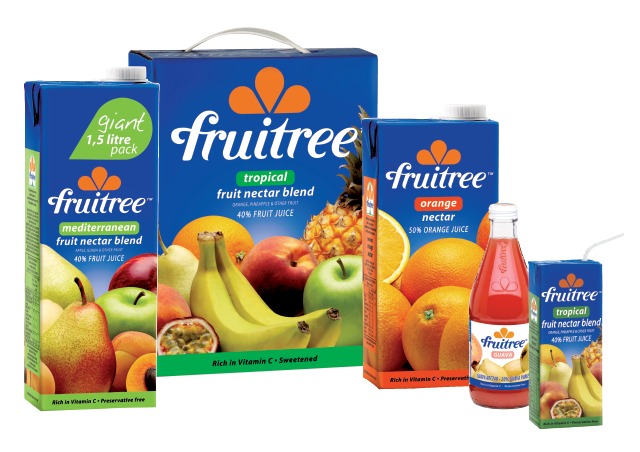
Namibia Breweries Limited (NBL) has revealed that its FruitTree distribution agreement with PepsiCo has ended after 15 years.
“The contract of distribution ended on February 28, 2025. The agreement ran for more than 15 years. This decision aligned with PepsiCo’s broader strategic vision,” NBL Integrated Communications Manager, Ndeshi Akwenye, told The Brief.
“This agreement covered the Namibian market only, as NBL was the Namibian distributor of FruitTree,” she said.
Akwenye ruled out plans by the brewer to secure new juice supply agreements, adding: “currently, our focus remains on our current portfolio.”
While details of the rationale were directed to PepsiCo, NBL stressed that the FruitTree portfolio contributed only a small portion to its overall soft drinks category.
As a result, the termination is expected to have minimal impact on revenues and profitability.
“We committed to ensuring a smooth transition and minimising any disruption to our operations. Our commercial team coordinated closely with all relevant stakeholders to manage customer relations and addressed any issues that may have arisen during this period,” Akwenye said.
“The half-year results contain four months of no FruitTree sales. Given the small contribution, the impact is not noticeable in our results.”
Soft drinks and water volumes remained flat at 2%, while juice exited the portfolio following the end of the FruitTree distribution.
The announcement came as the company reported strong interim results. Net revenue rose by 9.7% to N$2.1 billion for the period ending June 2025, compared with N$1.9 billion in 2024.
“Net revenue increased by 9.7% to N$2 104 million (2024: N$1 919 million), driven by volume growth, inflationary price increases and benefits from local production. Gross profit margins improved due to reduced beer discounts, margin gains from locally packaged wine and cider and disciplined cost management,” the interim results showed.
Beer remained the largest contributor, with domestic sales accounting for 60% of total volumes, up from 56% in 2024. South Africa contributed 17%, down from 20%, while other exports rose to 3% from 1%. Ciders increased to 6% of total volumes, while wine slipped slightly to 11% but generated higher revenues through price adjustments. Spirits contributed 1%, unchanged from the prior period.
Operating profit rose sharply by 79% to N$279 million, supported by stronger cash flows, while operating expenses increased by 3.5% to N$1.8 billion due to brand and strategic investments, including the ERP system introduced in March 2025. Capital expenditure normalised to N$102 million after significant prior investments.
“Despite the challenging consumer environment, the Group remains confident that the peak trading period in the second half will deliver stronger results, consistent with historic trends. NBL will continue to focus on winning market share, growing brand equity and executing effectively in trade,” the report said.
NBL said operational efficiency had improved following the completion of the HEINEKEN integration, allowing the company to respond to shifting consumer preferences towards beer and ciders.
The Windhoek brand, named Namibia’s Most Admired Alcoholic Beverage Brand at the 15th Brand Africa 100 awards, supported market share growth, while Windhoek Non-Alcoholic Lemon doubled its volumes. Ciders, including Savanna, Hunter’s and Bernini, also benefited from local production efficiencies and expanded distribution.