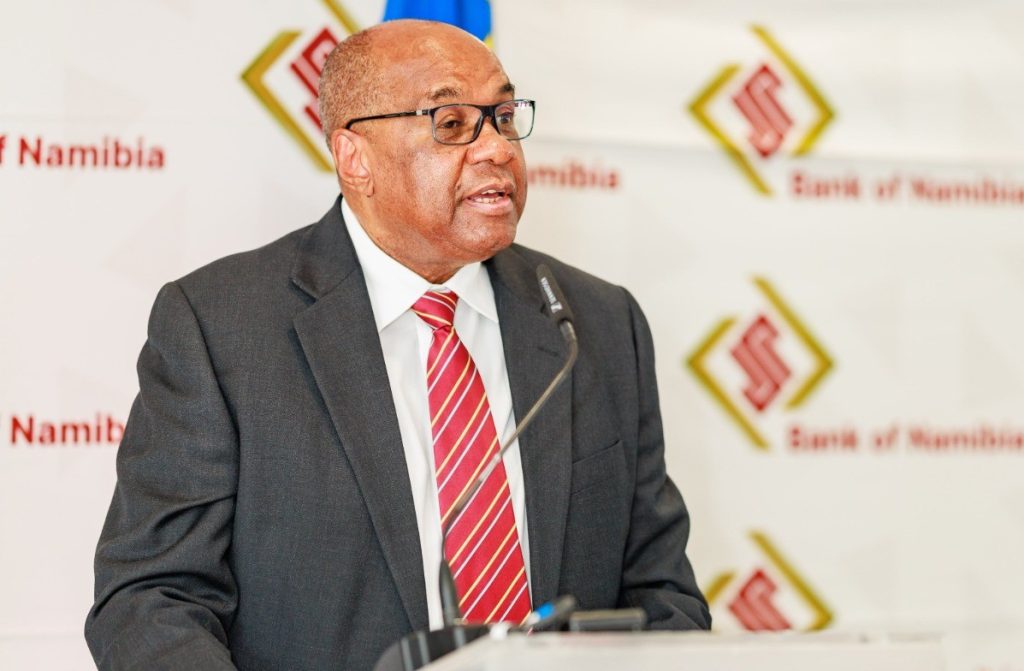
Namibia’s key export sectors face growing pressure following the United States’ introduction of new 15% reciprocal tariffs, which have disrupted supply chains and increased export costs, Bank of Namibia Governor Johannes !Gawaxab has said.
He noted that the indirect effects of U.S. trade policy could also be felt through South Africa, one of Namibia’s largest trading partners, which remains subject to a 30% tariff.
South Africa has warned of severe consequences for its vehicle export sector, with shipments to the U.S. plunging by 82% in the first half of 2025.
“In summary, Namibia’s exports to the U.S. remain relatively small, with marble, uranium, and polished diamonds making up the largest share. While uranium is shielded from tariffs, the new levies on polished diamonds and marble could weaken earnings from these sectors, which are already under pressure. The broader impact may also be felt indirectly through currency depreciation and Namibia’s economic ties with South Africa,” !Gawaxab said.
He explained that the U.S. is Namibia’s seventh-largest export market, accounting for around 3% of total exports. In 2024, Namibia exported goods worth N$2.5 billion to the U.S., up from N$1.9 billion in 2022. Minerals dominate the trade, with uranium concentrates and polished diamonds together making up over 76% of exports. Marble accounted for a further 9.5%, while other goods included rough diamonds, salt, live animals, art, fish, charcoal, hides and skins.
Marble, !Gawaxab said, has become Namibia’s most exposed commodity to the U.S., with sales rising from 62.1% of output in 2022 to 88.7% in 2024. However, the new 15% tariff on marble slabs, up from the previous 2.5%, is expected to severely impact the sector. Salt exports, which account for about 1.4% of Namibia’s U.S.-bound goods, could also lose competitiveness.
The diamond industry is also under strain. Previously tariff-free, polished diamonds now face a 15% levy, threatening export volumes and profitability at a time when global demand is slowing, synthetic diamonds are gaining market share, and prices are under pressure. Namibia, along with Botswana, South Africa and Canada, recently signed the “Luanda Accord” to strengthen marketing efforts and lobby for tariff reductions.
Uranium, by contrast, has been spared from the new tariffs due to its strategic importance to the U.S. “Over the past three years, uranium concentrate exports to the U.S. have remained below 10% of Namibia’s total uranium output. However, uranium and gold have been exempted from the recent tariffs due to their strategic importance to the U.S. This exemption, along with a weaker exchange rate and improving global prices, is expected to benefit Namibia’s uranium sector,” !Gawaxab said.
This comes as Debmarine Namibia told Namibia Mining & Energy that engagements are underway to secure an exemption from the newly imposed U.S. diamond import tariffs, which the company warns could erode the competitiveness of Namibian diamonds in the world’s largest jewellery market.