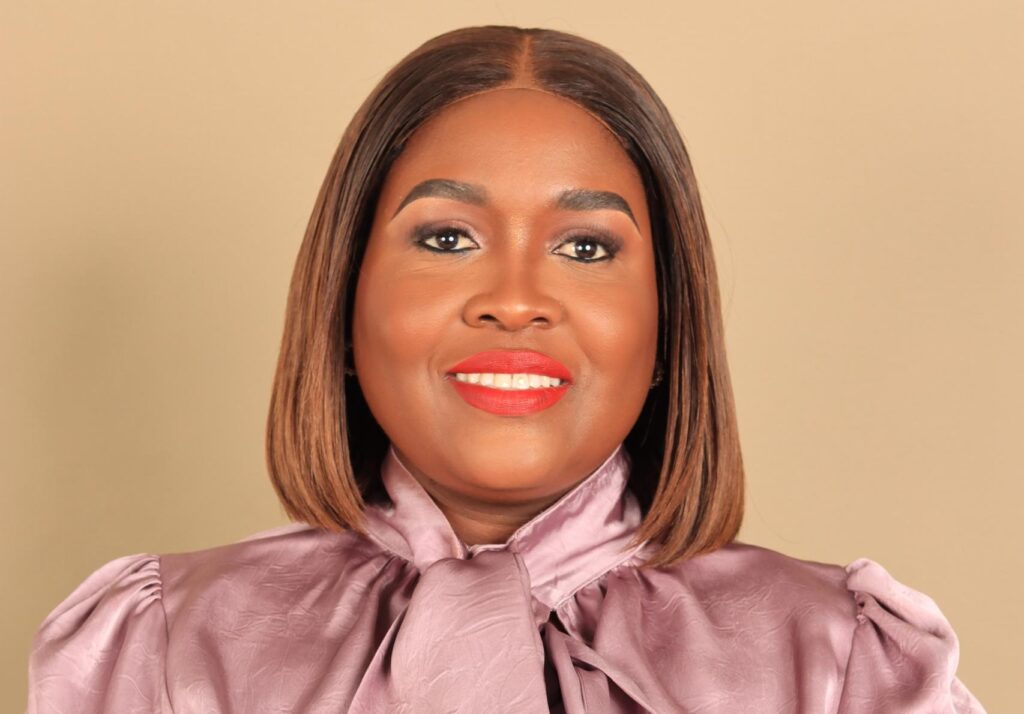
By Dr Etuna Simon
Namibia has invested significantly in developing highly qualified professionals, including academics and researchers who hold doctoral degrees.
Yet the expertise of many PhD holders remains concentrated within universities, reflected mainly in academic publications, conferences and specialised teaching.
If Namibia is serious about transforming education, this advanced knowledge must move beyond university offices and become part of how the country develops policy, supports teachers, designs curricula and solves persistent educational challenges.
What Namibia needs alongside this expansion of access is a deliberate, sustained investment in the people best equipped to make that expansion count: our PhD holders.
This is not a call for credentialism.
A doctorate (a Doctor of Philosophy, or PhD) is not a badge of superior worth, and plenty of excellent teaching and policy work is done by people without one.
But it is worth being precise about what a PhD actually represents. It is the highest academic degree a university awards, earned not by mastering existing knowledge but by producing new knowledge: original research, rigorously designed, critically examined and defended before experts, that adds something to a field which did not exist before. The training behind that achievement is what matters here.
A PhD is not merely an academic title.
It represents years of specialised study, independent research, critical analysis and disciplined problem-solving.
PhD holders are trained to examine complex problems, assess evidence, challenge assumptions and develop solutions that can be tested and improved. These capabilities are urgently needed in an education system facing unequal learning opportunities, shortages of specialised teachers, limited resources, uneven access to technology and persistent differences between urban and rural schools.
A PhD holder has spent years learning to formulate precise questions, design methods robust enough to answer them, gather and interrogate evidence rather than lean on assumption or anecdote, and follow an argument to its conclusion even when that conclusion is inconvenient. That is exactly the discipline Namibian education needs more of right now, at every level from classroom pedagogy to national policy design.
One of the most important contributions PhD holders can make is strengthening educational policy.
Policies sometimes fail not because their intentions are poor, but because they are developed without sufficient local evidence or without practical mechanisms for implementation.
Researchers can analyse enrolment patterns, learner performance, school infrastructure, teacher deployment and regional inequalities to identify where interventions are most urgently required. They can also evaluate whether existing programmes are producing meaningful results.
For example, when a literacy, digital-learning or school-feeding initiative is introduced, researchers should not only ask how many schools participated.
They should investigate whether learners’ attendance, engagement and achievement improved, which groups benefited, and why the intervention succeeded in one region but struggled in another. This would help Namibia move from policy based largely on assumption to policy informed by reliable evidence.
The problem is not effort. It is evidence.
Namibia’s education challenges are well documented: uneven learning outcomes between regions, a persistent gap between what curricula intend and what happens in classrooms, and questions about whether qualifications and assessment practices are keeping pace with the needs of a changing economy.
None of these problems stem from a shortage of good intentions among teachers, principals or ministry officials. They stem, in large part, from a shortage of rigorous, locally generated evidence about what actually works in Namibian classrooms, for Namibian learners, under Namibian conditions.
PhD expertise can also improve teaching practice.
Researchers in education, psychology, science, mathematics, languages and technology can work directly with teachers to translate research findings into practical classroom strategies.
In a multilingual country such as Namibia, specialists can help develop teaching approaches that recognise learners’ home languages while strengthening their proficiency in the language of instruction.
Experts in inclusive education can guide schools in supporting learners with disabilities and learning difficulties, especially in areas where specialist services are limited.
This collaboration must not become a system in which academics arrive at schools simply to tell teachers what to do. Classroom teachers possess practical knowledge that researchers may not have.
They understand their learners, communities and daily constraints. Meaningful transformation will happen when the research expertise of PhD holders is combined with the lived experience of teachers. Schools should become partners in research rather than merely places where data are collected.
Curriculum development is another area in which advanced expertise is essential.
Namibia’s curriculum must prepare learners for a changing economy shaped by artificial intelligence, automation, climate change, renewable energy and new forms of work.
PhD holders across disciplines can help ensure that curricula remain academically sound, nationally relevant and responsive to future skills needs.
A researcher in agriculture could support the integration of climate-smart farming into school and TVET programmes. An expert in artificial intelligence could help schools introduce AI literacy, data ethics and responsible technology use.
Specialists in indigenous knowledge could ensure that local environmental practices, languages and cultural knowledge are treated as valuable intellectual resources rather than peripheral topics. Such contributions would enable Namibia to innovate without losing its identity.
The country should also draw more deliberately on PhD holders to strengthen teacher professional development. Short workshops rarely produce lasting change when they are disconnected from teachers’ daily needs.
Researchers can help design sustained, school-based development programmes that include mentoring, classroom observation, practical experimentation and follow-up support. Universities could adopt clusters of schools in different regions and work with them over several years to improve literacy, numeracy, science education, leadership or digital learning.
However, it would be misleading to suggest that holding a PhD automatically makes someone an effective policymaker, teacher trainer or public intellectual.
Some doctoral research is highly specialised, and some academics have limited experience of conditions in schools.
Expertise must therefore be matched to the problem, communicated in accessible language and applied with humility. PhD holders should be assessed not only by the number of articles they publish, but also by the relevance and social impact of their work.
A shared responsibility.
Government ministries, universities and educational institutions should create formal platforms through which doctoral expertise can serve national priorities.
These could include policy advisory panels, regional research partnerships, curriculum task teams, teacher mentorship programmes and publicly accessible research summaries.
Funding should prioritise collaborative studies that address clearly identified national challenges, while researchers should be encouraged to share findings beyond academic journals.
None of this happens automatically. Universities need to reward researchers for policy engagement, not only publication counts.
Government departments need genuine mechanisms such as advisory panels, secondments and joint research units to draw on doctoral expertise rather than treating it as an occasional favour.
Besides, PhD holders themselves carry a responsibility to communicate clearly, engage practically, and resist the temptation to stay comfortably inside academic debates that never touch a classroom.
Namibia does not lack educated minds.
The greater challenge is connecting those minds to the places where their knowledge can make the greatest difference.
When PhD holders work alongside teachers, communities, policymakers and industry, advanced knowledge becomes more than a personal achievement. It becomes a national resource.
The real value of a doctorate is not found in the title before a person’s name. It is found in the problems that person helps society understand and solve.
By purposefully mobilising its PhD expertise, Namibia can develop stronger policies, more responsive teaching practices and an education system capable of preparing every learner for an innovative and inclusive future.
Whether that investment produces a stronger, more capable nation or simply a larger one depends on whether we are willing to put our best-trained minds to work on the hard, evidence-based questions that expansion raises. We have those minds. The task now is to use them.
*Dr Etuna Simon is a researcher, strategist and writer with a keen interest in education, innovation, artificial intelligence and national development. The views expressed in this article are solely those of the author. She can be reached at etunasimon@icloud.com