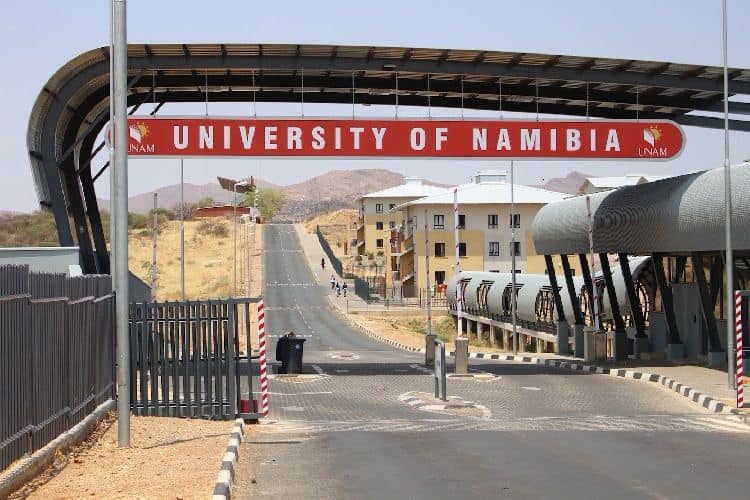
The University of Namibia (UNAM) is finalising plans to establish a School of Nuclear Science Applications, which will focus on nuclear energy, medicine, and uses in agriculture and water technologies.
UNAM Pro-Vice Chancellor Ellen Namhila made the announcement during the launch of the Sixth National Development Plan (NDP6), stating that the move is part of efforts to provide scientific solutions that support national development.
“I am pleased to inform you that we are at an advanced stage of establishing a School of Nuclear Science Applications, which will include departments for Nuclear Energy, Nuclear Medicine, and Nuclear Applications in Agriculture and Water Technologies,” Namhila said.
“The establishment of this school reaffirms our promise to the nation that UNAM is committed to providing the government and the people of Namibia with the best possible scientific solutions.”
The planned school directly supports NDP6’s goal of increasing the contribution of the nuclear industry to Namibia’s economy.
According to the plan, government aims to grow the sector’s share of GDP from 3.2% to 4% by 2030.
It also plans to train at least 100 people in nuclear science, establish three significant applications of nuclear technology, and set up one fully functional radioanalytical laboratory.
The NDP6 report states: “The operational capacity will be assessed and revised to ensure that it has the number of personnel, skills and experience to adequately respond to the current scope and future projects in the nuclear industry by pursuing implementation of a management system to ensure operational excellence.”
Government also plans to review and strengthen the Atomic Energy and Radiation Protection Act (2005) to improve regulation of nuclear installations and reinforce independent oversight.
A proposed Nuclear Institute of Namibia will serve as a technical body to lead feasibility studies and project management.
In addition, Namibia will seek bilateral and multilateral partnerships to raise funding and attract investment into the sector.
According to the report, these partnerships aim to minimise risk while delivering meaningful returns for both Namibia and its international partners.