Wednesday, October 21, 2026
Subscribe
The Brief | Namibia's Leading Business & Financial News
  • Home
  • Companies
    • Finance
    • Agriculture
    • Technology
    • Property
    • Trade
    • Tourism
  • Business & Economy
  • E-PAPERreader
  • Mining & Energy
  • Opinions
    • Analysis
    • Columnists
  • Africa
No Result
View All Result
The Brief | Namibia's Leading Business & Financial News
Subscribe
No Result
View All Result
Home namibia

Manufacturing sector to create 80,000 jobs by 2030

by reporter
July 22, 2025
in namibia
8
A A

Namibia’s manufacturing sector is expected to create over 80,000 jobs by 2030, up from 53,491 in 2024, according to the newly launched Sixth National Development Plan (NDP6).

The plan outlines government’s strategy to make manufacturing a major source of employment, economic growth, and exports over the next six years.

The policy, launched by President Netumbo Nandi-Ndaitwah, aims to raise the sector’s share of GDP from 10.6% to 18%, while boosting its contribution to exports from 42% to 60%.

Average monthly wages in the sector are projected to increase from N$5,749 to N$10,000.

To support these targets, investment in manufacturing is expected to rise from 6.1% to 15% of total investment by 2030.

According to the NDP6 document, “The sub-sub goal aims at adding value to raw materials and boosting manufacturing in a sustainable and environmentally-friendly way to ensure long-term economic and ecological health.”

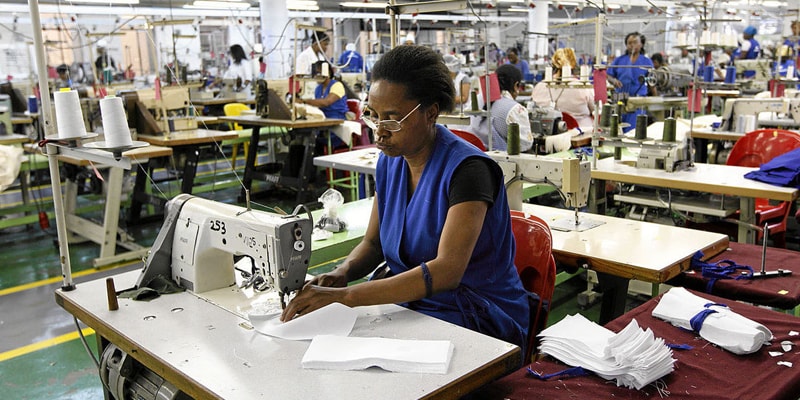
The government plans to focus on five strategic areas: modernising industrial infrastructure, improving access to finance, introducing tailored incentives, promoting new technologies, and strengthening value chains. Priority sectors include agro-processing, pharmaceuticals, mineral beneficiation, textiles, and steel production.

“This policy aims to move Namibia further up the value chain by producing high-value, complex products, thereby creating jobs, stimulating economic growth, and enhancing competitiveness,” the plan notes.

Infrastructure development will centre on special economic zones, industrial parks, and ready-built facilities to attract both local and foreign investors.

“The strategy will review, redesign and implement the modernisation and expansion of essential facilities such as industrial parks, and specialised industrial zones i.e. special economic zones,” the report states.

To finance this growth, government will partner with international development finance institutions to mobilise capital and expertise.

Support mechanisms will include low-interest loans, grants, and blended financing. “Foster partnerships with international development finance institutions to attract foreign capital and expertise, thus ensuring that financial support reaches both emerging and established manufacturers,” the policy outlines.

Incentives tailored to industry needs will also be introduced, including industrial rebates, export support, and subsidies. “The aim is to establish an incentive programme tailored to the needs of the industry,” the document reads.

Technology and innovation will be central to the plan, with new hubs and incubation centres to be established. These will provide access to modern research, industrial skills training, and green technologies.

“Technology hubs, innovation and incubation centres will be established to provide manufacturers with industrial skills, modern research, and development resources including the adoption of green technologies,” it states.

Flagship programmes include Manufacturing Infrastructure and Value Chains Development, with specific focus on sectors such as poultry, charcoal, textiles, and rural-based manufacturing.

Despite its potential, the manufacturing sector has experienced stagnation.

Between 2015 and 2024, it contributed an average of 11.5% to GDP and just 9.8% to total employment.

Investment declined to 7% in 2024 and fell by an average of 5.6% per year since 2016.

“Namibia was able to diversify; however, it has diversified into less complex and less high value products; hence, its contribution remains constant over a longer period,” the report warns.

Through NDP6, the government aims to reverse this trend and establish manufacturing as a central pillar of Namibia’s economy, creating jobs, raising incomes, and increasing exports.


author avatar
reporter
See Full Bio
Previous Post

Namibia targets to formalise 950 informal businesses by 2030

Next Post

Namibia’s financial system stable amid global uncertainty – BoN

Must Read

Middle-aged man with glasses and a gray beard sitting at a desk in an office, speaking or explaining something.
namibia

Govt rejects privatisation of electricity transmission and distribution

October 15, 2026
Portrait of a smiling professional woman in a black blazer and white shirt against a beige background.
namibia

IPM pushes for law to regulate Namibia’s HR profession

October 15, 2026
Vehicle sales rebound in February as Namibia records 1,165 units sold
namibia

Vehicle finance drives Namibia’s credit growth

October 2, 2026
A large crowd of people arranged to form the shape of a computer mouse cursor
Latest

Namibia’s population projected to reach 3.47 million by 2030

September 30, 2026
Three professional headshots in a collage: left man with dark hair and glasses, middle bald man smiling, right woman with blonde hair and red-framed glasses.
namibia

Skeleton Basin appoints Mertens, Shikongo and Venner to board

September 28, 2026
Electrical substation with transformers and hanging wires silhouetted against a sunset sky.
namibia

Local council power networks emerge as weak link in Namibia’s electricity system

August 24, 2026
Load More

Related News

Leader brand and institutional brand incongruence

Why board members must read the “room” !

November 7, 2025
Namibia nears N$9.5bn Eurobond sinking fund target, only N$1.5bn short 

Namibia nears N$9.5bn Eurobond sinking fund target, only N$1.5bn short 

February 12, 2025
Being brave, an intrinsic requirement of the internal audit function

Being brave, an intrinsic requirement of the internal audit function

December 7, 2022

Browse by Category

  • Africa
  • Agriculture
  • Analysis
  • Business & Economy
  • Columnists
  • Companies
  • e-edition
  • Finance
  • Finance
  • Fisheries
  • Green Hydrogen
  • Health
  • Investing
  • Latest
  • Market
  • Mining & Energy
  • namibia
  • Namibia
  • News
  • Opinions
  • Property
  • Retail
  • Technology
  • Tourism
  • Trade
The Brief | Namibia's Leading Business & Financial News

The Brief is Namibia's leading daily business, finance and economic news publication.

CATEGORIES

  • Business & Economy
  • Companies
    • Agriculture
    • Finance
    • Fisheries
    • Health
    • Property
    • Retail
    • Technology
    • Tourism
    • Trade
  • e-edition
  • Finance
  • Green Hydrogen
  • Investing
  • Latest
  • Market
  • Mining & Energy
  • namibia
  • News
    • Africa
    • Namibia
  • Opinions
    • Analysis
    • Columnists

CONTACT US

Cell: +264814612969

Email: newsdesk@thebrief.com.na

© 2026 The Brief | All Rights Reserved. Namibian Business News, Current Affairs, Analysis and Commentary

Welcome Back!

Login to your account below

Forgotten Password?

Retrieve your password

Please enter your username or email address to reset your password.

Log In
No Result
View All Result
  • Home
  • Companies
  • Mining & Energy
  • Business & Economy
  • Opinions
    • Analysis
    • Columnists
  • Africa

© 2026 The Brief | All Rights Reserved. Namibian Business News, Current Affairs, Analysis and Commentary

This website uses cookies. By continuing to use this website you are giving consent to cookies being used. Visit our Privacy and Cookie Policy.