Thursday, October 1, 2026
Subscribe
The Brief | Namibia's Leading Business & Financial News
  • Home
  • Companies
    • Finance
    • Agriculture
    • Technology
    • Property
    • Trade
    • Tourism
  • Business & Economy
  • E-PAPERreader
  • Mining & Energy
  • Opinions
    • Analysis
    • Columnists
  • Africa
No Result
View All Result
The Brief | Namibia's Leading Business & Financial News
  • Home
  • Companies
    • Finance
    • Agriculture
    • Technology
    • Property
    • Trade
    • Tourism
  • Business & Economy
  • E-PAPERreader
  • Mining & Energy
  • Opinions
    • Analysis
    • Columnists
  • Africa
No Result
View All Result
The Brief | Namibia's Leading Business & Financial News
Subscribe
No Result
View All Result
Home Companies Fisheries

Namibia eyes billion-dollar fish waste innovation opportunity

by reporter
May 15, 2025
in Fisheries
15
A A

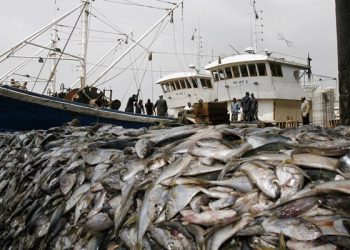
Namibia’s fishing industry is setting its sights on a multi-billion-dollar opportunity by transforming fish waste into high-value products — from Omega-3-rich hake liver oil to collagen-based cosmetics and even medical treatments.

According to fisheries expert and Namibia Ocean Cluster associate, Dave Russell, what is currently discarded at sea could form the foundation of a new, job-creating sector focused on health, wellness, and industrial applications.

Russell noted that Namibian vessels presently discard heads, guts, and skins at sea, despite their considerable potential in secondary industries.

He emphasised that international benchmarks, such as Iceland’s century-old liver oil sector, illustrate how waste products can be converted into profitable commodities.

“What we are hearing from international partners is that when companies manage their waste more efficiently, they are better able to cope with quota reductions. This provides a cushion while stocks recover. Regeneration, at its core, makes good business sense,” said Russell.

Citing early local research, Russell highlighted that 750 millilitres of hake liver oil had been extracted from just four kilograms of livers — a strong indicator of commercial viability.

He explained that liver oil is rich in Omega-3 and vitamins A, D, and E — nutrients that are in high demand globally across health and nutrition markets.

He further noted the versatility of fish skins, which are used in the production of collagen and gelatin for health and beauty products.

Moreover, Russell pointed to international medical applications as further evidence of the value inherent in fish waste.

He cited Brazil’s innovative use of tilapia skins in the treatment of burn wounds and chronic ulcers, highlighting how such innovations can yield high-value, life-enhancing products.

“Beyond industrial uses, fish skins are being used internationally for medical treatments. In countries like Brazil, tilapia skins are applied to burn wounds and chronic ulcers. They assist with skin regeneration and reduce healing time,” he noted.

However, Russell observed that the waste generated by individual companies is insufficient to justify large-scale investment, while the cost of research and development remains a major hurdle.

As such, he stressed the need for collective action through platforms like the Namibia Ocean Trust to drive product innovation and industrial transformation.

Russell explained that Namibia’s hake sector comprises six companies with a combined quota of 110,000 tonnes.

Although some modernisation has taken place, the sector has yet to achieve the efficiency levels seen in leading fishing nations. He argued that value addition would not only boost economic returns but also create employment.

“The marine fishing industry employs around 18,000 people, with approximately 12,000 in the hake sector. By pursuing value addition through the utilisation of waste materials, the industry can create even more jobs beyond the current 18,000. Government has been promoting value addition — and rightly so — because it leads to employment creation,” he said.

He also acknowledged that the recent quota reduction from 150,000 to 140,000 tonnes reflects mounting pressure on fish stocks and underscores the importance of sustainable resource management.

In contrast, Russell pointed out that the horse mackerel sector handles around 250,000 tonnes annually but employs only 6,000 people due to limited processing and value addition.

This, he argued, clearly demonstrates the direct link between domestic processing and job creation.

author avatar
reporter
See Full Bio
Previous Post

Swakopmund leads building completions worth N$86.8 million in March

Next Post

The struggle of unemployed Namibian graduates

Must Read

Namibia eyes billion-dollar fish waste innovation opportunity
Fisheries

Namibia’s fisheries exports grow 12.2% to N$4.6bn in Q2

September 24, 2026
Namibia urged to reform fisheries legislation and improve oversight
Fisheries

Govt raises N$29.1m from sale of 4,500MT fish quota

September 16, 2026
Worker in a blue plastic apron and blue gloves trimming salmon fillets on a white work surface in a seafood processing facility.
Fisheries

AAC plans to use existing Namibian fish-processing facilities for salmon production

September 14, 2026
Eight professionals standing together in a conference room with a geometric blue wallpaper and framed portraits above them.
Fisheries

Zaamwani appoints new Fishcor board

September 10, 2026
Older woman wearing a turquoise headwrap and glasses, seated in a dimly lit audience.
Fisheries

Nandi-Ndaitwah warns against self-interest as Namibia seeks to revive fisheries sector

September 4, 2026
African Aquaculture, AKVA partner on N$8.5bn Lüderitz salmon project
Fisheries

African Aquaculture, AKVA partner on N$8.5bn Lüderitz salmon project

August 29, 2025
Load More

Related News

East African Community to set up regional central bank this year

East African Community to set up regional central bank this year

January 16, 2023
SAB in talks about mandatory vaccinations for staff

SAB in talks about mandatory vaccinations for staff

January 6, 2022
Tongaat Hulett abandons planned R5bn rights offer

Tongaat Hulett abandons planned R5bn rights offer

June 27, 2022

Browse by Category

  • Africa
  • Agriculture
  • Analysis
  • Business & Economy
  • Columnists
  • Companies
  • e-edition
  • Finance
  • Finance
  • Fisheries
  • Green Hydrogen
  • Health
  • Investing
  • Latest
  • Market
  • Mining & Energy
  • Namibia
  • namibia
  • News
  • Opinions
  • Property
  • Retail
  • Technology
  • Tourism
  • Trade
The Brief | Namibia's Leading Business & Financial News

The Brief is Namibia's leading daily business, finance and economic news publication.

CATEGORIES

  • Business & Economy
  • Companies
    • Agriculture
    • Finance
    • Fisheries
    • Health
    • Property
    • Retail
    • Technology
    • Tourism
    • Trade
  • e-edition
  • Finance
  • Green Hydrogen
  • Investing
  • Latest
  • Market
  • Mining & Energy
  • namibia
  • News
    • Africa
    • Namibia
  • Opinions
    • Analysis
    • Columnists

CONTACT US

Cell: +264814612969

Email: newsdesk@thebrief.com.na

© 2026 The Brief | All Rights Reserved. Namibian Business News, Current Affairs, Analysis and Commentary

Welcome Back!

Login to your account below

Forgotten Password?

Retrieve your password

Please enter your username or email address to reset your password.

Log In
No Result
View All Result
  • Home
  • Companies
  • Mining & Energy
  • Business & Economy
  • Opinions
    • Analysis
    • Columnists
  • Africa

© 2026 The Brief | All Rights Reserved. Namibian Business News, Current Affairs, Analysis and Commentary

This website uses cookies. By continuing to use this website you are giving consent to cookies being used. Visit our Privacy and Cookie Policy.