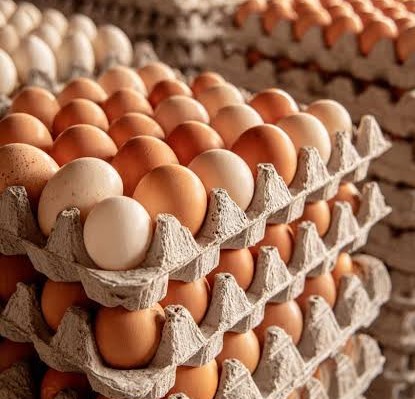
…local egg output up 13.1%
Namibia exported 135,479 eggs in September 2026, marking the country’s first recorded egg exports since at least 2025, as domestic production increased and reliance on imports declined sharply.
Figures from the Livestock and Livestock Products Board of Namibia (LLPBN) show that Botswana was the largest export market, receiving 108,000 eggs, followed by Zimbabwe with 26,339 eggs and South Africa with 1,140 eggs.
Local producers marketed 94.01 million eggs between January and September 2026, an increase of 13.1% from the 83.13 million eggs recorded during the corresponding period in 2025.
Egg imports declined by 88.7% to 1.74 million from 15.36 million, while local producers’ share of the domestic market increased from 84.4% to 98.2%.
“Egg imports fell from 15.36 million eggs in January–September 2025 to 1.74 million eggs in 2026, a drop of 88.7%. Over the same period, eggs marketed by local producers rose by 13.1% to 94.01 million. In September, Namibia recorded its first egg exports since at least 2025: 108,000 eggs to Botswana, 26,339 to Zimbabwe and 1,140 to South Africa,” the board said in its third-quarter trade report.
The domestic poultry industry also recorded growth, with the number of chickens marketed increasing by 24.5% to 17.88 million during the first nine months of 2026.
Local poultry producers increased their share of the domestic market from 62.7% to 68.4% between January and August.
Poultry imports declined by 5.4% to 15.10 million kilograms during the first nine months of the year, despite increasing by 31.4% in the third quarter alone.
Brazil was Namibia’s largest supplier of poultry imports, accounting for 48.2% of total imports, followed by Poland at 23.4%, South Africa at 10.9% and Argentina at 9.2%.
“The main change was in trading partners. Imports from Brazil almost doubled to 7.29 million kg, while imports from Poland fell from 8.16 million kg to 3.53 million kg,” the report said.
Meanwhile, Namibia’s dairy sector became increasingly reliant on imports, with total dairy imports rising by 26.6%. South Africa accounted for 95.4% of dairy imports.
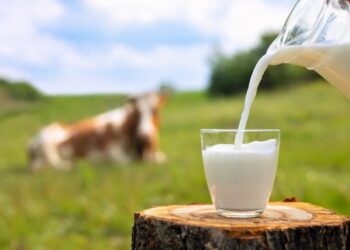
Liquid milk imports increased by 37.4% to 15.10 million litres, while domestic milk production declined by 3.3% to 11.91 million litres.
Local milk producers accounted for 44.1% of Namibia’s milk supply, down from 52.9% during the corresponding period in 2025.
The board also recorded dairy exports of 46,094 kilograms to Angola.