The Government Institutions Pension Fund (GIPF) has initiated arbitration proceedings against its investment managers in a bid to recover an impaired investment of approximately N$815 million in South Africa.
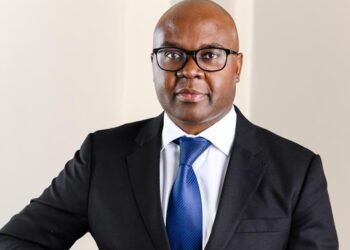
GIPF Chief Executive Officer Martin Inkumbi said the impairment resulted from a tax dispute between an underlying South African company and the South African Revenue Service (SARS), which significantly reduced the valuation of the investment.
“We have raised a claim against the Signal Structured Finance Fund and TriAlpha. However, to ensure that I do not say anything that could compromise our arbitration case, I would refrain from going into further detail,” Inkumbi said.
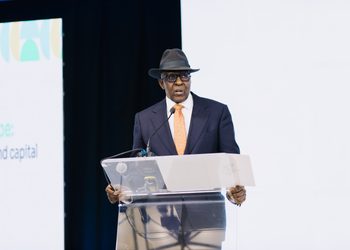
Speaking during a joint parliamentary committee engagement, Inkumbi said GIPF made the investment in 2021 through the Signal Structured Finance Fund under an investment management arrangement with TriAlpha.
The tax dispute stems from a transaction undertaken in 2016, five years before GIPF made its investment, although SARS only raised the tax claim in 2024.
The initial tax claim amounted to R495 million, with additional penalties of R129 million and accumulated interest bringing the total liability claimed by SARS to nearly R1 billion.
Inkumbi said the potential liability prompted GIPF to write down the value of its investment in accordance with International Financial Reporting Standards (IFRS).
He stressed that the impairment did not constitute a realised loss and could be reversed if the legal proceedings were resolved in favour of the underlying company.
“An impairment is not a realised loss. It reflects the projected valuation based on the information available at the reporting date. The impairment may be reversed if circumstances improve. This is consistent with the International Financial Reporting Standards,” he said.
The N$815 million write-down accounted for the bulk of the N$922 million in total investment impairments recorded by GIPF during the financial year ended March 2025, up from N$117 million in the preceding financial year.
Total investment impairments subsequently declined to N$102 million in the financial year ended March 2026.
Inkumbi maintained that the impairments did not threaten the fund’s financial sustainability, with the N$922 million representing approximately 0.5% of its total investment portfolio.
Meanwhile, the Namibia Financial Institutions Supervisory Authority (NAMFISA) is examining whether shortcomings in investment due diligence, governance and risk management contributed to the impairment.
NAMFISA Chief Executive Officer Kenneth Matomola said while GIPF’s investment allocations complied with regulatory requirements and its board-approved investment policy, compliance alone did not establish whether adequate due diligence and oversight had been exercised.
The regulator has requested additional information from GIPF on potential weaknesses in investment management and oversight, prospects for recovering the investment and measures to prevent similar incidents.
Matomola said further regulatory action, including possible on-site inspections, would depend on the findings.
“We still need to establish whether there was a failure in controls or due diligence. When we get the information, it might not be adequate. We have regulatory tools available that we can use, including on-site inspections, to find out exactly what happened,” he said.
Despite the impairment, GIPF reported assets of N$200 billion against estimated liabilities of N$153 billion, giving the fund a funding surplus of N$47 billion and a funding level of approximately 130%.
Both GIPF and NAMFISA maintained that the pension fund remained financially sound and solvent.