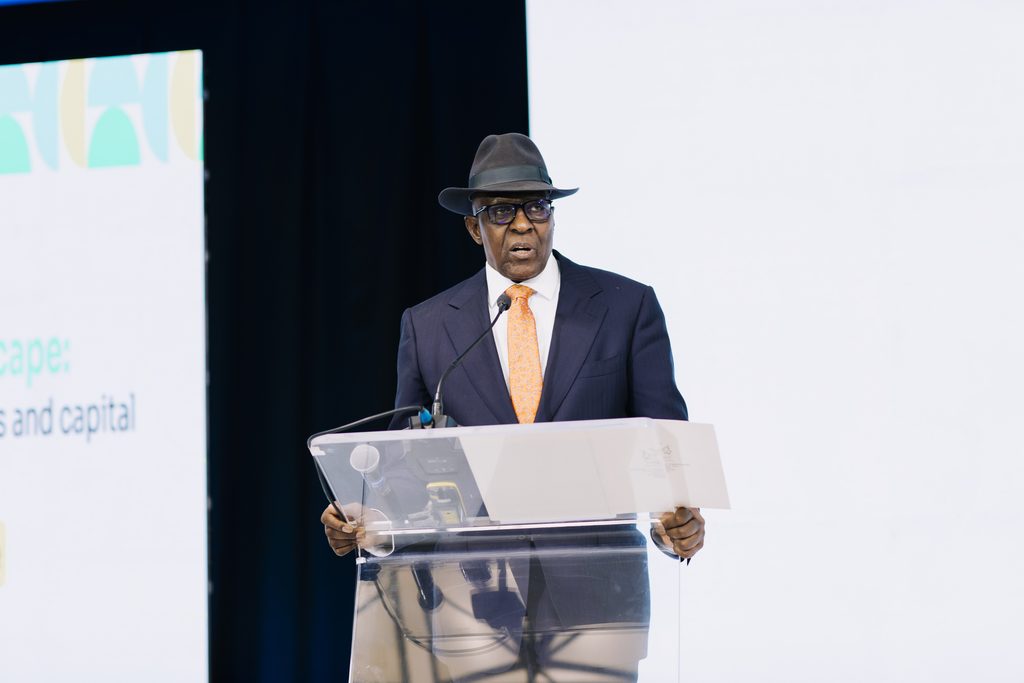
The National Planning Commission (NPC) is seeking N$5 billion in financing from institutional investors, government and foreign investment sources to support the implementation of Namibia’s Sixth National Development Plan (NDP 6) and Vision 2030.
NPC Director-General Ambassador Kaire Mbuende said the country needed to mobilise available capital and direct it towards viable investment projects capable of driving economic transformation.
Speaking at the Government Institutions Pension Fund (GIPF) 2026 Pension and Investment Symposium in Windhoek, Mbuende said Namibia had sufficient natural resources, capital, labour and skills to support industrialisation, but had struggled to translate these into productive economic activity.
“I need 5 billion Namibian dollars to attain the objectives of NDP 6, as well as attain the objectives of Vision 2030,” Mbuende said.
He said Namibia’s ambition to become an industrialised nation by 2030 would require greater investment in infrastructure, energy, agriculture, manufacturing and other productive sectors.
“The task from a resource point of view is manageable. The question is putting resources into projects. And not just projects but successful projects,” he said.
Mbuende identified green hydrogen, renewable energy, oil and gas, transport and logistics infrastructure, agriculture, irrigation, mining beneficiation and critical minerals as priority sectors for investment.
He said Namibia needed to diversify its economy beyond its historical dependence on diamond mining, particularly as declining diamond prices were placing pressure on government revenue.
Mbuende also identified oil and gas developments as potential drivers of economic growth but said financial projections remained uncertain pending a final investment decision by TotalEnergies on its offshore development plans.
In agriculture, he called for increased investment in commercial production, irrigation infrastructure and green schemes to expand output beyond small-scale farming.
He said approximately 13,000 hectares of land could be developed for irrigation, with an estimated investment requirement of N$1.5 billion.
Mbuende also highlighted transport infrastructure projects aimed at strengthening Namibia’s position as a regional logistics hub.
These include the proposed 770-kilometre Trans-Zambezi railway extension from Grootfontein to Katima Mulilo, which has completed a pre-feasibility study, and the proposed 1,500-kilometre Trans-Kalahari railway linking Mmamabula in Botswana to Walvis Bay.
In the water sector, he identified a proposed N$80-million investment in local manufacturing capacity for water supply infrastructure materials, which could reduce dependence on imports and support domestic industrial development.
Mbuende said attracting institutional investment would require a stable investment environment, transparent regulations, good governance and stronger coordination between government institutions, development finance institutions, pension funds and private investors.
He linked these requirements to the four pillars of NDP 6, namely economic transformation, human resource development, environmental sustainability and good governance.
He further stressed the need to improve project preparation to ensure that proposed investments were commercially viable and capable of attracting financing.
Meanwhile, Trade and Development Bank (TDB) Group President and Chief Executive Officer Admassu Tadesse said Africa’s investment challenge was not solely a shortage of capital but the limited deployment of available institutional savings into productive sectors.
Tadesse said approximately US$2 trillion in institutional capital was available across Africa, but much of it was not being channelled into infrastructure, industry, small and medium enterprises and agriculture.
He said African economies were growing at approximately 4%, a rate he considered insufficient to deliver the continent’s desired economic transformation without increased investment.
Tadesse described Namibia as having a relatively strong investment environment compared with several other African countries, although its small domestic market remained a constraint for large-scale projects.
He said Namibia could address this limitation by using its coastline, port infrastructure and access to landlocked neighbouring countries to attract regional investment.
“Namibia can overcome some of these limitations by leveraging its coastline, port infrastructure and access to landlocked neighbouring countries. Regional integration and the African Continental Free Trade Area could eventually allow Namibia to serve as a platform for Pan-African investment,” Tadesse said.