…as the fund’s domestic investments exceed N$100 billion
The Government Institutions Pension Fund (GIPF) has N$5.1 billion in committed capital awaiting deployment into suitable investment projects in Namibia, as the pension fund faces challenges identifying bankable opportunities, particularly in infrastructure.
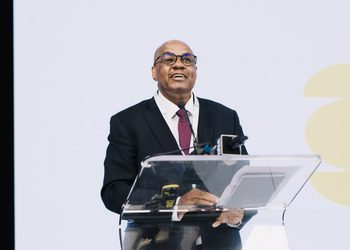
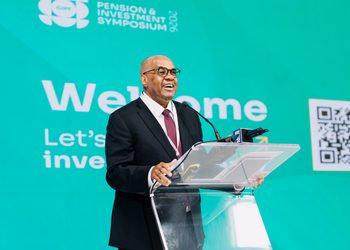
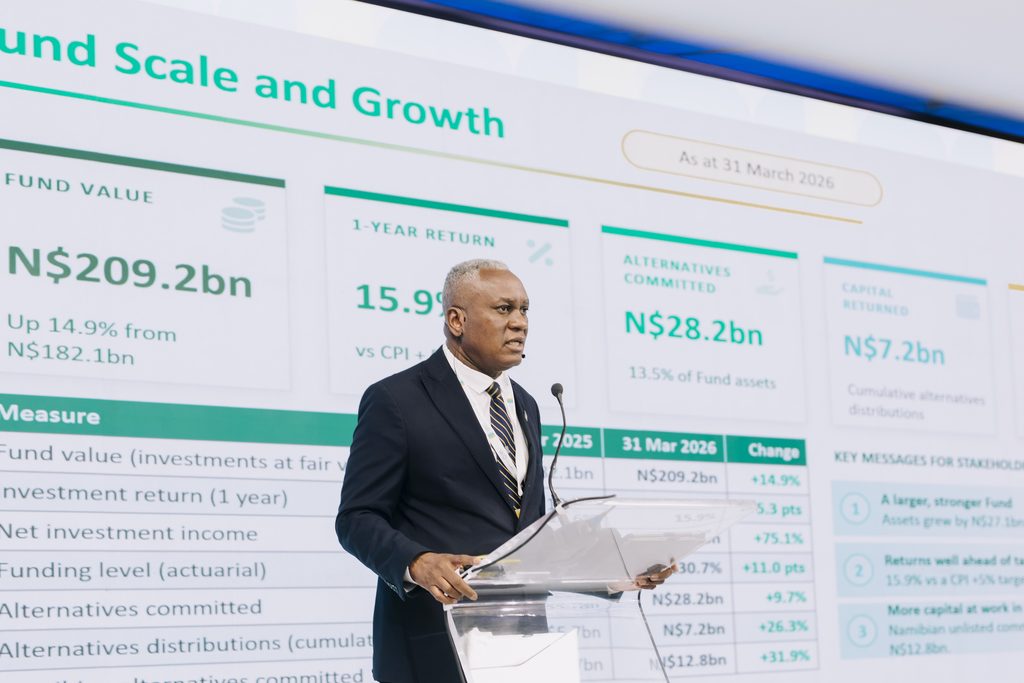
GIPF Board of Trustees Chairperson Penda Ithindi said the fund had committed N$28.2 billion to its unlisted investment portfolio, of which N$23.1 billion had been invested, leaving N$5.1 billion yet to be deployed.
Speaking at the GIPF 2026 Pension and Investment Symposium in Windhoek, Ithindi said the outstanding capital was close to the N$5 billion to N$6 billion in annual investment funding identified as necessary to support Namibia’s development priorities.
However, he cautioned that the fund could not release capital to projects that failed to meet its investment criteria, regardless of their potential economic benefits.
“I have five billion point one for him. But let me be clear. It’s conservative. It’s in a very conservative investment philosophy. So projects have to meet particular criteria. There are specific boxes to be ticked for the investment to be committed and to be invested,” Ithindi said.
He identified infrastructure as the sector with the largest gap between committed and invested capital, largely because projects require extensive preparation before they can qualify for institutional financing.
Ithindi said proposed investments must demonstrate financial viability, appropriate security arrangements and sound governance structures before the fund can commit financing.
“The fundamental question that we ask is whether they are ready, whether they are bankable, whether they could then meet all the governance aspects as well for us to be able to see fund flows,” he said.
He noted that some infrastructure proposals involved substantial investment requirements but remained unsuitable for financing because of incomplete project preparation, inadequate guarantees or other investment risks.
Despite these challenges, Ithindi said GIPF’s unlisted investment commitments had increased by approximately 10% during the period under review, while the fund had received about N$7.2 billion in distributions from the portfolio to date.
GIPF’s broader domestic investment portfolio has exceeded N$100 billion, representing 48% of the fund’s total assets.
This is above the regulatory minimum domestic investment requirement of 45%.
Ithindi said GIPF had invested approximately N$7 billion in energy and infrastructure, N$2.7 billion in small and medium enterprise (SME) financing and N$207.4 million in information and communications technology (ICT) fibre infrastructure.
The fund’s investments have also contributed to the development of an additional 545 megawatts of electricity generation capacity.
In housing and property, GIPF has invested approximately N$5 billion, supporting the delivery of 2,385 serviced plots and about 12,000 homes, while contributing to nearly 5,000 jobs.
The housing portfolio includes rent-to-own arrangements and a pension-backed home loan initiative aimed at improving access to housing finance for members.
GIPF also has approximately N$1.62 billion committed to venture capital investments, while its manufacturing and agricultural portfolio includes investments in FabuPharm and Mashare Berries.
FabuPharm operates approximately 20 medicine production lines, while the fund’s agricultural investments include grapes, dates and other high-value crops.
Ithindi said investment decisions in agriculture must consider Namibia’s production conditions, environmental risks and access to markets.
GIPF currently manages approximately 45 investment mandates and has exposure to about 315 portfolio companies across different sectors in all 14 regions.
The fund’s total assets stood at N$209 billion as at March 2026, representing year-on-year growth of approximately 16%.
It recorded an annual investment return of 15.9%, while net investment income increased by approximately 75% to N$29.2 billion.
Its funding level stood at 133%, above the target range of 105% to 115%.
Ithindi said that while GIPF remained committed to supporting domestic economic development, investment decisions would continue to be guided by its responsibility to safeguard retirement benefits.
As a defined-benefit pension fund, GIPF must maintain sufficient assets and investment income to meet its long-term obligations to members and beneficiaries.