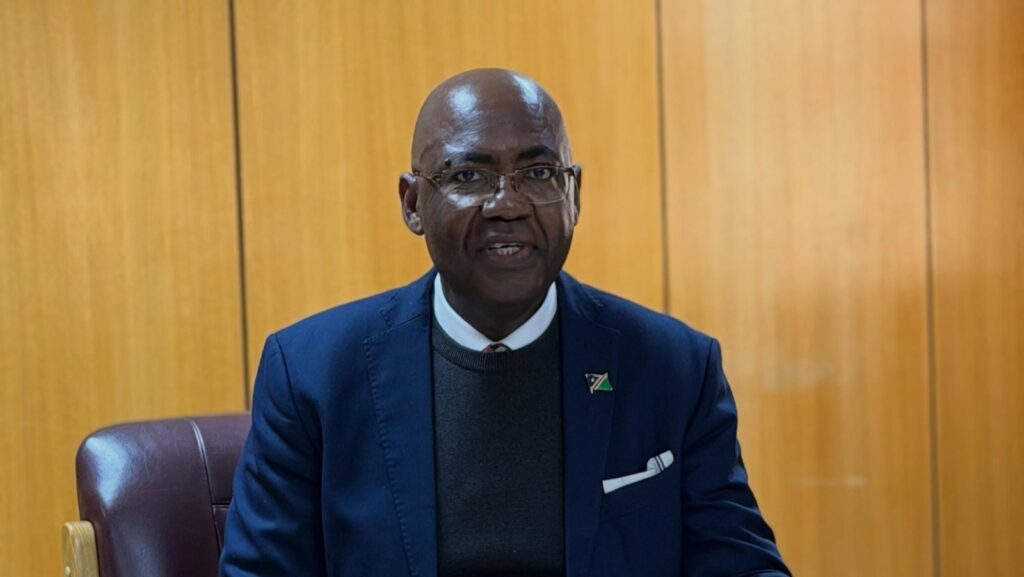
The National Planning Commission (NPC) has called for increased private sector investment to address Namibia’s development financing gaps, warning that declining official development assistance (ODA) and limited government resources are placing pressure on the implementation of the Sixth National Development Plan (NDP6).
NPC Executive Director I-Ben Natangwe Nashandi said Namibia needed to diversify its development financing sources as traditional donor funding declined and global geopolitical pressures continued to constrain fiscal resources.
Speaking at the 2026 Joint Development Partners Forum and Development Partners Coordination Open Day in Windhoek on Tuesday, Nashandi said mobilising private sector capital had become necessary to finance national development priorities.
“We are mindful of reducing ODI. But the paradox is also that fiscal spaces are limited by global geoplotics. Hence, partnerships must also extend to unlock private sector capital mobilization. This is necessary to fill in gaps in funding for development. Hence, the scope of development partners extend to private sector,” Nashandi said.
He said development partnerships should extend beyond traditional financial assistance to include private investment, technical expertise, institutional strengthening, innovation and knowledge exchange.
According to Nashandi, implementing NDP6 would require coordinated participation from government, development partners, financial institutions, businesses, civil society and academic institutions.
He said Namibia needed to ensure that economic growth translated into employment opportunities and increased participation by young people, women, rural communities, persons with disabilities and local businesses.
Nashandi identified youth unemployment, entrepreneurship and the digital economy as priority areas requiring stronger partnerships and investment.
He also called for increased support for micro, small and medium enterprises (MSMEs), particularly through improved access to finance, reduced regulatory barriers and business development programmes.
“Micro, small and medium enterprises (MSMEs) remain the backbone of many successful economies. They stimulate innovation, generate employment, strengthen local value chains and foster inclusive growth. We must therefore continue working together to improve access to finance, strengthen business development services, reduce regulatory barriers, promote innovation and support entrepreneurship across all regions of the country,” Nashandi said.
He said partnerships should focus on mobilising investment, strengthening domestic productive capacity and supporting industrial development to improve Namibia’s economic resilience.
Meanwhile, United Nations Resident Coordinator in Namibia Hopolang Phororo warned that development financing was becoming increasingly constrained despite growing demand for investment in national development programmes.
Phororo said geopolitical tensions, climate risks and global economic uncertainty were placing additional pressure on developing countries and their development partners.
She called for stronger coordination to ensure that available resources were directed towards priority projects and programmes under NDP6.
“The challenge before us is therefore not simply how to convene good discussions. It is how to ensure that the ideas, partnerships and commitments generated through these discussions continue beyond the day of the Forum and contribute to implementation and results,” Phororo said.
She proposed regular thematic engagements aligned with NDP6 priorities to allow government, development partners and other stakeholders to monitor implementation, identify bottlenecks and coordinate funding.
Phororo said Namibia could build on existing coordination mechanisms, including the National Health Partners Forum, rather than establishing additional structures that could fragment development efforts.
She added that the annual Development Partners Forum should remain a high-level platform for strategic discussions, supported by regular engagements throughout the year to track progress.
The forum, jointly organised by the NPC and the United Nations, is being held under the theme “Harnessing Emerging Economic Opportunities for Inclusive and Sustainable Growth”.
Phororo said the discussions built on previous forums that focused on poverty and hunger in 2024 and youth unemployment in 2025.
She stressed that the effectiveness of development cooperation should be measured by its contribution to employment creation, economic inclusion and the implementation of national development priorities.
Phororo reaffirmed the United Nations’ commitment to supporting the NPC through technical expertise, coordination and partnerships aimed at advancing Namibia’s development agenda.