… Proposal could support 22,000 jobs
Namibia’s pension funds and long-term insurers have been urged to invest N$30 billion in domestic infrastructure over the next five years under a proposed 5% investment target aimed at financing roads, railways, electricity, water, housing and telecommunications networks.
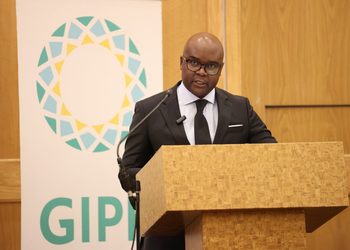
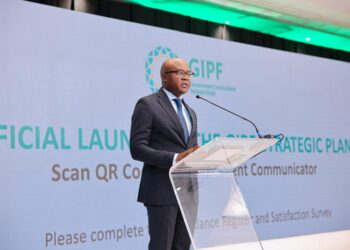
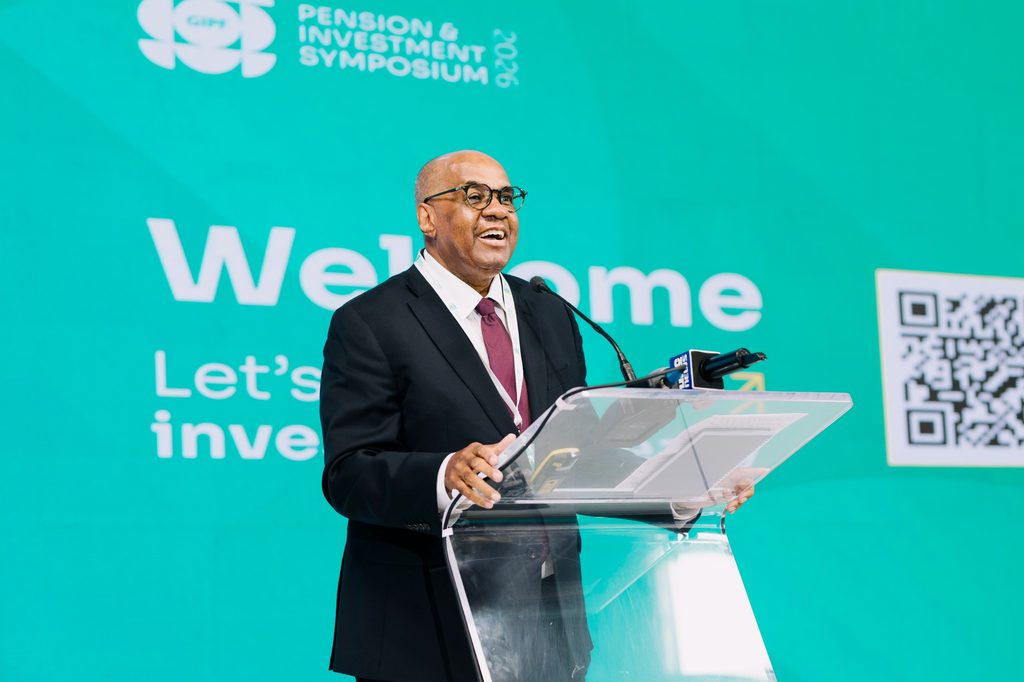
Former Bank of Namibia Governor Johannes !Gawaxab proposed the investment target at the Government Institutions Pension Fund (GIPF) Pension and Investment Symposium in Windhoek on Wednesday, calling for greater mobilisation of institutional savings to finance infrastructure development.
!Gawaxab said the proposed allocation would represent approximately 5% of Namibia’s non-bank financial assets, estimated at N$600 billion, translating into N$6 billion annually over five years.
The investment would target five priority sectors: logistics infrastructure, including roads, railways, airports and harbours; electricity generation and transmission; water security; connectivity and technology networks; and housing.
He stressed that the proposal would not amount to compulsory investment or require pension funds to compromise their fiduciary responsibilities.
Instead, it would establish a commitment among institutional investors to prepare, assess and finance commercially viable infrastructure projects.
“It is not prescription. Everything I have said this morning still stands. Not one dollar moves unless the project passes the eight tests. Five percent of new money is a commitment to prepare, review and decide, not a quota to fill. It is not compliance but a developmental imperative. If the projects are not good enough, the answer remains no, and the scorecard will tell us why,” !Gawaxab said.
He said investments should proceed only where projects demonstrated adequate risk-adjusted returns, credible underlying assets, enforceable contractual rights, sound governance, independent valuations and viable exit strategies.
According to !Gawaxab, the proposal would not require new legislation, as investments in domestic infrastructure through unlisted investment managers, listed bonds, regulated special-purpose vehicles and pooled investment platforms already qualify towards domestic asset requirements.
However, he identified Namibia’s existing 3.5% maximum allocation to unlisted assets as a regulatory consideration that could require engagement with the Namibia Financial Institutions Supervisory Authority (NAMFISA).
The proposal comes as Namibia’s non-bank financial institutions held approximately N$553 billion in assets at the end of December 2025, including N$301 billion in pension fund assets, N$107 billion in long-term insurance assets and N$123 billion in collective investment schemes.
Approximately 50% of these assets were invested domestically, while 18% were invested elsewhere in the Common Monetary Area and 32% outside the region.
!Gawaxab estimated that approximately N$275 billion in Namibian savings was invested outside the country, arguing that a portion could be mobilised to support domestic infrastructure development.
He estimated that annual infrastructure investments of N$6 billion could generate approximately N$4.8 billion in additional economic output each year, based on an assumed output multiplier of 0.8.
Over five years, the proposed investment could generate an estimated N$24 billion in economic output and support an average of 22,000 jobs during the period.
The projections are based on the proposed investment levels and assumed economic effects rather than confirmed project commitments.
To facilitate the investments, !Gawaxab proposed establishing a national project preparation facility, a Namibian co-investment platform and blended financing arrangements involving development finance institutions and private investors.
He also called for greater use of existing operational infrastructure assets through concessions, infrastructure bonds and other investment vehicles to attract institutional capital without increasing public debt.
!Gawaxab proposed that institutional investors, NAMFISA, the Bank of Namibia, the Ministry of Finance, the National Planning Commission and development partners agree on an investment framework within 100 days.
Under the proposed timetable, the first pooled investment transaction and infrastructure asset-recycling deal should reach financial close within 12 months, with progress assessed at the November 2027 symposium.
Meanwhile, GIPF Chief Executive Officer Martin Inkumbi said the symposium was intended to establish a common institutional position on the measures required to attract long-term investment capital and improve the readiness of domestic projects.
He said the discussions should produce practical outcomes, including an investment-readiness framework, greater clarity on the relationship between fiduciary responsibilities and development objectives, and opportunities for regional co-investment.
“That means moving beyond constructive discussion to a written institutional position, clearly attributable to the participating institutions. It must give our sector a basis for action: positioning Namibia for institutional capital and preparing the market for investment that drives development and impact,” Inkumbi said.
He added that selected Namibian projects would be assessed against institutional investment requirements to identify gaps in project preparation, governance, regulation, investment quality and risk management.
“This is not a pitch session: it is a diagnosis of what is ready and what still needs work. Lessons from comparable funds in the region will strengthen our evidence based on what enables institutional capital to work at scale,” Inkumbi said.
The symposium is expected to provide a basis for further engagement among pension funds, insurers, regulators, government institutions and development partners on financing commercially viable infrastructure projects in Namibia.