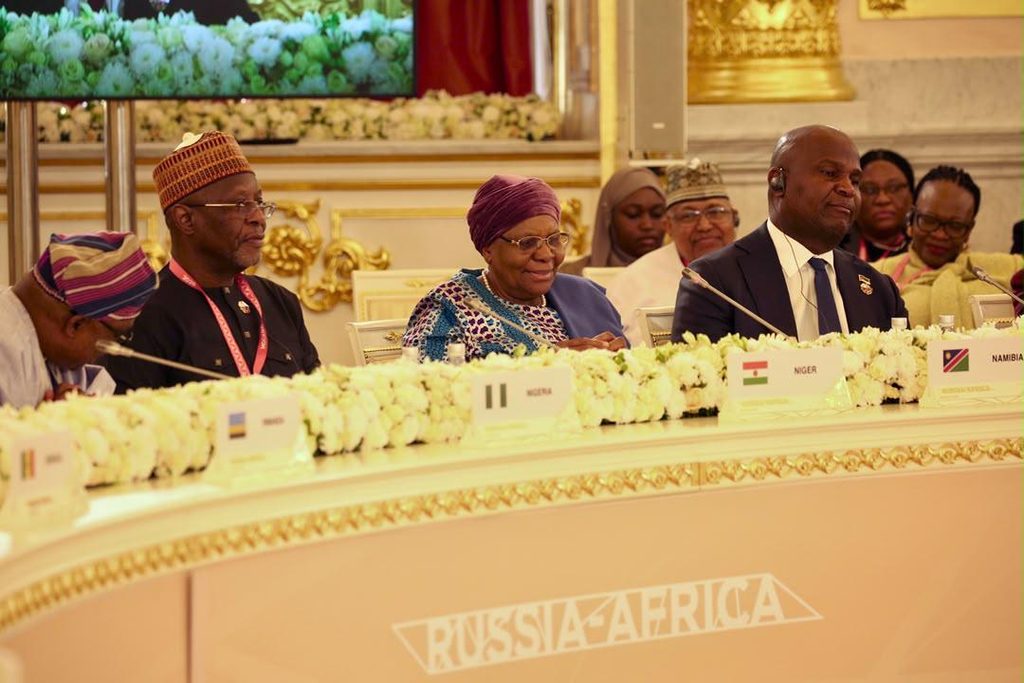
…seeks support for agriculture and livestock disease control
President Netumbo Nandi-Ndaitwah has called for stronger business-to-business partnerships between Namibia and Russia, urging companies from both countries to pursue joint ventures, investment and technology transfer to translate longstanding diplomatic relations into tangible economic benefits.
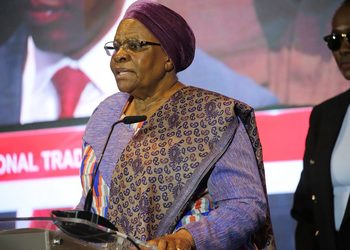
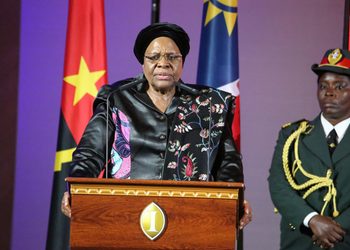
Speaking at the Third Russia-Africa Summit in Moscow on Thursday, Nandi-Ndaitwah said economic cooperation should move beyond political commitments and focus on commercially viable partnerships that support industrialisation, economic diversification and job creation.
“We must strengthen business-to-business relations, promote joint ventures, facilitate technology transfer, skills development, and diversify our economies,” she said.
The President said Namibia was seeking partnerships that would expand local production capacity, promote value addition and strengthen regional value chains, particularly in agriculture, energy, industry, technology and innovation.
She stressed that historical relations between Namibia and Russia should provide a foundation for deeper economic engagement, with greater emphasis on practical outcomes.
“Our historical solidarity must continue to serve as a foundation upon which to build stronger and more dynamic partnership, now and for the future,” Nandi-Ndaitwah said.
She identified industrialisation and local value addition as key priorities, calling for cooperation that would enable African economies to develop stronger manufacturing and processing industries.
Nandi-Ndaitwah also called for increased technology transfer and skills development to strengthen domestic industries and improve the competitiveness of African businesses.
She said academic and professional exchanges, joint research and innovation programmes should be expanded, particularly in science, technology, engineering and mathematics.
In agriculture, the President called for partnerships to introduce modern farming technologies, improve market access and develop climate-resilient agricultural production systems.
She also identified livestock development and the prevention, control and eradication of transboundary animal diseases as areas requiring closer cooperation.
“Enhanced veterinary cooperation, technology transfer and capacity-building are essential,” she said.
Nandi-Ndaitwah said Namibia’s vulnerability to drought, desertification and land degradation highlighted the need for stronger international partnerships to support climate resilience and sustainable agricultural development.
She called for the implementation of the Namib Declaration, adopted during the 11th Conference of the Parties in Windhoek in 2013, and urged greater efforts to close Africa’s water investment gap.
She said the success of future partnerships should be measured by concrete achievements, particularly investment, technology transfer, industrial development and improvements in people’s livelihoods.