Namibia and Angola are pushing to establish joint industries in mining, agriculture, fisheries, oil and gas, and energy as both countries seek to reduce their dependence on raw commodity exports and increase local manufacturing.
President Netumbo Nandi-Ndaitwah said the two neighbouring countries could no longer afford to continue exporting unprocessed natural resources while importing finished products, calling for joint investments that would create jobs, expand production and retain more economic value within the region.
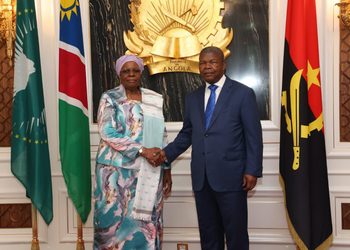
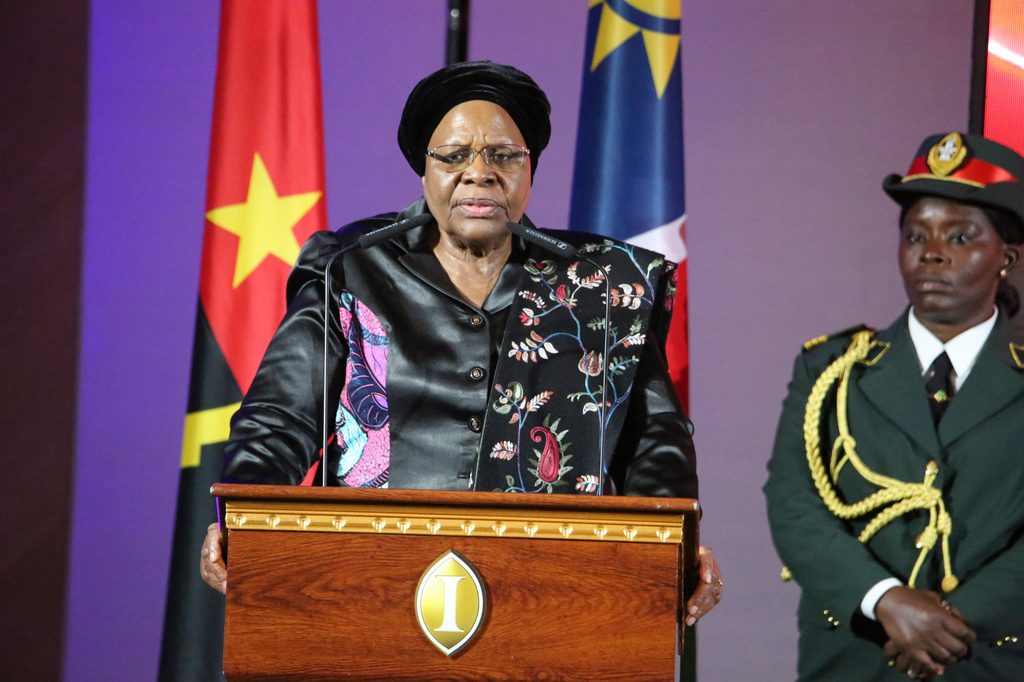
Speaking at the Angola–Namibia Business Forum in Luanda on 19 October 2026, Nandi-Ndaitwah said the countries must turn their shared natural resources and economic strengths into commercially viable industrial projects.
“Namibia and Angola have no choice, but to diversify our economies, strengthen domestic productive capacity and reduce excessive dependence on the export of unprocessed commodities,” she said.
The President identified agriculture, mining, fishing, oil and gas, and energy as priority sectors for joint investment, saying businesses should combine capital, technology and expertise to develop industries capable of supplying regional and international markets.
“While the size of our economies differs, the major economic activities are more or less the same; these are agriculture, mining, fishing, oil and gas, and energy,” she said.
Nandi-Ndaitwah acknowledged that economic cooperation between Namibia and Angola had not matched the strength of their longstanding political relations, despite increased business activity in banking, telecommunications, healthcare and hospitality.
She said the two countries needed to move beyond diplomatic commitments and translate their relationship into measurable trade, investment and industrial development.
“This Business Forum must lay the foundation for our bilateral trade,” she said.
The President called on businesses to identify bankable projects and establish joint ventures, while urging investment promotion agencies, government ministries and chambers of commerce to facilitate partnerships and track implementation.
She also pressed both governments to address barriers affecting cross-border trade, including cumbersome border procedures, logistics challenges, product standards and inadequate access to market information.
Nandi-Ndaitwah said investment should not be measured solely by capital inflows but by its contribution to employment, skills development, technology transfer and opportunities for local enterprises.
She said Namibia remained committed to improving its investment laws and policies to provide greater certainty for investors while protecting national interests.
“Our approach is therefore to encourage responsible trade and investment that creates mutual benefits for investors, host communities and the wider economy,” she said.
The President further called for small businesses and informal cross-border traders to be included in industrial development plans, warning against economic cooperation that benefits only established companies.
She said women and young entrepreneurs should also have access to financing, technology, market opportunities and supply chains linked to larger industrial investments.
Nandi-Ndaitwah urged businesses to use regional trade arrangements, including the Southern African Development Community Trade Protocol and the African Continental Free Trade Area, to expand production and access larger markets.
She insisted that the proposed industrial partnerships must be supported by clear responsibilities, implementation timelines and regular progress reviews to prevent commitments from remaining on paper.
“Governments can establish the policy environment and facilitate cooperation, but it is businesses that must identify commercial opportunities, mobilise capital, innovate, produce and trade,” she said.
The President said the success of the Namibia–Angola economic partnership would ultimately depend on whether the two countries could turn their shared resources into operating industries, increased trade and sustainable employment.