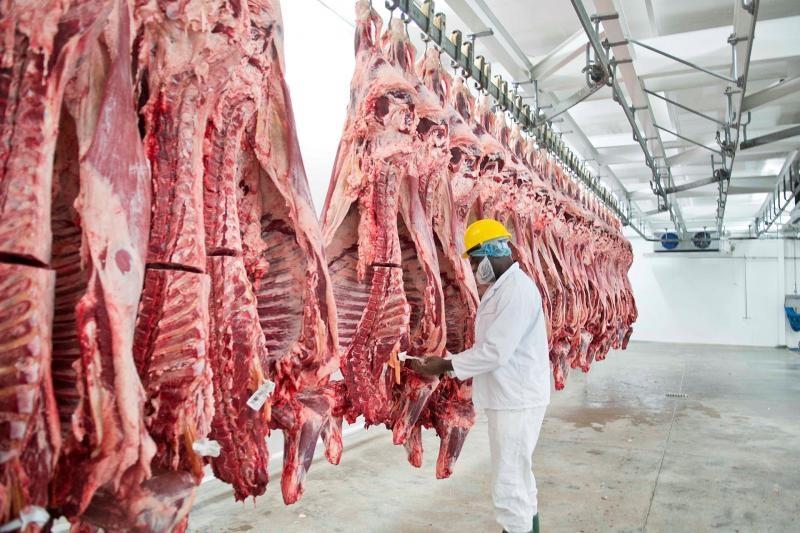
The Meat Corporation of Namibia (Meatco) will temporarily resume slaughtering on 27 and 28 October 2026 to generate revenue from cattle already held in its feedlots, following a month-long shutdown caused by the foot-and-mouth disease (FMD) outbreak.
However, the corporation has warned that the limited operation will not restore normal production or allow it to resume buying cattle from farmers, as restrictions continue to disrupt access to lucrative beef export markets.
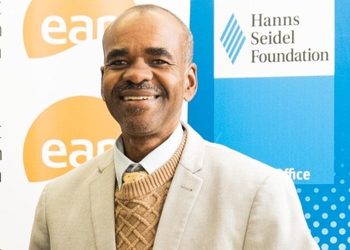
Meatco Deputy Board Chairperson Stephanie de Klerk said all beef produced during the two-day operation would be sold on the domestic market, where prices are significantly lower than those obtained from premium export destinations, particularly Europe.
The temporary slaughter will be conducted under Standard Operating Procedure Circular v8 of 2026, issued by the Directorate of Veterinary Services (DVS), following the suspension of normal slaughter operations on 23 September.
De Klerk said the arrangement would provide limited revenue but would not resolve the corporation’s worsening financial position.
“Limited slaughter for the domestic market cannot replace the revenue and margins generated through normal export operations,” Meatco said.
The corporation said it remained far from commercial recovery, with the continued loss of export revenue placing increasing pressure on its ability to meet financial commitments.
Despite the shutdown, Meatco has continued honouring its financial commitments to livestock producers and employees, drawing on increasingly constrained cash resources.
De Klerk warned that the corporation could not sustain these obligations indefinitely without sufficient commercial revenue or additional financial support.
“The Corporation cannot indefinitely sustain payments to livestock producers, salaries and other financial obligations without sufficient commercial revenue or additional financial support. The longer the disruption continues, the greater the pressure on our ability to meet these commitments,” she said.
In response, Meatco has introduced emergency cost-containment measures, including restrictions on non-essential spending, procurement and official travel, alongside tighter controls on overtime and recruitment.
Temporary special leave arrangements have also been introduced following the suspension of production.
The corporation is holding discussions with recognised trade unions and employee representatives over further labour cost reductions and other measures necessary to keep the business operational.
Meatco said the discussions were ongoing and acknowledged that the proposed measures would have significant implications for employees.
Meanwhile, the corporation said there was no certainty over when normal slaughtering and livestock procurement would resume.
Any broader resumption of operations will depend on further directives from the DVS, while the restoration of access to traditional export markets remains subject to regulatory requirements imposed by importing countries.
“We cannot responsibly predict when normal operations will resume or when the Corporation will again be able to operate on a commercially sustainable basis,” Meatco said.
The corporation is also pursuing alternative sales opportunities in the domestic retail, wholesale, hospitality and catering sectors, while assessing permissible regional and international trading opportunities.
However, it warned that these markets would not fully compensate for the loss of higher-value beef exports.
De Klerk called on the government, as Meatco’s shareholder, to urgently provide financial and commercial support to help the corporation withstand the prolonged disruption.
“We therefore call upon Government, as our Shareholder, and our partners across the livestock industry to work urgently towards practical financial and commercial interventions. Meatco cannot shoulder the financial consequences of this crisis indefinitely on its own,” she said.
She warned that the consequences of the shutdown extended beyond Meatco to livestock producers dependent on market access, employees and the wider livestock industry.
The corporation said its immediate priority was to preserve available financial resources, meet essential obligations for as long as possible and maintain the capacity to resume normal operations once veterinary restrictions and market conditions allow.