Sunday, November 29, 2026
Subscribe
The Brief | Namibia's Leading Business & Financial News
  • Home
  • Companies
    • Finance
    • Agriculture
    • Technology
    • Property
    • Trade
    • Tourism
  • Business & Economy
  • E-PAPERreader
  • Mining & Energy
  • Opinions
    • Analysis
    • Columnists
  • Africa
No Result
View All Result
The Brief | Namibia's Leading Business & Financial News
Subscribe
No Result
View All Result
Home Companies Agriculture

FMD cases rise to 131 across 18 farms in //Kharas

by reporter
October 19, 2026
in Agriculture
9
A A
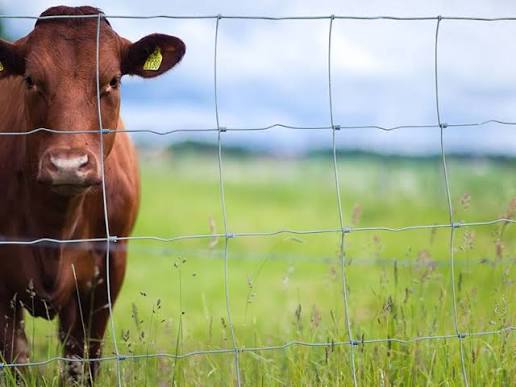
Brown cow standing behind a wire fence in a green pasture on a sunny day.

Namibia has recorded 131 confirmed cases of foot-and-mouth disease (FMD) across 18 farms in the Karasburg Veterinary District of the //Kharas Region, as authorities maintain strict livestock movement and slaughter restrictions to contain the outbreak.

Chief Veterinary Officer Dr Kenneth Shoombe confirmed that the outbreak remains confined to the Karasburg Veterinary District, with laboratory tests identifying the virus as Southern African Territory (SAT) 1 serotype.

“As of 15 October 2026, a total of a hundred and thirty-one (131) animals tested positive across eighteen (18) farms with the virus circulating, confirmed as FMD serotype Southern African Territory (SAT) 1,” Shoombe said.

He said intensified disease surveillance, livestock movement controls and the tracing of animals moved from infected areas before the outbreak was detected remain in force under the Animal Health Act.

The restrictions continue to affect livestock movement, slaughtering and the transportation of raw meat and animal products, particularly within the //Kharas Region.

“Movement of raw meat and animal products from butcheries, abattoirs, slaughterhouses, informal slaughter slabs, cold storages in //Kharas Region remains restricted,” Shoombe said.

However, raw meat and animal products from registered facilities outside the region may still be transported into //Kharas for retail or personal consumption, provided the necessary documentation is presented.

Meat purchased from retailers within the region may also be transported for personal consumption, subject to proof of purchase.

Outside //Kharas, but south of the Veterinary Cordon Fence, animals held at registered feedlots and quarantine facilities may be moved directly to registered abattoirs for slaughter, subject to strict veterinary conditions.

These include confirmation that no new animals have entered the holding facilities during the preceding 30 days, the implementation of biosecurity measures and negative FMD test results following clinical examinations and sampling.

Shoombe said slaughtering animals on farms or homesteads for commercial sale remains prohibited until further notice.

“Slaughtering at the farm/homestead for sale purposes is prohibited until further notice,” he said.

Slaughtering for household consumption remains permitted, provided the meat and related products are not transported away from the premises where slaughtering takes place.

Despite the restrictions, livestock exports may continue for animals already standing and ready for export, excluding those in //Kharas, subject to the importing country’s veterinary requirements.

“Animals standing and ready for export will be allowed to be exported (excluding animals in //Kharas Region) subject to import conditions set by the importing country,” Shoombe said.

The movement and trade of commercially processed meat products, including cooked meat, biltong, dried sausages and pasteurised dairy products from registered facilities, remain permitted nationwide.

Shoombe further confirmed that livestock movement north of the Veterinary Cordon Fence remains permitted, except in the Zambezi Region, where separate disease control measures apply.

He urged farmers and livestock industry stakeholders to remain vigilant and immediately report suspected infections to the nearest State Veterinary Office.

“Farmers, members of the public and stakeholders are urged to be on the lookout and report clinical symptoms of FMD to the nearest State Veterinary Office,” Shoombe said.

Clinical symptoms of FMD include blisters and wounds in the mouth and between the hooves, excessive salivation, reluctance to move and deterioration in body condition.

Shoombe said the public would continue to receive updates as the disease situation develops, with control measures subject to changes in the outbreak situation.

author avatar
reporter
See Full Bio
Previous Post

Namibia, Angola push to accelerate stalled infrastructure projects

Next Post

IMF projects Namibia’s current account deficit to widen to 16.9% of GDP

Must Read

White-and-brown longhorn cow in a dry grassy field under a clear blue sky, foreground focus on its curved horns.
Agriculture

Namibia targets six-month recovery of FMD-free status as UK clears nine consignments

November 27, 2026
Rows of white and brown eggs packed in stacked cardboard trays.
Agriculture

Namibia exports 135,479 eggs to Botswana, Zimbabwe and SA

November 26, 2026
Group of cows standing in a grassy field under a cloudy sky.
Agriculture

Namibia vaccinates 26,898 cattle as FMD containment efforts continue

November 25, 2026
Two professionals shake hands in front of a tree mural with flags on either side behind them.
Agriculture

Namibia, Botswana move to remove livestock export barriers

November 24, 2026
Close-up of a brown-and-white goat in the foreground with a yellow ear tag, standing among other goats in a straw-filled barn pen.
Agriculture

South Africa takes 95% of Namibia’s live goat exports as shipments decline

November 24, 2026
Namibia imports over 1.3 million litres of milk in January
Agriculture

Namibia faces 13.3 million-litre milk deficit, needs 3,600 more dairy cows

November 23, 2026
Load More

Related News

Understanding fertilizer application methods

Understanding fertilizer application methods

October 29, 2021
Deep-South seeks to raise N$27.5m for Namibia copper venture

Deep-South seeks to raise N$27.5m for Namibia copper venture

August 28, 2023
Standard Bank launches online calculator for vehicle finance

Standard Bank launches online calculator for vehicle finance

November 24, 2025

Browse by Category

  • Africa
  • Agriculture
  • Analysis
  • Business & Economy
  • Columnists
  • Companies
  • e-edition
  • Finance
  • Finance
  • Fisheries
  • Green Hydrogen
  • Health
  • Investing
  • Latest
  • Market
  • Mining & Energy
  • Namibia
  • namibia
  • News
  • Opinions
  • Property
  • Retail
  • Technology
  • Tourism
  • Trade
The Brief | Namibia's Leading Business & Financial News

The Brief is Namibia's leading daily business, finance and economic news publication.

CATEGORIES

  • Business & Economy
  • Companies
    • Agriculture
    • Finance
    • Fisheries
    • Health
    • Property
    • Retail
    • Technology
    • Tourism
    • Trade
  • e-edition
  • Finance
  • Green Hydrogen
  • Investing
  • Latest
  • Market
  • Mining & Energy
  • namibia
  • News
    • Africa
    • Namibia
  • Opinions
    • Analysis
    • Columnists

CONTACT US

Cell: +264814612969

Email: newsdesk@thebrief.com.na

© 2026 The Brief | All Rights Reserved. Namibian Business News, Current Affairs, Analysis and Commentary

Welcome Back!

Login to your account below

Forgotten Password?

Retrieve your password

Please enter your username or email address to reset your password.

Log In
No Result
View All Result
  • Home
  • Companies
  • Mining & Energy
  • Business & Economy
  • Opinions
    • Analysis
    • Columnists
  • Africa

© 2026 The Brief | All Rights Reserved. Namibian Business News, Current Affairs, Analysis and Commentary

This website uses cookies. By continuing to use this website you are giving consent to cookies being used. Visit our Privacy and Cookie Policy.