Thursday, October 15, 2026
Subscribe
The Brief | Namibia's Leading Business & Financial News
  • Home
  • Companies
    • Finance
    • Agriculture
    • Technology
    • Property
    • Trade
    • Tourism
  • Business & Economy
  • E-PAPERreader
  • Mining & Energy
  • Opinions
    • Analysis
    • Columnists
  • Africa
No Result
View All Result
The Brief | Namibia's Leading Business & Financial News
  • Home
  • Companies
    • Finance
    • Agriculture
    • Technology
    • Property
    • Trade
    • Tourism
  • Business & Economy
  • E-PAPERreader
  • Mining & Energy
  • Opinions
    • Analysis
    • Columnists
  • Africa
No Result
View All Result
The Brief | Namibia's Leading Business & Financial News
Subscribe
No Result
View All Result
Home Companies Finance

Lack of credit histories shuts individuals, small businesses out of financing

by reporter
October 15, 2026
in Finance
5
A A

Individuals and small businesses without established credit histories risk being excluded from formal financing as banks continue to rely heavily on traditional credit records to assess borrowers.

Credit risk expert Naeem Siddiqi said financial institutions needed to expand their lending assessments beyond credit bureau records by incorporating alternative data, including mobile phone transactions, rental payments, utility bills and digital business records.

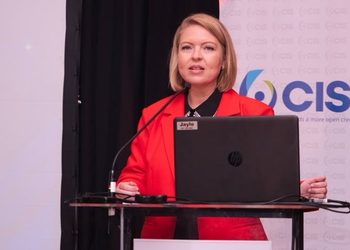
Speaking at the 3rd Africa Credit and Risk Reporting Conference in Windhoek, Siddiqi, Principal at Naeem Siddiqi and Associates, said conventional credit assessment methods often failed to capture the financial activities of people who had never borrowed from formal institutions.

He said alternative data could help lenders assess the repayment capacity of unbanked and underbanked individuals, first-time borrowers and small businesses that lacked formal financial statements.

“Approximately 1.5 billion people globally are underbanked or unbanked. Of these, a significant number have access to mobile phones, and billions have smartphones,” Siddiqi said.

He said mobile phone usage and digital payment records offered opportunities to assess potential borrowers who remained outside traditional credit reporting systems.

Access to financial services across sub-Saharan Africa ranged from approximately 35% to 80%, depending on the market and measurement used, highlighting disparities in financial inclusion.

Siddiqi said information such as prepaid airtime purchases, utility payment histories and banking transactions could provide additional insights into financial behaviour, particularly where conventional credit records were unavailable.

Small and medium-sized enterprises (SMEs) could also benefit from broader credit assessments, as many businesses struggled to obtain financing because they lacked audited financial statements or sufficient borrowing histories.

He said digital sales records, supplier transactions and shipping information could help banks evaluate business activity, cash flow and repayment capacity.

However, Siddiqi warned that alternative data should not automatically be treated as reliable evidence of creditworthiness.

“The idea is that some everyday behaviours may correlate with characteristics associated with financial reliability. Nevertheless, such correlations must be interpreted carefully before they are used in lending decisions,” he said.

He also cautioned against excessive reliance on artificial intelligence in credit assessments, warning that automated systems could produce misleading outcomes if they relied on incomplete or poorly interpreted data.

Some indicators, including social media activity and digital behaviour, could also raise privacy concerns or indirectly reflect sensitive personal characteristics.

“Much of the data I have discussed is uncertain, highly localised and context-dependent. You cannot simply put it into a black-box algorithm and accept the results. You need people who can analyse the data, question assumptions and develop sensible strategies for using it,” Siddiqi said.

He said banks would need to invest in digital infrastructure, analytical expertise and stronger data governance systems to incorporate alternative information into lending decisions.

Siddiqi added that existing banking compliance and risk management frameworks could provide a foundation for adopting alternative credit assessment methods while protecting borrowers.

He said combining traditional credit records with alternative data and human judgement could improve lending decisions and expand financing opportunities for individuals and businesses currently underserved by the banking sector.

author avatar
reporter
See Full Bio
Previous Post

MSC Cruises seeks Namibians to fill 130 cruise ship vacancies

Next Post

Ngurare warns against favouritism in public and private sector recruitment

Must Read

Woman in a red blazer delivering a talk at a podium with a laptop on stage at a conference.
Finance

Limited credit data locking Namibian businesses and individuals out of loans

October 15, 2026
Modern multi-story building with red-brick and glass facade, curved entrance, and driveway at sunset.
Finance

BoN to test transaction-based credit assessments in 2027

October 14, 2026
Professional headshot of a man in a navy suit and plaid tie against a light blue backdrop, neutral expression.
Finance

Mobile money and digital data offer new opportunities for lending

October 14, 2026
Two businessmen in suits pose with documents at a Bank of Namibia event backdrop.
Finance

Bank of Namibia, Bundesbank renew central banking cooperation deal

October 13, 2026
Portrait of a bald man in a navy suit and red tie, wearing black-ramed glasses, looking at the camera in an office setting
Finance

Tsaone Raboloko appointed Bank Gaborone MD

October 13, 2026
Modern six-story office building with exterior curved staircases on the right, brick and concrete façade, and large glass windows against a clear blue sky.
Finance

Auditor-General flags N$792.4m discrepancy in government accounts

October 12, 2026
Load More

Related News

Ethics in business and corporations

Ethics in business and corporations

March 16, 2026
Luvindao sets sights on Namibia’s first state-owned pharmaceutical plant

Luvindao sets sights on Namibia’s first state-owned pharmaceutical plant

April 23, 2025
Matomola re-elected CISNA chairperson

Matomola re-elected CISNA chairperson

October 11, 2023

Browse by Category

  • Africa
  • Agriculture
  • Analysis
  • Business & Economy
  • Columnists
  • Companies
  • e-edition
  • Finance
  • Finance
  • Fisheries
  • Green Hydrogen
  • Health
  • Investing
  • Latest
  • Market
  • Mining & Energy
  • namibia
  • Namibia
  • News
  • Opinions
  • Property
  • Retail
  • Technology
  • Tourism
  • Trade
The Brief | Namibia's Leading Business & Financial News

The Brief is Namibia's leading daily business, finance and economic news publication.

CATEGORIES

  • Business & Economy
  • Companies
    • Agriculture
    • Finance
    • Fisheries
    • Health
    • Property
    • Retail
    • Technology
    • Tourism
    • Trade
  • e-edition
  • Finance
  • Green Hydrogen
  • Investing
  • Latest
  • Market
  • Mining & Energy
  • namibia
  • News
    • Africa
    • Namibia
  • Opinions
    • Analysis
    • Columnists

CONTACT US

Cell: +264814612969

Email: newsdesk@thebrief.com.na

© 2026 The Brief | All Rights Reserved. Namibian Business News, Current Affairs, Analysis and Commentary

Welcome Back!

Login to your account below

Forgotten Password?

Retrieve your password

Please enter your username or email address to reset your password.

Log In
No Result
View All Result
  • Home
  • Companies
  • Mining & Energy
  • Business & Economy
  • Opinions
    • Analysis
    • Columnists
  • Africa

© 2026 The Brief | All Rights Reserved. Namibian Business News, Current Affairs, Analysis and Commentary

This website uses cookies. By continuing to use this website you are giving consent to cookies being used. Visit our Privacy and Cookie Policy.