Individuals and small businesses without established credit histories risk being excluded from formal financing as banks continue to rely heavily on traditional credit records to assess borrowers.
Credit risk expert Naeem Siddiqi said financial institutions needed to expand their lending assessments beyond credit bureau records by incorporating alternative data, including mobile phone transactions, rental payments, utility bills and digital business records.
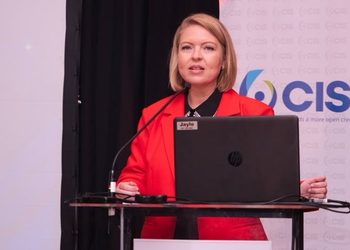
Speaking at the 3rd Africa Credit and Risk Reporting Conference in Windhoek, Siddiqi, Principal at Naeem Siddiqi and Associates, said conventional credit assessment methods often failed to capture the financial activities of people who had never borrowed from formal institutions.
He said alternative data could help lenders assess the repayment capacity of unbanked and underbanked individuals, first-time borrowers and small businesses that lacked formal financial statements.
“Approximately 1.5 billion people globally are underbanked or unbanked. Of these, a significant number have access to mobile phones, and billions have smartphones,” Siddiqi said.
He said mobile phone usage and digital payment records offered opportunities to assess potential borrowers who remained outside traditional credit reporting systems.
Access to financial services across sub-Saharan Africa ranged from approximately 35% to 80%, depending on the market and measurement used, highlighting disparities in financial inclusion.
Siddiqi said information such as prepaid airtime purchases, utility payment histories and banking transactions could provide additional insights into financial behaviour, particularly where conventional credit records were unavailable.
Small and medium-sized enterprises (SMEs) could also benefit from broader credit assessments, as many businesses struggled to obtain financing because they lacked audited financial statements or sufficient borrowing histories.
He said digital sales records, supplier transactions and shipping information could help banks evaluate business activity, cash flow and repayment capacity.
However, Siddiqi warned that alternative data should not automatically be treated as reliable evidence of creditworthiness.
“The idea is that some everyday behaviours may correlate with characteristics associated with financial reliability. Nevertheless, such correlations must be interpreted carefully before they are used in lending decisions,” he said.
He also cautioned against excessive reliance on artificial intelligence in credit assessments, warning that automated systems could produce misleading outcomes if they relied on incomplete or poorly interpreted data.
Some indicators, including social media activity and digital behaviour, could also raise privacy concerns or indirectly reflect sensitive personal characteristics.
“Much of the data I have discussed is uncertain, highly localised and context-dependent. You cannot simply put it into a black-box algorithm and accept the results. You need people who can analyse the data, question assumptions and develop sensible strategies for using it,” Siddiqi said.
He said banks would need to invest in digital infrastructure, analytical expertise and stronger data governance systems to incorporate alternative information into lending decisions.
Siddiqi added that existing banking compliance and risk management frameworks could provide a foundation for adopting alternative credit assessment methods while protecting borrowers.
He said combining traditional credit records with alternative data and human judgement could improve lending decisions and expand financing opportunities for individuals and businesses currently underserved by the banking sector.