Namibia’s coffee market is attracting growing interest from international brands, with new trade data showing the country imported more than N$559 million worth of coffee and coffee-related products between January 2024 and March 2026.
The figures suggest that Namibia is emerging as an increasingly attractive consumer market, despite producing no coffee of its own.
According to the Namibia Statistics Agency, coffee imports reached N$559.4 million over the period, compared to exports of just N$718,702, highlighting the scale of domestic consumption.
Imports rose from N$235.6 million in 2024 to N$268.2 million in 2025, with a further N$55.6 million worth of coffee products entering the country during the first quarter of 2026.
The surge in consumption comes as international coffee brands race to establish a foothold in Namibia’s growing café and specialty coffee market.
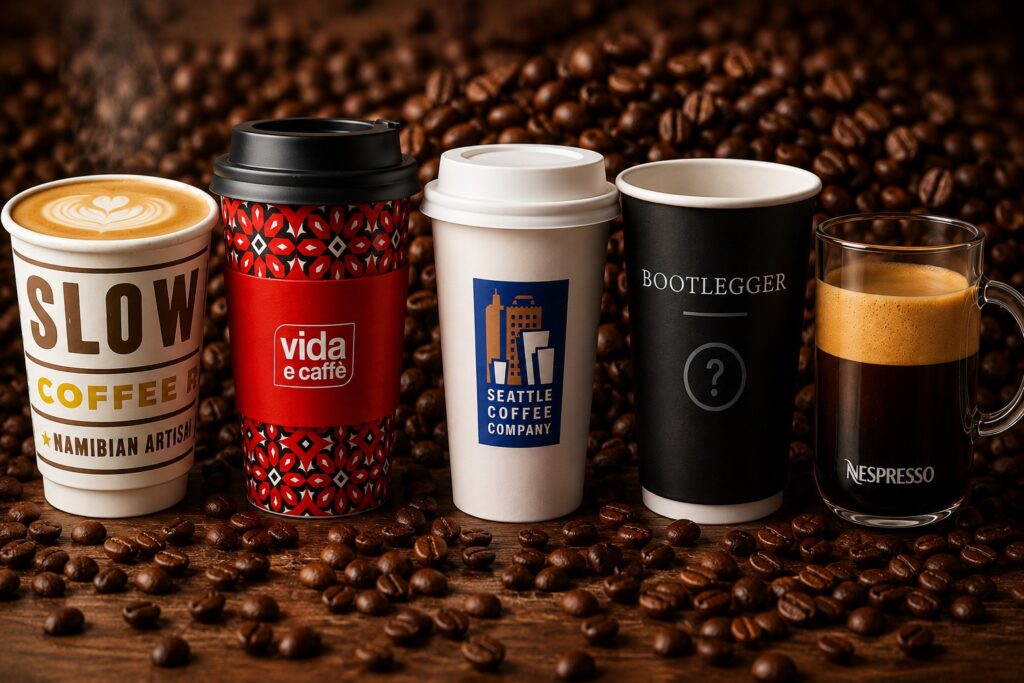
Earlier this year, premium coffee giant Nespresso opened its first Namibian nano boutique at The Grove Mall in Windhoek, signalling confidence in the country’s higher-end consumer segment.
South African chain Bootlegger Coffee also entered the market in September last year, choosing Namibia for its first international expansion with two outlets in Windhoek.
Seattle Coffee Company has since joined the market and announced plans to expand into Swakopmund and Walvis Bay, while Vida e Caffè recently opened its first Namibian outlet at Maerua Mall.
The entry of multiple international brands within a relatively short period points to increasing competition in a market that was previously dominated by local operators.
Namibian-owned Slowtown Coffee remains one of the country’s largest coffee businesses, operating six outlets and supplying more than 200 wholesale customers, including hotels, lodges, offices and retailers.
The company has also expanded beyond retail coffee sales into equipment supply and barista training, strengthening its position in the market.
Trade statistics show the largest import category was coffee husks, skins and coffee substitutes containing coffee, valued at N$146.3 million. Roasted non-decaffeinated coffee accounted for N$88.7 million, while roasted chicory and other coffee substitutes contributed N$87.3 million.
Namibia also imported N$66.9 million worth of green coffee beans and more than N$116 million worth of instant coffee and coffee extract products.
South Africa remains the country’s dominant coffee supplier, accounting for imports worth approximately N$96.9 million in 2025. Germany supplied N$18.4 million worth of coffee products, followed by Switzerland, Brazil and Uganda.
While imports continue to climb, exports remain negligible.
Coffee exports declined from N$412,836 in 2024 to N$249,856 in 2025 and generated only N$56,011 during the first quarter of 2026.
The widening trade gap reflects a market driven almost entirely by domestic consumption, but one that is increasingly attracting investment from international brands seeking a share of Namibia’s growing coffee economy.