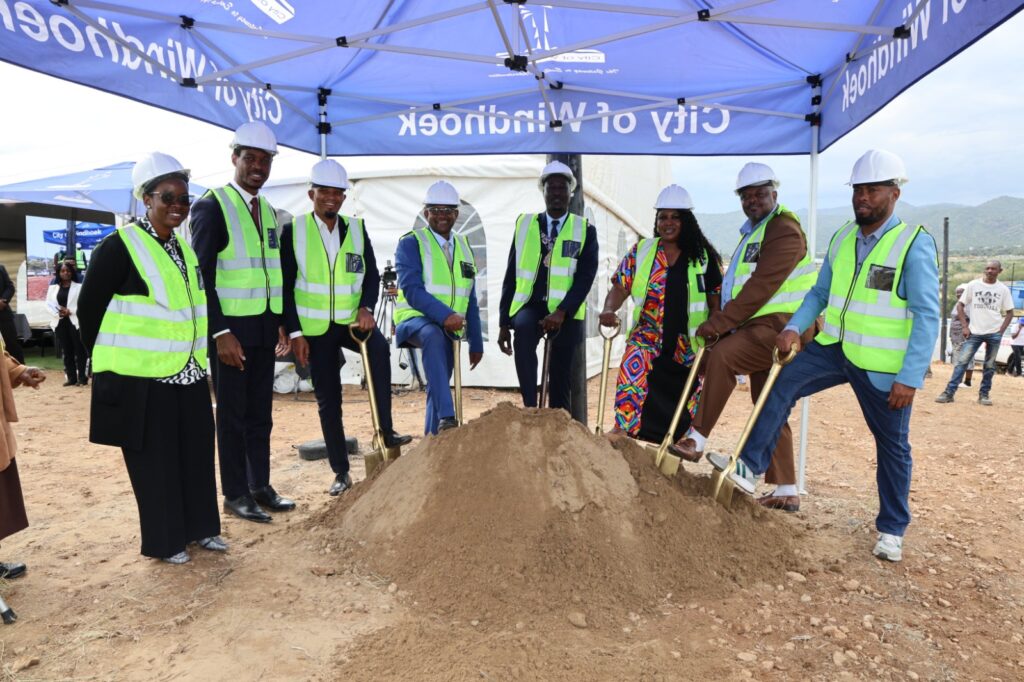
The Mayor of the Municipal Council of Windhoek, Sakarias Uunona, says about 8,000 households have been connected to the electricity grid under the city’s electrification programme, with a further 1,300 households targeted in the 2025/2026 financial year at a cost of N$33 million.
The programme, implemented since 2018 in partnership with central government through the Ministry of Urban and Rural Development and the Ministry of Industries, Mines and Energy, focuses on informal and peri-urban settlements experiencing rapid urbanisation.
“To date, approximately 8,000 households have been connected to the electricity grid, a clear demonstration of what can be achieved through strong partnerships and a shared vision. In the 2025/2026 financial year, construction work commenced to electrify approximately 1,300 households at an estimated cost of N$33 million,” Uunona said.
Household allocations for the current phase include 492 in Tobias Hainyeko Constituency, 275 in Windhoek Rural Constituency, 260 in Moses //Garoëb Constituency and 281 in Khomasdal Constituency.
“Since 2018, the Municipal Council of Windhoek, with support from central government through the Ministry of Urban and Rural Development and the Ministry of Industries, Mines and Energy, has implemented a targeted electrification programme for informal and peri-urban settlements,” Uunona said.
He said the allocation model is designed to direct infrastructure investment to areas with the greatest need, while supporting broader goals of inclusive urban development and improved service delivery.
Additional infrastructure is being rolled out alongside household connections, including a high-mast lighting programme covering 15 installations across informal and peri-urban areas to improve safety and support economic activity.
Uunona said 10 high-mast lights under the second phase have been installed, while five from the initial phase have been erected, with three already energised and two awaiting final connection.
The municipality is also incorporating skills development into the programme through the appointment of graduate electrical engineers, who are receiving on-site training under supervision.
“The Municipal Council of Windhoek has appointed Namibian graduate electrical engineers who will be trained during the execution of these projects under the mentorship of experienced engineers,” Uunona said.
He added that the electrification programme forms part of a broader strategy to expand access to basic services and support long-term urban development.