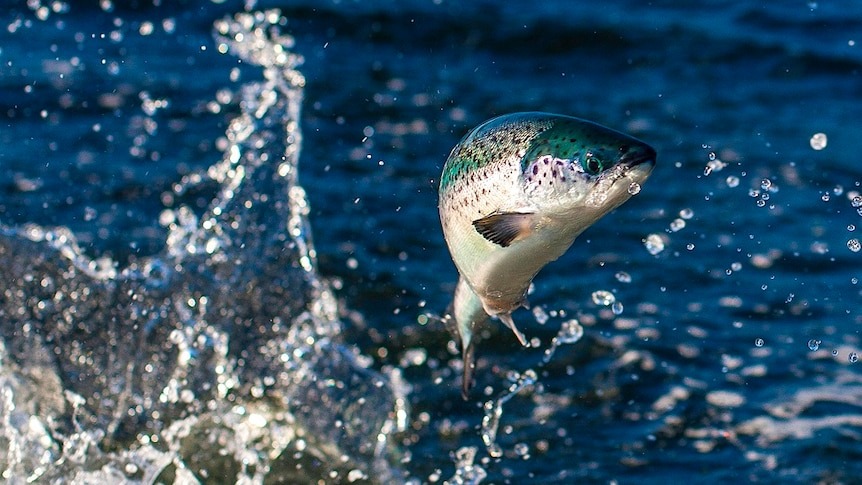
The African Aquaculture Company (AAC) says Namibia has the potential to produce up to 51,000 tonnes of salmon annually and generate turnover of approximately N$7 billion (€400 million) once full-scale production is achieved by 2030.
AAC Chief Executive Officer Helge Krogenes said production will be introduced in phases, beginning with an initial target of 1,000 tonnes, followed by expansion to 5,000 tonnes before scaling up to full capacity of 51,000 tonnes.
The early production phase will primarily supply the Southern African market, including Namibia and South Africa, with fresh salmon, while later stages are expected to target broader African and international export markets.
“At full production of 51,000 tonnes, total annual revenue is projected at €400 million. Compared to the existing fishing industry, we would be matching export revenues at that level of production. This represents a significant opportunity and could become a major industry in Namibia,” Krogenes said.
The company aims to capitalise on growing global demand for salmon, currently estimated at around three million tonnes per year and expanding at an annual rate of between 5% and 7%. At a growth rate of roughly 6%, global demand increases by about 180,000 tonnes annually — a supply gap Krogenes believes Namibia is well positioned to help address.
AAC has already secured its first batch of salmon eggs, with additional consignments expected later this year. Smolt production is anticipated by 2027, with the first commercial harvest projected for 2028.
The farming model will follow established international aquaculture practices used in major salmon-producing countries such as Norway and Chile, which together account for a significant share of global output.
The project will deploy advanced offshore technology, including reinforced sea cages designed to withstand harsh ocean conditions and protective barriers to prevent seal interference. Environmental monitoring and regulatory compliance will form a central component of development, supported by environmental impact assessments conducted in consultation with relevant authorities.
Krogenes said salmon’s status as a globally traded commodity strengthens the project’s commercial prospects.
“The project has high profitability potential. One of the reasons is that salmon is traded on a commodity exchange, meaning farms can reference global price levels when selling their production,” he said.
Beyond primary production, the initiative is expected to stimulate broader economic activity through hatchery operations, feed supply logistics, transport services and partnerships with processing facilities. Initial sales will focus on head-on gutted fish supplied to processing and distribution partners, with longer-term plans aimed at deeper value-chain integration.
The proposed offshore farming operations will be located near Lüderitz, where ocean temperatures range between 10°C and 16°C — conditions considered optimal for salmon growth. Krogenes noted that salmon grow best at around 13°C, making Namibia’s southern coastal waters suitable for open-ocean aquaculture.
Each offshore site, covering approximately 60 square kilometres and averaging depths of about 100 metres, has been licensed to produce up to 17,000 tonnes of salmon annually.