Sunday, August 23, 2026
Subscribe
The Brief | Namibia's Leading Business & Financial News
  • Home
  • Companies
    • Finance
    • Agriculture
    • Technology
    • Property
    • Trade
    • Tourism
  • Business & Economy
  • E-PAPERreader
  • Mining & Energy
  • Opinions
    • Analysis
    • Columnists
  • Africa
No Result
View All Result
The Brief | Namibia's Leading Business & Financial News
  • Home
  • Companies
    • Finance
    • Agriculture
    • Technology
    • Property
    • Trade
    • Tourism
  • Business & Economy
  • E-PAPERreader
  • Mining & Energy
  • Opinions
    • Analysis
    • Columnists
  • Africa
No Result
View All Result
The Brief | Namibia's Leading Business & Financial News
Subscribe
No Result
View All Result
Home Latest

Khomas has highest number of informal settlements in Namibia

by reporter
February 25, 2026
in Latest
8
A A

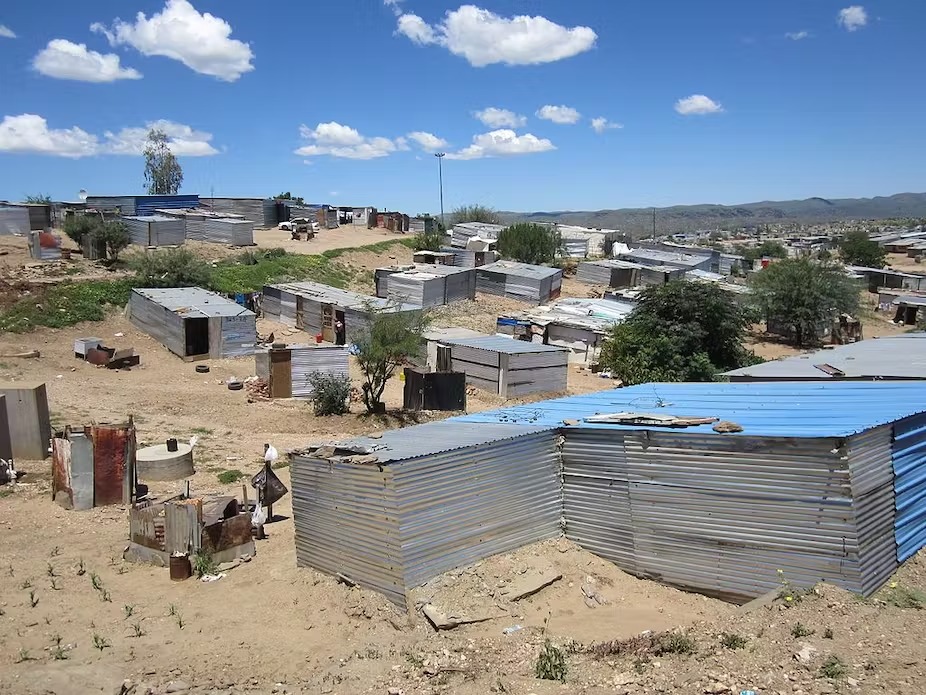
The Khomas Region has the highest number of informal settlements in Namibia, accounting for 150 of the 419 undeclared informal settlements recorded nationwide, or roughly 35.8% of the national total, according to the Namibia Informal Settlements Baseline Report.

The report, compiled by the Ministry of Urban and Rural Development in collaboration with the Namibia Statistics Agency (NSA), highlights the growing scale of urban informality and mounting pressure on local authorities to provide basic services and secure land tenure.

Presenting the findings, Statistician General and NSA Chief Executive Officer Alex Shimuafeni said the country has 563 urban settlements exhibiting varying levels of informality.

“From the 563 listed settlements, 419 (74.4%) were classified as informal settlements, while the remaining 144 (25.6%) were declared townships which were still exhibiting some levels of informality,” Shimuafeni said.

He noted that more than half of informal settlements are located within municipalities, which host 221 settlements, representing 52.7% of the total. Towns account for 145 settlements, or 34.6%, while 53 settlements, equivalent to 12.6%, are located in villages.

“Khomas Region had the highest number of informal settlements (150, 35.8%), followed by Otjozondjupa (42; 10.0%), Oshana (32; 7.6%), Hardap (31; 7.4%), and Kunene (27; 6.4%),” Shimuafeni said.

The report further indicates that 89.5% of informal settlements are concentrated in municipalities and towns, placing significant strain on local authorities, which own approximately 98.3% of the land on which these settlements are situated.

Nationally, more than 60% of informal settlements are classified as congested, with Windhoek recording a congestion rate of 59.3%. Despite being located within urban boundaries, most settlements remain disconnected from essential infrastructure and services.

According to the findings, 86.4% of informal settlements lack access to formal sewer systems, while 70.4% have no connection to both formal water and electricity networks. In addition, 93.5% of these areas have no formal road infrastructure.

The report also reveals slow progress in service upgrading, with 244 settlements classified under “Level 1”, indicating little to no bulk service provision.

 Only 16 settlements nationwide have reached “Level 5”, which represents full service coverage and secure land tenure.

“The upgrading of service levels has been classified into five categories in the report. Level 1 includes municipalities where no services have been implemented at all. Level 2 refers to municipalities where at least one service has been implemented. Level 3 applies to those with at least two services implemented, while Level 4 includes municipalities with at least three services in place. Finally, Level 5 represents municipalities where full services have been implemented. According to the statistics, out of 419 municipalities, only 16 have full services (Level 5). The majority fall under Level 1, meaning they have no services at all,” Shimuafeni said.

The lack of infrastructure development is compounded by limited legal security, with only about 33.9% of residents holding a Certificate of Occupancy, leaving the majority without formal tenure rights.

The findings underscore the scale of Namibia’s urban housing and infrastructure challenges, as rapid urbanisation continues to outpace service delivery and settlement formalisation efforts.


author avatar
reporter
See Full Bio
Previous Post

Govt bets on innovation to drive economic growth and public sector efficiency

Next Post

Namibia’s salmon project eyes 51,000-ton output and N$7bn turnover

Must Read

Bright yellow license plates with large black numbers stacked diagonally in the frame, overlapping each other.
Latest

Govt plans new national standard for vehicle number plates

August 20, 2026
Straight highway through a desert landscape under a blue sky with a few clouds.
Latest

Roads Authority targets N$2.1bn upgrade of nine Oshana roads

August 20, 2026
Smiling woman with a black top and gold jewelry against a dark blue studio backdrop.
Latest

The bankability bridge: Turning Namibia’s economic potential into SME participation

August 18, 2026
Construction workers in high-visibility vests along a dirt road under construction beside a busy highway; muddy tire tracks, piles of soil, and distant hills.
Latest

Auas Road Phase 3 kicks off, targets major expansion over next 12 months

August 18, 2026
Construction-site fence with a Namibian Competition Commission banner in front of a modern brick building; street signs show Marien Ngouabi St and Wisserstraat.
Latest

Namibia’s merger rules out of step with regional peers despite proposed increase

August 17, 2026
Why Namibia urgently needs consumer protection laws on home auctions
Latest

Blood is no longer thicker than water

August 14, 2026
Load More

Related News

Group of workers in orange safety vests and hard hats handling cardboard boxes at a busy dock, with cranes and stacked pallets in the background.

Erongo Marine workers pocket N$45k each from N$9.3m empowerment pay-out

May 7, 2026
Why Humility Is the New Competitive Advantage in Leadership

Live with passion. Live with purpose

April 2, 2026
Govt breaks ground on N$665-million water plant at Rundu 

Govt breaks ground on N$665-million water plant at Rundu 

July 1, 2024

Browse by Category

  • Africa
  • Agriculture
  • Analysis
  • Business & Economy
  • Columnists
  • Companies
  • Finance
  • Finance
  • Fisheries
  • Green Hydrogen
  • Health
  • Investing
  • Latest
  • Market
  • Mining & Energy
  • namibia
  • Namibia
  • News
  • Opinions
  • Property
  • Retail
  • Technology
  • Tourism
  • Trade
The Brief | Namibia's Leading Business & Financial News

The Brief is Namibia's leading daily business, finance and economic news publication.

CATEGORIES

  • Business & Economy
  • Companies
    • Agriculture
    • Finance
    • Fisheries
    • Health
    • Property
    • Retail
    • Technology
    • Tourism
    • Trade
  • Finance
  • Green Hydrogen
  • Investing
  • Latest
  • Market
  • Mining & Energy
  • namibia
  • News
    • Africa
    • Namibia
  • Opinions
    • Analysis
    • Columnists

CONTACT US

Cell: +264814612969

Email: newsdesk@thebrief.com.na

© 2026 The Brief | All Rights Reserved. Namibian Business News, Current Affairs, Analysis and Commentary

Welcome Back!

Login to your account below

Forgotten Password?

Retrieve your password

Please enter your username or email address to reset your password.

Log In
No Result
View All Result
  • Home
  • Companies
  • Mining & Energy
  • Business & Economy
  • Opinions
    • Analysis
    • Columnists
  • Africa

© 2026 The Brief | All Rights Reserved. Namibian Business News, Current Affairs, Analysis and Commentary

This website uses cookies. By continuing to use this website you are giving consent to cookies being used. Visit our Privacy and Cookie Policy.